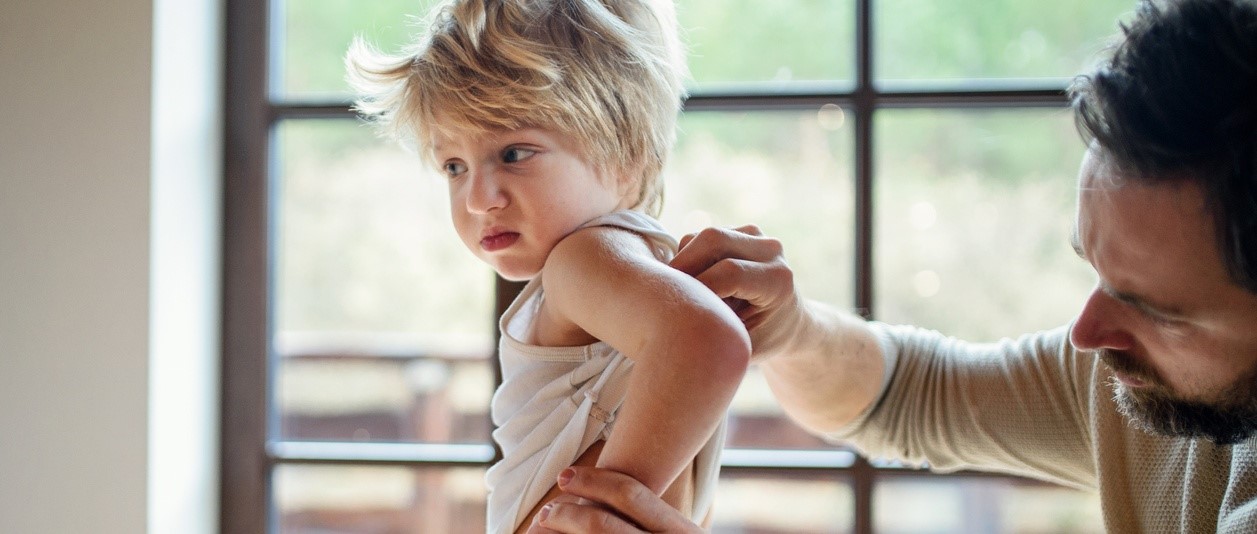
Eczema in children: how to soothe your child
Peer reviewed by Dr Krishna Vakharia, MRCGPAuthored by Amberley DavisOriginally published 4 Jul 2023
Meets Patient’s editorial guidelines
- DownloadDownload
- Share
- Language
- Discussion
- Audio Version
- Add to preferred sources on Google
Eczema affects 1 in 5 children, and the itchiness and soreness of this skin condition often leads to poor sleep, tears, and irritability. We share expert tips to help you calm and soothe your child's eczema.
What causes eczema in children?
Having eczema means your skin is more vulnerable to inflammation, and this causes itchy skin, red rashes, and dry or broken skin. This is a very usual condition at all stages of life - but eczema in children is more common, affecting around 2 in 10 kids compared with 1 in 10 adults1.
It's not always clear why some children develop eczema while others don't, but several important factors have a role to play. Dr Mia Jing Gao, a consultant skin specialist at the Cadogan Clinic, explains:
"Genetics play a large part, as do environmental factors like climate, dry air, extreme temperatures, low humidity, air pollution, and exposure to chemicals. We also know that a heightened immune response can lead to eczema inflammation.
"Allergies, irritants, and sensitivities to food can trigger eczema, and emotional stress can make eczema in children worse. Each child's experience of eczema is different, and consulting with a dermatologist can ensure they have a personalised treatment strategy."
Can children grow out of eczema?
Many children do grow out of eczema, which s is why cases of adult eczema are less common than child eczema. The chances of your child's eczema disappearing are high - as many as 80% of children outgrow the condition by adolescence or adulthood2. However, children diagnosed younger - with baby or toddler eczema - those with more severe symptoms of eczema, and those living in urban environments have a higher risk of carrying it into adult life.
Ways to soothe and control your child’s eczema
It's hard seeing a child struggle with eczema. It can disrupt their sleep and leave them sore and irritated. Plus, scratching rashes can lead to infection.
By establishing an eczema-friendly skincare routine, using the right treatments, managing their scratching, and knowing any triggers, you can make a big difference in your child's life.
Dr Gao shares her tips to help soothe eczema in children.
1. Wash them with a soap substitute
When bathing your child, Dr Gao says to use lukewarm water instead of hot which can aggravate sore skin. Soap can also be harsh on dry eczema patches, so choose gentle skincare products that are hypoallergenic and fragrance-free, and do not use bubble bath. You'll also need to gently pat their skin dry, ideally with a fresh towel as regularly washing towels and clothes can help prevent infection.
2. Moisturise them regularly
"Apply fragrance-free hypoallergenic moisturisers morning and night," says the dermatologist. This should be the next step after bathing when their skin is still damp, as moisturiser helps lock in water hydration, which helps to heal dry, flaky skin rashes. For this reason, try and pick a cream rather than a lotion, as the latter tend to be thinner and less effective. If your child's doctor has prescribed any eczema creams, be sure to put these on the eczema before using moisturiser.
3. Put on wet wraps
By allowing eczema creams to sink deep into the affected skin while keeping it hydrated, wet wrap therapy has reportedly helped many children's symptoms3. However, there's little evidence that this technique works better than eczema creams on their own4. When it comes to finding the right treatments - as well as ones your child is open to - every case is different. If you choose to try wet wraps:
Put them on after bathing, medicinal creams, and moisturizers.
Soak your child's pyjamas in warm water.
Wring them out so they are damp and not dripping.
Dress your child in the damp pyjamas, then dry pyjamas on top.
To stop your child getting cold, give them a blanket and make sure the room is warm.
Keep these wet wraps on for at least a half an hour, or you can leave them on overnight.
Apply moisturiser after removing the wet wraps.
4. Dress them in breathable clothes
"Dress your child in soft, breathable, loose-fitting clothing and also choose natural rather than synthetic fabrics," says Dr Gao.
To minimise their exposure to ingredients that are known to irritate eczema, wash your child's clothes with mild, non-biological, fragrance-free detergent and do not use fabric softeners.
5. Keep them away from known triggers
There are many known irritants and allergens that can trigger eczema in children, and these are different for different people. If you're unsure if your child's eczema flare ups are triggered by certain substances, keep a diary to track when their symptoms become worse and what they have recently been exposed to.
Keep note of possible exposure to these common triggers:
Pollen - many children with eczema also have hay fever.
Heat and sweat.
Fragrances - such as perfumes, air fresheners, and scented candles.
Skincare products - any new ones introduced that aren't designed for sensitive skin.
Tobacco smoke.
Wool and synthetic fabrics.
Food - in rare cases.
6. Control their scratching
As a parent, it isn't an easy task to keep your child from scratching when they feel itchy, but scratching can make the skin feel even more itchy, cause open sores, and risk skin infections. Dr Gao's tips include keeping your child's nails short, and putting their hands in gloves as they go to sleep to prevent nighttime scratching.
7. Manage environmental factors
While you can't control the weather, you can keep an eye on the forecast for extreme temperatures, as well as a high pollen count if hay fever triggers their flare ups. As well as limiting their time outdoors during very hot or cold days, Dr Gao recommends considering a dehumidifier in dry climates and through the winter to add moisture to the air.
8. Seek professional advice
Over-the-counter creams for eczema are available in pharmacies, but if you're worried about your child's skin it's best to see a qualified health professional - like your GP or a dermatologist - for an assessment. To soothe or help reduce the recurrence of eczema flare ups, a doctor might prescribe:
Steroid creams, gels, oils, and lotions - to heal irritated eczema rashes.
Non-steroid eczema creams - to heal irritated eczema rashes without steroids, which may be helpful for mild eczema and on delicate areas of skin, such as armpits and eyelids.
Antihistamine medicines - to help the itching.
Biologic medicines - to suppress the part of the immune system that's causing the skin inflammation in children with allergic eczema, also called atopic dermatitis.
Further reading
Patient picks for Skin rashes
Skin, nail and hair health
Will a gluten-free diet help my child's eczema?
One in five children in the UK has eczema. Many children develop the condition in their first year of life and often, the earlier symptoms become apparent, the more severe the child's eczema. Eczema is one of a group of 'atopic' conditions that also includes asthma, hay fever and food allergy, so they commonly occur together to varying degrees. The term 'atopic' means sensitive to allergens: in people with atopic conditions, their immune system overreacts to a substance and attacks the body, resulting in the symptoms of the allergy.
by Allie Anderson
Skin, nail and hair health
Everything you need to know about baby eczema
Babies get all sorts of rashes and skin complaints, from nappy rash to cradle cap. Most are harmless and will disappear over time with the right care, but eczema can be a persistent problem. So what is baby eczema and how do you treat it?
by Lawrence Higgins
About the authorView full bio
Authored by

Amberley Davis
Senior writer
BA (Hons), CPD
Amberley is a senior writer with Patient and has written extensively on a range of health and wellbeing topics.
About the reviewerView full bio

Dr Krishna Vakharia, MRCGP
Chief Medical Officer for Health, Optum UK
MBChB, MRCGP(2013), BMedSci (hons), DFSRH, DRCOG, PGDipDerm (Distn)
Dr Krishna Vakharia is an NHS GP. She is also a regular examiner for the postgraduate Diploma in Practical Dermatology at Cardiff University as well as being the Chief Medical Officer for health at Optum UK.
Article history
Article also available in English, German, Spanish, French, Italian, Portuguese, Hindi, Hebrew, Arabic, and Swedish.
4 Jul 2023 | Originally published
Authored by:
Amberley DavisPeer reviewed by
Dr Krishna Vakharia, MRCGP
Join the conversation
Share your thoughts or experiences with others in our patient communities.

Ask, share, connect.
Browse discussions, ask questions, and share experiences across hundreds of health topics.

Feeling unwell?
Assess your symptoms online for free
Sign up to the Patient newsletter
Your weekly dose of clear, trustworthy health advice - written to help you feel informed, confident and in control.
By subscribing you accept our Privacy Policy. You can unsubscribe at any time. We never sell your data.