
Magnesium: Health benefits and risks
Peer reviewed by Dr Colin Tidy, MRCGPAuthored by Josh AldermanOriginally published 12 Mar 2026
Meets Patient’s editorial guidelines
- DownloadDownload
- Share
- Language
- Discussion
- Audio Version
- Add to preferred sources on Google
Magnesium is an essential mineral that plays a role in hundreds of processes in the body.
From supporting muscle and nerve function to helping maintain healthy bones, magnesium is vital for overall health. But despite its importance, many people are unsure whether they’re getting enough or whether supplements are necessary.
In this article, we explore what magnesium does, the potential health benefits, and when supplementation might be appropriate.
Sponsored
Patient recommends... HEIGHTS
A clean, gentle magnesium formula for head-to-toe health. 1 ingredient (magnesium glycinate), powering 300+ bodily functions.
› Shop now

What is magnesium?
Magnesium is a mineral found naturally in many foods, including leafy green vegetables, nuts, seeds, whole grains and pulses.
It is also available as a dietary supplement in several different forms, such as magnesium citrate, magnesium oxide, and magnesium glycinate.
Around 60% of the body’s magnesium is stored in bones, with the rest found in muscles, soft tissues and bodily fluids. It plays a key role in energy production, muscle contraction, nerve signalling and maintaining a steady heart rhythm.1
Why is magnesium important?
Magnesium is involved in more than 300 biochemical reactions in the body. Without enough magnesium, several systems can be affected.
Some of its core functions include:
Supporting muscle and nerve function.
Helping regulate blood pressure.
Maintaining normal heart rhythm.
Supporting bone strength.
Contributing to energy production.
Helping regulate blood sugar levels.
Because magnesium is involved in so many processes, low levels - known as hypomagnesaemia - may cause a range of symptoms.
Symptoms of low magnesium
Possible symptoms include:
Muscle cramps or tremors.
Fatigue.
Numbness or tingling.
Abnormal heart rhythms.
Loss of appetite.
Nausea.
People at higher risk of low magnesium include those with digestive disorders, type 2 diabetes, alcohol dependence, or those taking certain medicines such as diuretics.
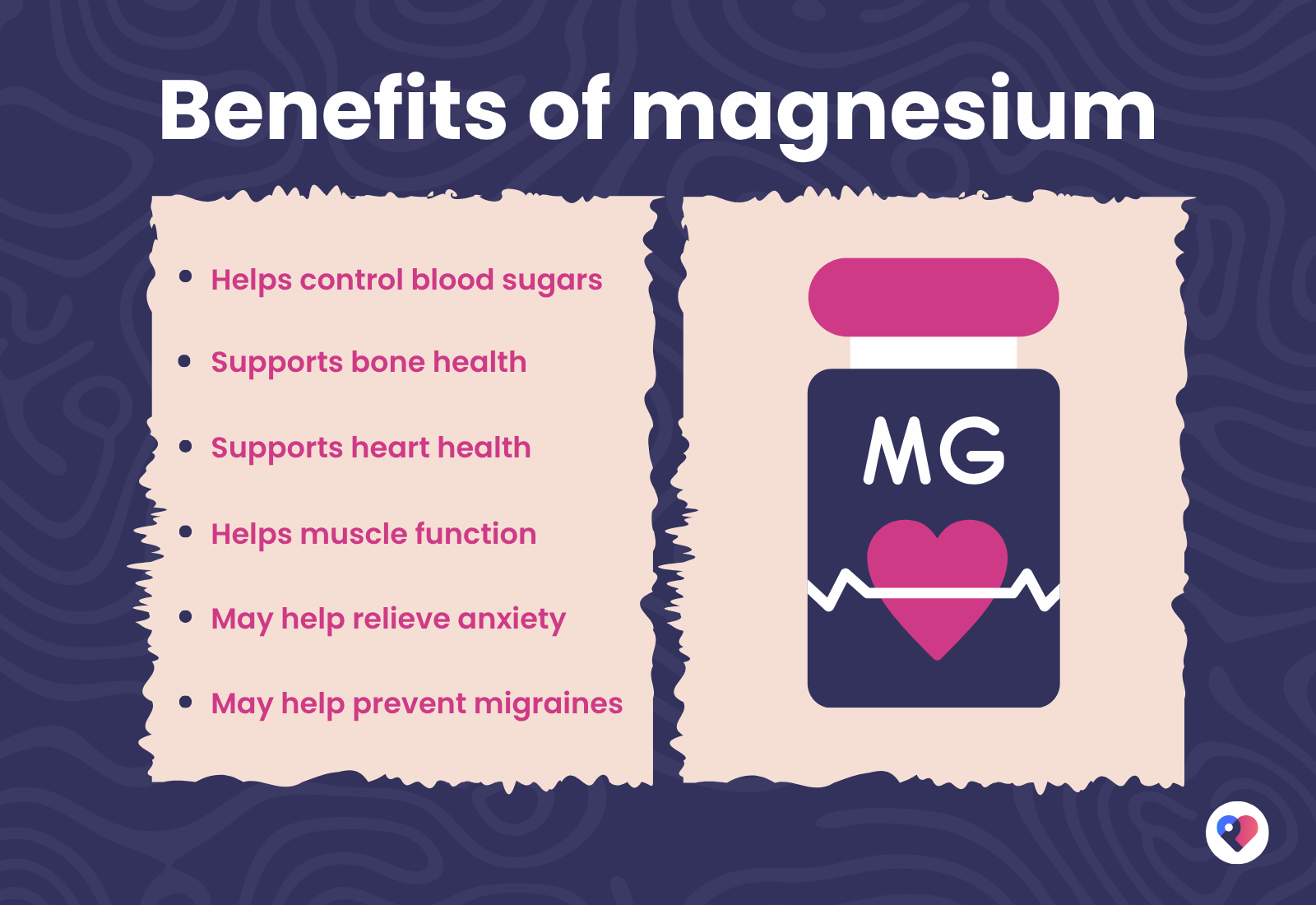
Magnesium benefits
Potential health benefits of magnesium according to research2 are:
Helps muscle function
Magnesium helps muscles contract and relax properly. Low magnesium levels have been linked to muscle cramps, twitches and weakness. However, evidence for magnesium supplements preventing night-time leg cramps in otherwise healthy people is mixed.3
Supports bone health
Magnesium works alongside calcium and vitamin D to support bone strength. Adequate intake may help maintain healthy bones, particularly as we age. However, magnesium alone does not prevent osteoporosis.
Supports heart health
Magnesium plays a role in maintaining a regular heartbeat and supporting blood vessel function. Some studies suggest that higher magnesium intake may be linked with lower blood pressure, although supplements should not replace prescribed treatment.4
May improve energy levels
Magnesium contributes to normal energy metabolism. Low levels can cause fatigue, weakness and reduced exercise tolerance. If a deficiency is present, correcting it may improve energy levels.
Helps control blood sugar levels
Magnesium is involved in insulin function. Some research suggests that adequate magnesium intake may support healthy blood sugar levels, particularly in people with type 2 diabetes.
Magnesium should not be treated as a substitute for diabetes medicine.5
May help prevent migraines
Magnesium has been studied as a preventive treatment for migraine. Some evidence suggests it may reduce frequency in certain people, although results vary.6
May help relieve anxiety
Because of its role in nerve function and how muscles relax, it has been suggested that magnesium might help with anxiety.
Low magnesium levels have been linked to symptoms such as irritability and low mood, so correcting a deficiency could, in theory, support emotional wellbeing.7
Some small studies suggest magnesium supplements may help mild anxiety, particularly in people who are deficient. But there isn’t strong enough evidence to recommend magnesium as a standalone treatment for anxiety.
If anxiety is ongoing, severe or affecting your daily life, it’s important to speak to a healthcare professional about appropriate support and treatment options.
Should you take magnesium supplements?
Most people can get enough magnesium through a varied diet. Good sources include:
Spinach and other leafy greens.
Almonds and cashews.
Pumpkin seeds.
Wholegrain bread and brown rice.
Beans and lentils.
Magnesium supplements may be helpful if a deficiency is diagnosed or strongly suspected. They are also sometimes used for specific conditions such as migraine prevention or constipation (certain forms of magnesium have a laxative effect).
Different forms of magnesium are absorbed differently and may cause varying side effects.
Are magnesium supplements safe?
For most healthy adults, magnesium from food is safe and unlikely to cause issues.
High doses of magnesium supplements can cause:
Diarrhoea.
Stomach cramps.
Nausea.
Very high levels, usually due to excessive supplementation or kidney problems, can lead to more serious symptoms such as low blood pressure or irregular heartbeat.
People with kidney disease should not take magnesium supplements without medical supervision, as their bodies may struggle to clear the excess magnesium.
As with all supplements, it’s advisable to speak to a healthcare professional before starting magnesium if you have a long-term health condition or take regular medicine.
Summary
Magnesium is an essential mineral involved in muscle function, nerve signalling, heart rhythm, bone strength and energy production. Many magnesium benefits are most noticeable when levels are low, and a balanced diet usually provides enough for healthy adults.
Magnesium supplements may be useful in certain situations, such as diagnosed deficiency or specific medical conditions, but they are not a cure-all. High doses can cause side effects, and they may not be suitable for everyone.
If you’re concerned about your magnesium intake or symptoms of deficiency, speak to a healthcare professional for advice rather than self-prescribing high-dose supplements.
Frequently asked questions
Is it safe to take magnesium every day?
Yes, for most people taking magnesium every day is generally safe. However, you should always check with a doctor or pharmacist before taking magnesium supplements, particularly if you use other medications.
Which type of magnesium is best?
The best type of magnesium depends on why you’re taking it. Choose citrate for constipation and digestion, oxide for heartburn and indigestion, or glycinate for stress, anxiety, or sleep. Seek advice from a pharmacist if unsure.
Can magnesium help with sleep?
Magnesium may support sleep by promoting relaxation, but it is not a treatment for insomnia. If sleep problems continue, speak to a healthcare professional to identify underlying causes.
Patient picks for Vitamins and supplements

Diet and nutrition
What is ashwagandha? Health benefits, uses, and side effects
Ashwagandha (Withania somnifera) is a centuries-old herb that’s gaining popularity in today’s wellness world. Also known as Indian ginseng or winter cherry, it’s traditionally been used to help people feel calmer and more energised. Here we look at what it is used for, evidence-backed benefits, and the side effects you should know about.
by Heather Ainsworth

Diabetes
Can taking supplements help manage diabetes?
According to Diabetes UK, some people with diabetes believe that certain vitamins and supplements may help manage their blood sugar levels. While they shouldn't be a substitute for conventional treatment, here’s a look at some of the most commonly used supplements, and their purported benefits.
by Victoria Raw
Frequently asked questions
Can magnesium supplements affect medicines I am already taking?
Yes, magnesium can interact with certain medications. It's always best to consult with a healthcare professional before starting any new supplement, especially if you are on regular medication or have a long-term health condition.
What happens if I take too much magnesium?
Taking too much magnesium, usually from excessive supplementation, can lead to side effects such as diarrhoea, stomach cramps, and nausea. Very high levels, especially if kidney problems are present, can cause more serious issues like low blood pressure or an irregular heartbeat.
How do I know if I have low magnesium levels?
Low magnesium levels, known as hypomagnesaemia, can cause various symptoms including muscle cramps or tremors, fatigue, numbness or tingling, abnormal heart rhythms, loss of appetite, and nausea. If you experience these symptoms, it's advisable to speak to a healthcare professional for advice rather than attempting to self-diagnose or self-treat.
Are there any specific situations where magnesium supplements are particularly helpful?
Magnesium supplements can be helpful if a deficiency is diagnosed or strongly suspected. They are also sometimes used for specific conditions like migraine prevention or for managing constipation, as certain forms of magnesium have a laxative effect. However, a balanced diet usually provides enough magnesium for most healthy adults.
Does magnesium help with muscle cramps that aren't at night?
Magnesium helps muscles contract and relax properly, and low magnesium levels have been linked to muscle cramps, twitches, and weakness. Correcting a deficiency may help with various types of muscle cramps, though the article specifically mentions mixed evidence for night-time leg cramps in otherwise healthy people.
Can I get enough magnesium from my diet alone?
For most healthy adults, a varied diet should provide sufficient magnesium. Good food sources include spinach and other leafy greens, almonds, cashews, pumpkin seeds, wholegrain bread, brown rice, beans, and lentils.
Further reading and references
- U. Gröber et al. "Magnesium in Prevention and Therapy."
- Gerry K Schwalfenberg et al. "The Importance of Magnesium in Clinical Healthcare."
- Noga Roguin Maor et al. "Effect of Magnesium Oxide Supplementation on Nocturnal Leg Cramps: A Randomized Clinical Trial."
- Zoe Argeros et al. "Magnesium Supplementation and Blood Pressure: A Systematic Review and Meta-Analysis of Randomized Controlled Trials."
- Nasiba Al Maqrashi et al. "Effect of Magnesium Supplements on Improving Glucose Control, Blood Pressure and Lipid Profile in Patients With Type 2 Diabetes Mellitus:"
- Ligia J. Domínguez et al. "Magnesium and Migraine."
- Botturi et al: "The role and the effect of magnesium in mental disorders - A systematic review."
About the authorView full bio

Josh Alderman
SEO Executive
BA (Hons) Media and Print Journalism
Josh is an SEO executive at Patient with over 4 years experience working within the healthcare sphere.
About the reviewerView full bio

Dr Colin Tidy, MRCGP
General Practitioner, Medical Author
MBBS, MRCGP, MRCP (Paediatrics), DCH
Dr Colin Tidy is an NHS Doctor, based in Oxfordshire.
Article history
Article also available in English, German, Spanish, French, Italian, Portuguese, Hindi, Hebrew, Arabic, and Swedish.
Next review due: 12 Mar 2029
12 Mar 2026 | Originally published
Authored by:
Josh AldermanPeer reviewed by
Dr Colin Tidy, MRCGP
Join the conversation
Share your thoughts or experiences with others in our patient communities.

Ask, share, connect.
Browse discussions, ask questions, and share experiences across hundreds of health topics.

Feeling unwell?
Assess your symptoms online for free
Sign up to the Patient newsletter
Your weekly dose of clear, trustworthy health advice - written to help you feel informed, confident and in control.
By subscribing you accept our Privacy Policy. You can unsubscribe at any time. We never sell your data.
More in diet and nutrition
- 5 quick and healthy meals for students
- 7 easy and delicious noodle recipes for students
- Brain food: what to eat, when to eat, recipes
- Can changing your diet ease endometriosis symptoms?
- Changing your dietary habits after a type 2 diabetes diagnosis
- Coeliac disease diet sheet
- Do gummy vitamins work?
- Does my diet really affect my immune system?
- Gout diet: foods to eat and avoid
- How to avoid iron deficiency
- How to make healthier choices without missing out
- How to make healthy stuffing
- How to set achievable health goals
- Two soft drinks a day may increase risk of early death
- Vitamin A-rich foods could protect against skin cancer
- What are the benefits of baby probiotics?
- UpdatedWhat is ashwagandha? Health benefits, uses, and side effects
- What is the Nordic diet?
- What is the TLC diet and can it improve your heart health?
- What would your stomach choose at the supermarket?