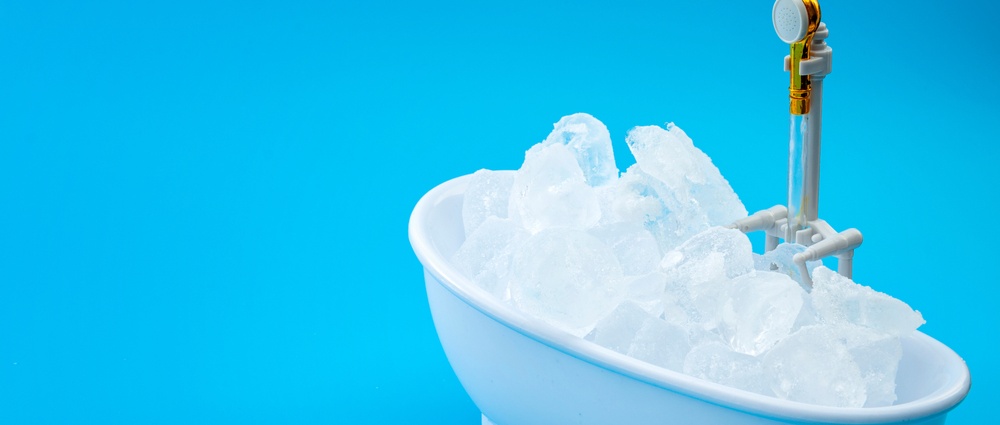
Could cold exposure boost your health and wellbeing?
Peer reviewed by Dr Colin Tidy, MRCGPLast updated by Lynn StephenLast updated 16 Dec 2025
Meets Patient’s editorial guidelines
- DownloadDownload
- Share
- Language
- Discussion
- Audio Version
- Add to preferred sources on Google
We tend to associate plunging winter temperatures with the cold and flu season. But did you know that cold showers and cold water swimming have proven benefits for health? We ask the experts about the dos and don'ts of cold exposure.
In Nordic countries, a sauna followed by a roll in the snow or a cold water swim is nothing new. Here in the UK, we've been slower to appreciate the benefits of cold exposure, but more of us are beginning to take the plunge. 'Chilling out' is thought to boost immune response, balance hormones, enhance mood and reduce our stress response.
An icy plunge every morning
Andrea is a member of Seaford Mermaids, an outdoor swimming group on the South Coast. She takes a dip in the sea first thing every morning, all year round.
"I'm an addict! Not to anything harmful, but on the contrary to a daily dip in the sea," she says. "I first met the group's founder, a very youthful and strong 87-year-old, as she emerged grinning from the surf. This was in August 2019 when the sea was still comparatively warm. Clad in two swim hats, 5 millimetre neoprene gloves, 6 millimetre boots, and just an ordinary swimming suit, I kept going throughout the winter.
"I happened to get ill with a COVID-like virus one December and after 10 days of inactivity I realised I was missing my daily immersion in chilly water. I simply had to get back in. I can now swim further and endure the slowly falling temperature better. This activity has to be the biggest spirit lifter ever."
The science behind a cold dip
Dr Mark Harper is working in collaboration with the Extreme Environments Laboratory at Portsmouth University. His research involves immersing himself and others in cold water and studying the effects of cold adaptation.
"I'm a consultant anaesthetist at Brighton and Sussex University Hospitals," he explains. "I developed an interest in the negative effects of getting cold during surgical operations and the positive effects of cold water swimming."
Harper has been sea swimming for around 20 years and takes a dip most mornings before work.
"I started researching cold adaptation and realised it might be beneficial in other contexts including for mental health patients," he continues. "If you swim in the sea a lot in the cold, the inflammatory levels in the body are reduced. Research has shown that depression is linked to inflammation, so I thought if you can reduce inflammation by cold water swimming that might help these patients. We've got anecdotal evidence that it works and the results in our study of cold exposure in anxiety and clinical depression are phenomenal."
Wim Hof, known to many as The Iceman, is also a key advocate for the benefits of cold. Hof teaches people to use a particular breathing method and cold exposure to change the body's physiology, which is thought to have health benefits.
A clinical study in The Netherlands tested Hof's method, giving subjects an injection designed to cause flu-like symptoms.1 Those who had been trained in his method had fewer symptoms. They also demonstrated an ability to control their nervous system's response to the injected virus. Another study in the USA produced similar results, though the clinical significance of both studies is yet to be determined.2
The body's adaptive response to cold
"Getting into cold water is stressful, but if you do it regularly your body adapts," says Harper. "It's a cross-adaptive response, which means your baseline stress response in daily life is reduced too. So, if you're stressed by missing the bus or whatever, your stress response won't have such a negative effect on your physiology."
Stress is a natural response that in certain situations helps us react quickly.
Sabine Tyrvainen, a clinical health and peak performance psychologist explains that it can be useful in sports for example, or when facing sudden danger.
"The stress hormone cortisol is released which increases blood pressure and muscle tension. But when stress becomes ongoing, the nervous system is constantly on high alert. It may be damaging to the body, triggering cell-damaging inflammation which may in turn lead to depression, autoimmune conditions, and immune response."
You can tell how well you've adapted to regular cold exposure by your breathing response.
"If you're not adapted you'll take a big gasp in and then start to hyperventilate," says Harper. "But when you are fully adapted you can hold your breath when you get into cold water."
Cold water swimming versus cold showers
If a freezing dip outdoors feels like a step too far, why not try a cold shower?
A Dutch study in 2016 showed that people finishing a daily shower with a 30-second blast of cold water reduced their sick days at work by 29%.3
"You can get benefits from having a cold shower," says Harper, "but not as much as from cold water swimming. There are two things which determine the body's response to cold water - one is the absolute temperature of the water and the other is the rate of cooling. In the shower the water temperature won't be as cold as the sea. Also, you're not immersing yourself fully in cold water so the rate of cooling is slower."
Tyrvainen adds: "Athletes often use ice baths after sports to reduce inflammation and the research shows that a regular cold shower will have some positive effects. But there are peripheral benefits to swimming in the cold - being outside, the exercise and the social side of it. And having a group leader to keep you motivated and safe is also a benefit."
If a cold shower is still too much to take, you could always try cold water face immersion (FI) in a bowl of iced water.
Harper advises that this stimulates the vagus nerve which links the gut and the brain and helps reduce inflammation. Studies show that FI can produce positive physiological changes by stimulating the parasympathetic system and helping the body relax.
Tips for beginners
Do not jump into water colder than 15°C unless you're used to it. Cold shock, the initial reaction to cold which can prevent you being able to breathe properly, and cold incapacitation, where your muscles lose power when you get too cold, are real dangers.
Never swim alone.
Always consult your doctor before winter swimming if you have health concerns and particularly if you have a heart condition, high blood pressure, or asthma, or are pregnant.
"My advice would be to start swimming outdoors in summer with other people so you stay safe," advises Harper. "If you swim regularly, you'll slowly adapt to the winter temperatures. Hypothermia can be a danger if you stay in too long, but a bigger danger is if your head goes under and you can't hold your breath."
Remember slow, deep breathing is key to managing the body's fight or flight response.
One of the symptoms of hypothermia is feeling warm, so get out of the water if that starts to happen, or if you experience cramps. Also look out for underwater obstacles that may pose a danger, particularly in rivers, ponds and lakes.
Here are some safety pointers for sea swimmers:
Stay close to shore.
Take note of currents and tides.
Swim with a hi-vis tow-float.
Know where and how you will get out of the water before you get in.
"Once you get a feel for cold water swimming," adds Harper, "it just wakes you up and gives you energy for the whole day. If there's one word to describe it, it's vitality."
The Outdoor Swimming Society and Wild Swimming have more information and advice on their websites. A list of open water swimming venues in the UK can be found at swimming.org.
Patient picks for Exercise and physical activity

Diet and nutrition
How to boost your energy levels and feel less tired in winter
The cold and darker months can take their toll on the way we feel. Often, the shorter days, dismal weather and changes to the way we eat and sleep mean we feel groggy and tired in winter - making it difficult to get out of bed. But why can our energy levels drop over winter, and what can we do about it?
by Victoria Raw
Healthy living
Stay fit indoors: winter workout ideas you can do at home
With winter on the way, it can be tough to stay active outdoors. If you want to avoid gym costs and exercising in wet, chilly weather, we asked a fitness expert for some simple home workouts for the colder months.
by Victoria Raw
Further reading and references
- Kox M, van Eijk LT, Zwaag J, et al; Voluntary activation of the sympathetic nervous system and attenuation of the innate immune response in humans. Proc Natl Acad Sci U S A. 2014 May 20;111(20):7379-84. doi: 10.1073/pnas.1322174111. Epub 2014 May 5.
- Wayne State University; Novel study is first to demonstrate brain mechanisms that give "The Iceman" unusual resistance to cold.
- Buijze GA, Sierevelt IN, van der Heijden BC, et al; The Effect of Cold Showering on Health and Work: A Randomized Controlled Trial. PLoS One. 2016 Sep 15;11(9):e0161749. doi: 10.1371/journal.pone.0161749. eCollection 2016.
About the authorView full bio

Sally Turner
Freelance Journalist
BA Media Production
Sally Turner is a writer and broadcaster specialising in sexual health and women’s issues.
About the reviewerView full bio

Dr Colin Tidy, MRCGP
General Practitioner, Medical Author
MBBS, MRCGP, MRCP (Paediatrics), DCH
Dr Colin Tidy is an NHS Doctor, based in Oxfordshire.
Article history
Article also available in English, German, Spanish, French, Italian, Portuguese, Hindi, Hebrew, Arabic, and Swedish.
Next review due: 16 Dec 2028
16 Dec 2025 | Latest version
11 Jan 2021 | Originally published
Authored by:
Sally Turner
Join the conversation
Share your thoughts or experiences with others in our patient communities.

Ask, share, connect.
Browse discussions, ask questions, and share experiences across hundreds of health topics.

Feeling unwell?
Assess your symptoms online for free
Sign up to the Patient newsletter
Your weekly dose of clear, trustworthy health advice - written to help you feel informed, confident and in control.
By subscribing you accept our Privacy Policy. You can unsubscribe at any time. We never sell your data.
More in healthy living
- AI skin analysis: what it is and why experts warn against it
- Can you do too much exercise?
- NewCould your pumpkin spice latte be giving you heartburn?
- Debunking bisexual stereotypes and myths
- Debunking lesbian stereotypes and myths
- Exercise snacking - how small bursts of movement can boost your mindset
- How to get your child the right support at school
- Is getting a sleep divorce the key to better rest?
- Is your lifestyle impacting your sex drive?
- Not quite 'back to normal': a guide to post-pandemic family healing
- The best resistance band workouts to build muscle
- The best ways to quit smoking for good
- Walk, jog, repeat: what is Jeffing?
- What does it mean to be intersex?
- What is cortisol belly? Why stress could be making it harder to lose belly fat
- What is forest bathing and can it improve your health?
- Why can't I sleep? 12 common causes and what to do
- Will making e-cigarettes available on prescription encourage teenagers to smoke?
- Young-onset dementia - what you need to know