Doomscrolling: Is the news bad for your mental health?
Peer reviewed by Dr Sarah JarvisAuthored by Emily Jane BashforthOriginally published 6 Apr 2022
Meets Patient’s editorial guidelines
- DownloadDownload
- Share
- Language
- Discussion
- Audio Version
- Add to preferred sources on Google
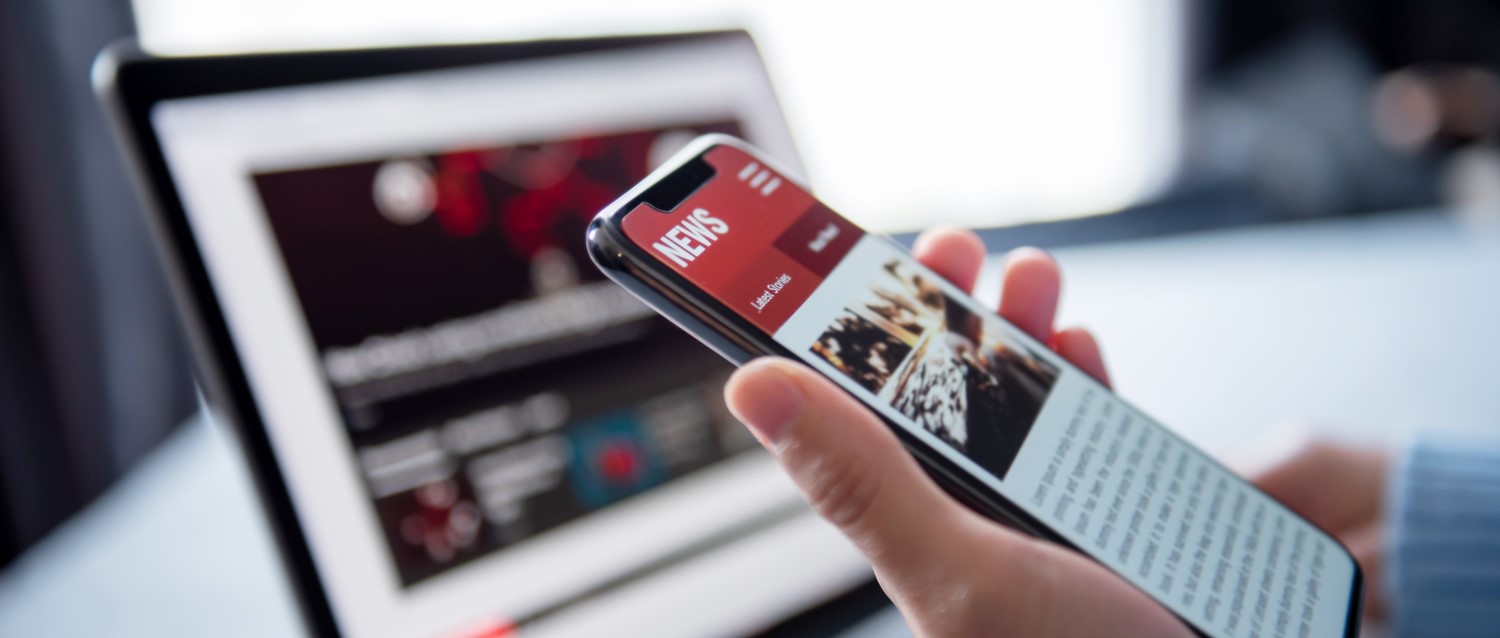
Watching the news during troublesome times can take a toll on our mental health. When major world events are taking place, we can find ourselves hooked on the news and feeling as though we need to know everything, but this behaviour, known as doomscrolling, can be to the detriment of our mental health.
What is doomscrolling?
"Doomscrolling is the term for endlessly scrolling through and consuming accurate and essential, but negative news", explains Floss Knight, psychotherapist and CEO of UK Therapy Guide.
"It's human nature to want to know what's happening in the world. However, it is easy to get into negative relationships with the news cycle."
Why do we watch the news?
It can often feel important to stay informed on current events when negative incidents are happening, particularly when there are important updates or restrictions announced.
During the height of the pandemic watching the news became necessary as lockdowns were introduced, restrictions changed frequently and mask mandates were enforced. Devastating global events often lead to doomscrolling as we can become obsessive and begin over-consuming news stories. Perhaps this is out of fear, anxiety, upset, disbelief or interest.
During times of uncertainty you might feel more compelled to watch the news which can affect your mental well-being. For example, the World Health Organization (WHO) says the COVID-19 pandemic triggered a 25% increase in the prevalence of anxiety and depression worldwide.
The way we consume news has also changed significantly over the past decade or two. Thanks to social media, we now have news at our fingertips all day, every day. While this makes current news events accessible in a multitude of formats - whether that be articles, videos, podcasts or infographics - it can make it feel inescapable.
How does negative news affect the brain?
When you consume too much negative news with activities such as doomscrolling, your sympathetic nervous system causes your body to release stress hormones, including cortisol and adrenaline. This is your body's natural response to a crisis.
Doomscrolling through stressful news can also have physical effects and cause you to experience uncomfortable symptoms such as:
Anxiety.
Vivid or disturbing dreams.
Gut problems.
This combination of mental and physical symptoms after watching too much news can severely affect your everyday life. Obsessively doomscrolling through the news is bad for your health as it can cause a constant state of worry and lead you to fear the worst outcome. A steady stream of disheartening news can alter your perception of the world, causing you to lack motivation and view the world with a sense of cynicism and hopelessness.
Negative news has the potential to exacerbate your personal anxieties and the stressful situations occurring in your own life. Research conducted by the Journal of Experimental Psychopathology says very visual and shocking news - particularly bystander-captured media - can be so intense that they can cause mood swings or aggressive behaviour or even PTSD and increase your chances of a heart attack in later life. This can be the case even when the news is not directly relevant to your own life.
"The constant feed of news can make people feel very helpless. Seeing what's happening beyond the bubble of your daily life is a reminder that the world is a big and scary place. If it's something you're unable to resolve it can lead to checking for updates obsessively and feeling stressed that you can't help people suffering," adds Knight.
Doomsday scenarios
Often the language used by news outlets can exacerbate these feelings. Graphic imagery frequently shows people being injured and killed, shocking tragedies, natural disasters and health crises. The news can be guilty of encouraging doomscrolling by creating Doomsday scenarios rather than putting the facts into perspective and conveying the likelihood of you being affected.
For example, the world media reported on the Ebola outbreak during the summer of 2014. As broadcasters speculated on the possibility of the virus spreading outside Africa, language was used by the news outlets that instilled fear. Encouraging viewers to fear the worst, they described worst-case scenarios and suggested that "the real fear is that it could mutate into a smarter virus. Turning airborne, it could infect with a single sneeze."
Why do we doomscroll when it's making us depressed?
Andy Cottom, psychotherapist and spokesperson for the UK Council for Psychotherapy (UKCP) says that it can be difficult to accept that we are powerless in preventing global suffering. Therefore, we tell ourselves that understanding every single fact will help us find a solution.
"24-hour live news broadcasts and minute-by-minute updates on the internet have created a fear of missing out which can provoke an additional anxiety that we aren't doing enough."
This pressure to be aware of global issues can derive from peers as well with the assumption that, unless someone posts about something on their social media, they aren't interested and don't care about the cause.
Becoming invested in the news
Cottom adds that we can feel compelled to engage with the news when we become emotionally invested.
"The job of a war correspondent is not only to report the facts but to communicate the human element. Emotions are highly contagious and the terror on a child's face as they run for cover can be broadcast in an instant to evoke feelings that we can find stressful to deal with. Watching the news can answer questions of what, when and which but rarely helps us understand why. There is no answer to why we are witnessing such inhumanity, yet we want to stay in the loop."
He says the human brain is evolutionarily wired to look for danger as this helps us survive.
However, the constant exposure to fear, outrage and shame at the core of doomscrolling means the mechanisms which protect our minds from such emotions can eventually become overwhelmed.
"Such a traumatised mind can experience hyper-alertness, panic attacks and flashbacks, a state where it can be impossible to differentiate between fear and danger, and emotions and thoughts."
Is there such thing as "too much" news consumption?
Knight says that if you have identified that engaging with a lot of news is not benefiting your mental well-being, it is time to consider reducing or altering the ways you consume news.
Cottom adds that catastrophes and shocking news can be "fascinating."
"Warfare, for example, is somehow fascinating to people. Acts of courage and resilience brought into our living rooms can stir up our emotions of bravery and hope. But, endless news consumption will eventually desensitise us to tragedy, making the extraordinary commonplace and the outrageous acceptable."
Can you be addicted to the news?
This can become the case particularly if you develop a habit of being constantly tuned in to the news without even realising it. Some people will listen to the news on the radio for background noise or come across articles while mindlessly scrolling through Twitter. In these passive doomscrolling instances you might not notice the effect negative news is having on you or just how much you are consuming.
However, it's important that the news doesn't rule your life and that you are able to strike a balance between being aware of what's going on around the world and living your life while accepting you alone cannot change what is happening.
Ways to control doomscrolling and news consumption
Limit news consumption to certain times of the day
80% of people check their phone within 10 minutes of waking up. This means the news could be the first thing they see upon opening their eyes and potentially the last thing on their mind at night. 62% of survey respondents said they sleep with their phone at night and spend an average of 50 minutes on their phones before bed. It's important to limit your hours spent consuming news to protect your mental health. You could do this by only checking it during your lunch hour, choosing one news programme to watch at night or setting a timer on your phone while scrolling.
Turn off push notifications
Having notifications for news stories appearing on your phone makes them unavoidable even when your phone is locked and you aren't using it. Therefore, it's a good idea to turn them off or only allow notifications from specific, trustworthy sources.
Ask family and friends not to discuss certain topics
Current events tend to be topics of conversation around the dinner table. If you are feeling overwhelmed by the news you should ask them to not talk about stories that upset you or make you anxious. Instead, use that time with family and friends to switch off and unplug. It is important to remember that you can talk to someone if you feel affected or overwhelmed by the news.
"Moderation is everything. Watching the news about negative events can stir up powerful negative emotions - fear, anger, shame - which can spiral out of control if not contained. The best way to cope with these emotions is not to continue to add to them but to talk about them with others. Reading the paper in the morning or watching the evening news should be enough to satisfy any appetite," adds Cottom.
How to practise self-care when the news is affecting your life
Knight offers suggestions for how to look after yourself when the news becomes draining and has a negative impact on your ability to live your life.
Think about what else might be causing your low mood - is it the news alone or are there other contributing factors? Take time to think about potential triggers.
Remember that habits can be changed - if you instinctively reach for a news app or turn on the TV for your news, try going for a walk instead, or making a hot drink. Try changing those instinctive habits and measure how they make you feel.
Set clear boundaries with people about the news - ask people in your life to not discuss certain topics if you think they may trigger negative feelings or emotions.
Consider speaking to an expert - confiding in a trained expert about your mental well-being and allowing them to help you process what you are feeling can make the world of difference. It can help you feel less alone and figure out coping strategies when triggers arise.
Patient picks for Online and social media

Healthy living
How to talk to your child about social media
When the coroner's report on Molly Russell - the 14-year-old who died from an act of self-harm -confirmed that social media had played a part in her death, it showed that social media content really can damage the mental health of our children and teenagers. How can parents and carers protect their children from this ever-evolving threat?
by Gillian Harvey
Healthy living
Blue light filters: do they really work?
Most of us spend several hours looking at digital screens every day, all of which emit varying levels of blue light. There's debate about the damage and effects blue light has on our vision and health, and if blue light filters help. We investigate if they really work.
by Matt Binny
About the authorView full bio

Emily Jane Bashforth
Feature Writer
NCTJ
Emily is a Feature Writer with Patient, writing articles on a variety of topics relating to health and well-being.
About the reviewerView full bio

Dr Sarah Jarvis
Clinical Consultant
MA (Cantab), BM, BCh (Oxon), DRCOG, FRCGP, MBE
After training in medicine at Cambridge and Oxford, Dr Sarah Jarvis MBE became a GP.
Article history
Article also available in English, German, Spanish, French, Italian, Portuguese, Hindi, Hebrew, Arabic, and Swedish.
6 Apr 2022 | Originally published
Authored by:
Emily Jane BashforthPeer reviewed by
Dr Sarah Jarvis
Join the conversation
Share your thoughts or experiences with others in our patient communities.

Ask, share, connect.
Browse discussions, ask questions, and share experiences across hundreds of health topics.

Feeling unwell?
Assess your symptoms online for free
Sign up to the Patient newsletter
Your weekly dose of clear, trustworthy health advice - written to help you feel informed, confident and in control.
By subscribing you accept our Privacy Policy. You can unsubscribe at any time. We never sell your data.
More in healthy living
- Can you lose weight and be body positive?
- NewCould your pumpkin spice latte be giving you heartburn?
- Debunking bisexual stereotypes and myths
- Does cold weather boost weight loss?
- Half of smokers would quit if they were paid to do so
- HIIT or weights: which is best for weight loss?
- How to do Pilates at home
- How to drink safely over Christmas and New Year
- How to find reliable health information online
- How to look after your mental health this winter
- How to support your child if they are being cyberbullied
- How your teeth can affect your self-esteem
- Should you 'come out' to your doctor?
- Switch off TV in the bedroom to avoid weight gain
- Tips for a healthier online life
- What does it mean to be intersex?
- What you need to know about parenting with a mental health issue
- Why going bald can seriously affect your mental health
- Will the government's obesity strategy work?