What your waist measurement says about your health
Peer reviewed by Dr Colin Tidy, MRCGPLast updated by Lynn StephenLast updated 17 Sept 2026
Meets Patient’s editorial guidelines
- DownloadDownload
- Share
- Language
- Discussion
- Audio Version
- Add to preferred sources on Google
We all know that if we consume excess calories and don't burn them off, our body stores them as fat. Many of us are also aware of our trouble spots - perhaps we're prone to gaining weight on our thighs, or around our middle. A little extra weight may not be harmful to your health, so how do you know if you're still in a healthy zone?
Need weight loss treatment?
Start a quick online consultation through Patient.info, available 24/7.
Reviewed by UK-registered clinicians and powered by Evaro, a UK-regulated healthcare service. Treatment can often be delivered next day.

Is BMI accurate?
Keeping within a healthy weight range is a good way to improve your overall health and many doctors recommend measuring body mass index (BMI) to help calculate your body fat percentage. However, while a BMI calculator can be a useful tool, it is not always accurate - for example, if you weigh more due to muscle type.
A more holistic way of measuring health
National Institute for Health and Care Excellence (NICE) guidelines1 recommend that health practitioners and those wanting to assess their overall weight profile also include their waist measurement in the calculation - for those with a BMI below 35. Rather than focusing on a specific figure, the guidelines advise people keep their waist circumference at "less than half of their height".
This additional waist measurement helps to identify if you are carrying excess abdominal fat, which can be a health risk for many obesity-related diseases, including type 2 diabetes, high blood pressure (hypertension), and cardiovascular disease.
What is a healthy waist measurement?
This simple way of measuring should hopefully help people to better assess their chance of developing diseases associated with having overweight and hit their weight loss goals. According to Professor Rachel Batterham, Consultant in Obesity, Diabetes, and Endocrinology, at University College London (UCL), increased fat in the abdomen raises a person's chance of developing several life-limiting diseases, including type 2 diabetes and heart disease.
"Waist-to-height ratio is a simple, easy-to-use measure that identifies people who are at increased health risk and would benefit from weight management support to improve their health," she says.
Two types of fat
If your waist measurement is above what it should be, it is likely that you are carrying excess fat in your abdomen.
But we can store two types of fat in this area - and one is more dangerous than the other.
These are:
Subcutaneous fat - this is the type of fat stored under your skin that can be felt from the outside.
Visceral fat - this type of fat may be harder to detect, as it is stored more deeply in your body and can form around organs. This type of fat may increase the chance of lifestyle diseases such as diabetes, but also cancer, and even your risk of sudden death. This is because it creates toxins in your body, including cytokines - a type of toxin that raises your chance of heart disease and makes your body less reactive to insulin.
How to measure your waist
To measure your waist:
Find the top of your hips below your belly button and ribs.
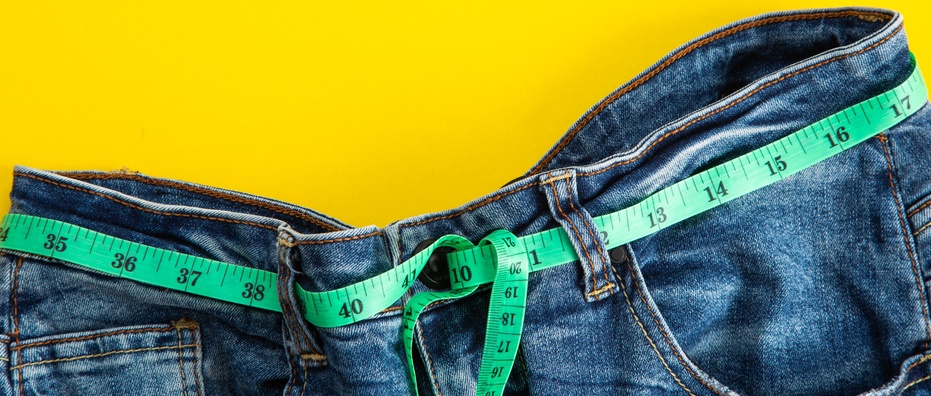
Wrap a tape measure around your waist and measure the circumference.
Keep your abdomen relaxed and natural when measuring your waist.
As a guide, the NHS recommends losing weight regardless of your height or age, if your waist measurement is:
94 centimetres (37 inches) for men.
80 centimetres (31.5 inches) for women.
How to reduce your waistline
It's common for people to think that doing targeted exercise - such as sit-ups - will reduce your waistline and help you lose weight. However, spot reduction is a myth, says David Starr, Performance Nutritionist.
"You can't choose where you lose fat from," he explains. "And there aren't any particular exercises that make you lose fat from your stomach as opposed to other areas.
"In terms of exercise, the standard advice for people who want to lose fat from any area, is to be more physically active and move more - whether this means more walking, using the stairs instead of the lift, or other activities."
In addition, increasing resistance training can also increase weight loss, as muscle burns more calories than fat, even at rest.
Can diet help you reduce your waistline?
To lose excess fat and increase overall fitness, a healthy diet and reducing your calorie intake is a must for successful weight loss. One way of ensuring we get maximum benefit from the food we eat is to focus on fresh, unprocessed ingredients.
Starr advises keeping all your food as fresh and unprocessed as possible.
"Focus on nutritionally dense foods such as whole grains," he says. "Frozen veg is also a great addition to your diet as it is often frozen very quickly and as a result maintains vitamin content."
You may think you're eating the right things, but are you eating them at the right times? Starr explains that it's important to consume enough protein at the right times. This macronutrient helps your body to build and maintain muscle mass and the creation of hormones.
Crucially, it's beneficial to consume your protein in small portions throughout your day, rather than tucking into an enormous steak in one meal.
"Most people should aim to have a significant protein portion in each meal," he says. "Good protein sources include meat, fish, dairy, eggs, or cheese, as well as legumes, nuts, and grains."
While carbohydrates are an important source of fuel, it's a good idea to avoid 'refined' carbohydrates such as pasta, white bread, rice, and potatoes.
According to Starr, they will increase your blood sugar level and - if you're not exercising - your body will store the energy as fat. He recommends choosing more complex carbohydrate sources such as leafy veg, wholegrain bread, and wholewheat pasta as they will give you a flatter blood sugar level.
How to reduce bloating
It's important to remember that bloating can also increase your waist measurement, potentially causing unnecessary anxiety. To keep any bloating in check, make sure you include soluble fibre in your diet - sources include oats, peas, and carrots - and make sure you consume probiotic foods such as natural yoghurt and sauerkraut which can have great health benefits.
"This helps your stomach to digest food more efficiently, and reduces bloating," explains Starr.
While there's no quick fix or targeted exercise to get that waist measurement down, adopting healthy habits in terms of diet and exercise will help to reduce visceral and subcutaneous fat, as well as improving our overall health.
Patient picks for Obesity and weight loss
Healthy living
Can certain foods mimic the effects of weight loss injections?
Weight loss injections have become a rapidly growing medical option for shedding pounds. To qualify, you must meet specific criteria. If you are eligible, you can pay privately to skip long waitlists. On the NHS, access can take much longer. If you find yourself stuck in the middle - unable to afford private care but waiting indefinitely for a prescription - there may be another way. We asked a nutritionist which foods and habits could naturally help curb appetite and support weight loss without medicine.
by Victoria Raw
Healthy living
10 daily habits for healthy weight loss
Balancing a busy schedule with weight loss goals can feel overwhelming. But the good news is that small changes can make a big difference. Experts agree that introducing simple steps to your daily routine can help you lose weight healthily.
by Victoria Raw
Further reading and references
- Overweight and obesity management; NICE guideline (January 2025)
About the authorView full bio
Updated by

Lynn Stephen
Content developer
MA (Hons)
Lynn joined Patient in 2023 and her role includes checking all the professional leaflets, patient information leaflets and medicine leaflets, to ensure consistency of spelling, grammar, reference material and brand style, working with the medical authors and clinical director to coordinate the authoring and peer reviewing of the leaflets.
Authored by
Gillian Harvey
Freelance Writer
BA (Hons) English
Gillian is a freelance writer and columnist for a variety of national newspapers and magazines.
About the reviewerView full bio

Dr Colin Tidy, MRCGP
General Practitioner, Medical Author
MBBS, MRCGP, MRCP (Paediatrics), DCH
Dr Colin Tidy is an NHS Doctor, based in Oxfordshire.
Article history
Article also available in English, German, Spanish, French, Italian, Portuguese, Hindi, Hebrew, Arabic, and Swedish.
Next review due: 16 Sept 2029
17 Sept 2026 | Latest version
29 Jun 2022 | Originally published
Authored by:
Gillian Harvey
Join the conversation
Share your thoughts or experiences with others in our patient communities.

Ask, share, connect.
Browse discussions, ask questions, and share experiences across hundreds of health topics.

Feeling unwell?
Assess your symptoms online for free
Sign up to the Patient newsletter
Your weekly dose of clear, trustworthy health advice - written to help you feel informed, confident and in control.
By subscribing you accept our Privacy Policy. You can unsubscribe at any time. We never sell your data.