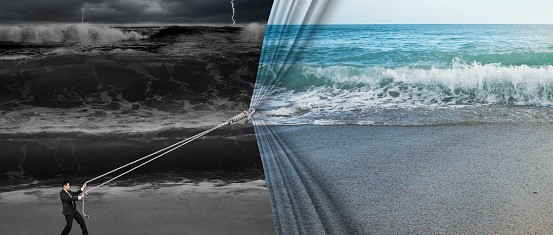
Thalassophobia: how to manage your fear of the ocean
Peer reviewed by Dr Krishna Vakharia, MRCGPAuthored by Amberley DavisOriginally published 27 Jan 2023
Meets Patient’s editorial guidelines
- DownloadDownload
- Share
- Language
- Discussion
- Audio Version
- Add to preferred sources on Google
Most people have some fear of the ocean - a natural survival instinct against the unknown that prevents you from jumping off a ship several miles offshore. But for people with thalassophobia, this fear runs so deep it affects their quality of life.
Mental health support for adults and children
Online CBT and psychological therapy for adults and children aged 8–17. Onebright’s accredited clinicians support people experiencing anxiety, depression and other emotional challenges.
What is thalassophobia?
Thalassophobia is an intense fear of deep bodies of water. The word is a merge of two Greek words - thalassa meaning sea, and phobos meaning fear.
As such, thalassophobia is often taken literally to mean a fear of the ocean. In reality, someone with this phobia could also be afraid of large bodies of water such as wide lakes or rivers - any expanse of water that's large and deep.
What are the symptoms of thalassophobia?
Having a specific phobia such as thalassophobia, is a type of anxiety disorder. For a person with thalassophobia, like other anxiety disorders, it can cause both psychological and physical symptoms.
Psychological symptoms of thalassophobia might include:
Sudden and severe feelings of fear or anxiety.
A fear of losing control.
Panic.
Inability to concentrate.
Racing thoughts.
Insomnia - difficulty sleeping.
Physical symptoms of thalassophobia might include:
Shaking or trembling.
Sweating.
Heart palpitations.
Shortness of breath.
Muscle tension.
An upset stomach.
In severe cases, this fear may cause panic attacks. The symptoms of a panic attack can be so intense that they can be mistaken for a heart attack.
What causes thalassophobia?
Christopher Paul Jones is a leading phobia specialist at Harley Street Phobia Therapy. He explains that finding the root cause of thalassophobia isn't always straightforward.
"Thalassophobia is usually caused by a bad experience or trauma that was related to water in childhood. However, sometimes it can be related to another phobia, for example a fear of sharks, whales, or wide-open spaces.
"I would never assume that it is as simple as being fearful of water, and getting to the underlying root cause of thalassophobia, just like any phobia for that matter, is vital."
What's more, phobias aren't always caused by a traumatic event, such as a near-drowning experience. There are also other possible factors:
Your genes - some people are more inherently likely to develop anxiety disorders like phobias than others1.
How your brain processes fear - if your brain can't process fear properly it may be easier for you to develop a phobia like thalassophobia2.
What can trigger thalassophobia?
Having thalassophobia usually means your fear of deep water is so intense that it interferes with your life - even when you're not physically near any water.
"You do not have to be near the actual ocean in order to be triggered," Paul Jones explains. "It could be that you see the ocean on television or hear the sound of waves on a meditation audio. As thalassophobia isn't always as straightforward as a fear of the ocean, there could be all kinds of different triggers."
How is thalassophobia diagnosed?
If you have a fear of the ocean or any deep water that you find is negatively affecting your life, talk to your GP or a phobia specialist. Health professionals classify thalassophobia as a natural environment phobia, and you will be assessed to see:
How intense your fear of deep bodies of water is.
Whether deep water almost always causes you intense and sudden fear or anxiety.
Whether this fear is disproportionate to any actual danger - for example, looking at a photo of the sea may trigger fear even though this poses no risk of harm.
Whether you actively avoid certain triggers.
Whether the phobia results in clinically significant distress or physical symptoms.
How long you've experienced this fear - thalassophobia typically lasts for six months or more.
Whether this phobia is not better explained by the symptoms of another mental disorder, such as post-traumatic stress disorder (PTSD) or obsessive-compulsive disorder (OCD).
How to manage thalassophobia
1. Therapy
According to Paul Jones, the best way to manage thalassophobia is to seek help from a healthcare specialist or mental health professional who can help work out the root cause of your fear or anxiety.
"A therapist will work on releasing the negative emotions attached to your memory of the original incident that is behind the phobia, in order to help prevent you from feeling the same way again."
This is known as cognitive behavioural therapy (CBT) - a type of talking therapy in which you're coached to retrain your thoughts in order to deal with trauma.
2. Medication
As phobias are anxiety disorders, you and your doctor might decide that anxiety medication may also help improve your quality of life. Medication can be used alongside therapy to help you better manage your emotions, or it could be prescribed to help you through specific situations, for example if you need to get on a boat.
3. Other coping techniques
There are also things you can try in your free time that may help you better deal with your fear of the ocean.
For example, mindfulness and relaxation techniques have helped some people manage anxiety:
Healthy habits like eating a healthy, well-balanced diet and regular exercise has also been shown to effectively reduce anxiety, although this should support - and not replace - therapy to help you understand and address your specific phobia.
Further reading
Patient picks for Phobias and fears

Mental health
What it's like to experience claustrophobia
I first experienced claustrophobia on a hot, packed Tube train when I was 22. As it left the station, it stopped at a red light in a tunnel. I knew this was normal. But after a few seconds, I began to feel strange.
by Lydia Smith
Mental health
How to overcome a fear of flying
At least 1 in 10 people have a fear of flying - and some studies suggest this proportion is much higher. Having a fear of flying, also called flight anxiety, is officially classed as an anxiety disorder. To doctors, this is known as aerophobia, or sometimes aviophobia in the US. Here, we share the triggers, practical tips, and support you can get to help your next flight go as smoothly as possible.
by Amberley Davis
About the authorView full bio
Authored by

Amberley Davis
Senior writer
BA (Hons), CPD
Amberley is a senior writer with Patient and has written extensively on a range of health and wellbeing topics.
About the reviewerView full bio

Dr Krishna Vakharia, MRCGP
Chief Medical Officer for Health, Optum UK
MBChB, MRCGP(2013), BMedSci (hons), DFSRH, DRCOG, PGDipDerm (Distn)
Dr Krishna Vakharia is an NHS GP. She is also a regular examiner for the postgraduate Diploma in Practical Dermatology at Cardiff University as well as being the Chief Medical Officer for health at Optum UK.
Article history
Article also available in English, German, Spanish, French, Italian, Portuguese, Hindi, Hebrew, Arabic, and Swedish.
27 Jan 2023 | Originally published
Authored by:
Amberley DavisPeer reviewed by
Dr Krishna Vakharia, MRCGP
Join the conversation
Share your thoughts or experiences with others in our patient communities.

Ask, share, connect.
Browse discussions, ask questions, and share experiences across hundreds of health topics.

Feeling unwell?
Assess your symptoms online for free
Sign up to the Patient newsletter
Your weekly dose of clear, trustworthy health advice - written to help you feel informed, confident and in control.
By subscribing you accept our Privacy Policy. You can unsubscribe at any time. We never sell your data.