Prolactinoma
Peer reviewed by Dr Toni Hazell, FRCGPLast updated by Dr Hayley Willacy, FRCGP Last updated 31 Oct 2022
Meets Patient’s editorial guidelines
- DownloadDownload
- Share
- Language
- Discussion
- Audio Version
- Add to preferred sources on Google
A prolactinoma is a non-cancerous growth in the pituitary gland that makes a hormone called prolactin.
At a glance
A prolactinoma is a non-cancerous growth on the pituitary gland in the brain.
This growth makes too much of a hormone called prolactin.
Symptoms in women can include irregular periods, reduced fertility, or milk leaking from breasts.
Men may experience reduced fertility, erectile dysfunction, or breast enlargement.
Large prolactinomas can cause headaches or vision problems.
Various treatments are available, including medication and sometimes surgery.
If you have headaches, reduced vision, or double vision, see a doctor urgently.
Tucked away deep inside your brain is a gland called your pituitary gland. It may only be the size of a pea in humans, but it has a significant effect on our bodies. One of its main functions is to produce hormones. These are chemical messengers that are made in one part of the body and travel in the blood to one or more 'target' organs where they have an effect.
One of the hormones the pituitary produces is prolactin. It main job is to stimulate a woman's breast to produce milk after childbirth. Prolactin is also made in men.
What is a prolactinoma?
Location of pituitary gland
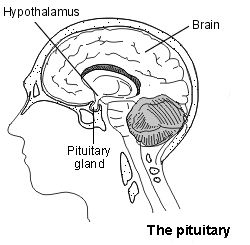
A prolactinoma occurs when some of the cells in the pituitary gland (the ones producing prolactin) multiply more than usual to form a small growth (tumour) in the pituitary gland. The prolactinoma makes too much prolactin and this can cause symptoms.
Prolactinomas are usually very small. Small prolactinomas (less than 1 cm ) are called microprolactinomas. Larger ones (more than 1 cm ) are called macroprolactinomas. There is also a rare type called giant prolactinomas, which are more than 4 cm. However, these are only found in between 1-5 cases of prolactinoma out of 100.
What causes prolactinomas?
For most people the cause is unknown. In rare cases, there may be an inherited cause and this is often linked to multiple endocrine neoplasia type 1.
What are the symptoms of a prolactinoma?
High levels of prolactin in the blood can cause various symptoms, such as headaches. The signs and symptoms differ slightly between men, women and children.
Women may have:
Irregular periods or no periods. This symptom is present in 9 out of 10 pre-menopausal women with prolactinoma.
Reduced fertility.
Reduced sex drive.
Milk leaking from the breasts (known as galactorrhoea). This symptom is present in 8 out of 10 women. The milk may leak out by itself, or may only show when the breast is squeezed. (Note: leakage of milk from the breasts is normal towards the end of pregnancy, with recent childbirth, if breast-feeding and for some time after finishing breast-feeding.)
Increased growth of hair on the face or body.
Men may have:
Reduced fertility.
Difficulty having an erection (erectile dysfunction).
Reduced sex drive (libido).
Breast enlargement (called gynaecomastia).
Very rarely, leakage of milk from the breasts.
Children and teenagers may have:
Reduced growth.
Delayed puberty.
Prolactinomas which are large may press on the brain or nearby nerves (the nearest nerves are the optic nerves which go to the eye). Some prolactinomas can get bigger during pregnancy. Larger prolactinomas may cause symptoms such as:
Eye symptoms - you may get reduced vision or double vision. The early changes can easily go unnoticed, because they affect the peripheral vision - that is, the edges of your vision to the extreme left and right. This means that you may see less of what is around you, but can still see well if you focus on something directly.
If you have headaches or double/reduced vision, see a doctor urgently - you may need to have treatment promptly to relieve the pressure on the optic nerves
.
Rarely, the prolactinoma may press on the rest of the pituitary gland, stopping it from producing other hormones. This can cause symptoms such as tiredness, fainting, low blood pressure, low blood sugar or collapse. Also (rarely) there may be a leakage of the fluid that surrounds the brain and pituitary gland, felt as watery fluid leaking through the nose. These symptoms need urgent treatment.
How are prolactinomas diagnosed?
The diagnosis may be suspected from the symptoms. Women tend to be diagnosed earlier than men because a change in the woman's periods is an early symptom and is easily noticed. Some prolactinomas are diagnosed by chance if you have tests for another reason. If a prolactinoma is suspected, you may be offered several tests.
Blood tests
The first test for women is a pregnancy test - prolactin goes up in pregnancy, and occasionally an undiagnosed pregnancy can be mistaken for a prolactinoma. A blood sample can check the level of prolactin in the blood. A very high prolactin level usually means that a prolactinoma is present. However, there are other causes of raised prolactin levels. For example, some medicines may cause high prolactin levels. These include:
Antidepressants of the selective serotonin reuptake inhibitor (SSRI) type.
Some medicines used to treat schizophrenia or bipolar disorder.
Other blood tests may be done at the same time. It is important to test the thyroid gland and to check kidney function, as both these can affect prolactin levels. Further tests may be needed to see if the tumour is causing a lack of other hormones made by the pituitary gland.
Eye tests
Eye tests will assess if the tumour is pressing on the optic nerve - this includes a test of visual fields.
Scans
A magnetic resonance imaging (MRI) scan or a computerised tomography (CT) scan can show the size of the tumour. A bone density scan may be advised for some patients, to check whether they are at risk of 'thinning' of the bones (osteoporosis), which is a possible complication.
How to treat prolactinomas
Treatment usually works well to stop the symptoms of prolactinoma and to improve fertility. There are various options to treat prolactinomas but the usual treatment is medication. Some treatment options depend on the size of the growth.
Not treating may be an option
For a small prolactinoma (a microprolactinoma), if symptoms are not too troublesome then one option is just to monitor the situation. This means having regular blood tests and possibly scans. If symptoms get worse or the prolactinoma seems to be growing, treatment can be started whenever necessary.
If you are choosing the no-treatment option, you may be advised to take oestrogen hormones (for women) or testosterone hormones (for men). This can help to prevent 'thinning' of the bones (osteoporosis).
Medication
Medication is a very effective treatment for most prolactinomas. The medication is a type called dopamine agonists. These act on the pituitary gland to reduce the amount of prolactin it makes, and they can also shrink the tumour. Usually with this medication, prolactin levels go down to normal in a few weeks. Dopamine agonists can be taken as long-term treatment.
The dopamine agonists are called bromocriptine, cabergoline or quinagolide. They are taken as tablets.
What about treatment with medication in pregnancy?
If you are planning a pregnancy, it is best to discuss treatment options with your doctor beforehand. Treating the prolactinoma usually improves fertility, so can help you become pregnant. Bromocriptine is thought to be the safest of the dopamine agonists for pregnancy, because it is the most tried and tested one. Many women have had babies after taking bromocriptine.
Surgery
Surgery may be an option if medication does not work, is not wanted, or for larger prolactinomas. The operation is called trans-sphenoidal surgery, because the surgeon gets to the pituitary gland through the sphenoid bone, via a small cut above the upper front teeth or from inside a nostril. It is done under general anaesthetic.
Other treatments
Sometimes prolactinomas cause a reduction in the other hormones that the pituitary gland produces. If so, you may need to take tablets to replace these hormones. This will depend on your symptoms and blood test results.
How common are prolactinomas?
Prolactinomas are rare but they are the most common type of pituitary gland tumour. It is estimated that about 4 in 10,000 people have a prolactinoma. Prolactinomas occur both in men and in women. Prolactinomas occur most often in women aged 20-50 years, but they can occur at any age.
Are prolactinomas dangerous?
The main complication is the risk of 'thinning' of the bones (osteoporosis), which occurs if high prolactin levels are untreated for a long time (over one year). Osteoporosis can be prevented by treating the prolactinoma (as above). Alternatively, replacement oestrogen or testosterone can be taken.
Large prolactinomas may cause complications if they grow and press on the structures nearby: the pituitary gland, the brain and the nerves to the eye. If untreated, the pressure might eventually lead to nasty side-effects such loss of vision, other hormone problems (which could cause severe illness) or severe headaches.
Rare complications are:
A leak of fluid from around the brain into the nose, which causes a risk of infection such as meningitis.
Pituitary apoplexy, which is rare but very serious. There is a bleed inside the tumour, making it suddenly expand. This causes sudden increasing symptoms such as headache and reduced vision, and may cause collapse. It needs urgent treatment and may require surgery.
What is the outlook for prolactinomas?
The outlook (prognosis) for most people with a prolactinoma is very good. Most prolactinomas are successfully treated with medication. If this does not work, surgery is usually successful.
Treatment for women can restore periods and fertility (assuming that the fertility problem was due to the prolactinoma). Fertility for men can also improve with treatment.
For some people, the prolactinoma may be cured after about three years of taking medication. So you may be able to come off treatment.
Prolactinomas can come back, even after successful treatment with medication or surgery. You will still need monitoring (such as regular blood tests) to check that the prolactinoma has not come back. If it has, then treatment can be restarted.
Patient picks for Hormone imbalance

Hormones
Acromegaly
Acromegaly is a rare, progressive condition in which you make too much growth hormone. This causes a range of symptoms that develop gradually, often over several years. The most noticeable symptoms are that your hands and feet become larger and features of your face may become more prominent. The cause is usually a small non-cancerous growth (tumour) in the pituitary gland. Treatment options include surgery to remove the growth and medicines to block the release or effects of growth hormone.
by Dr Mohammad Sharif Razai, MRCGP
Hormones
Pituitary gland disorders
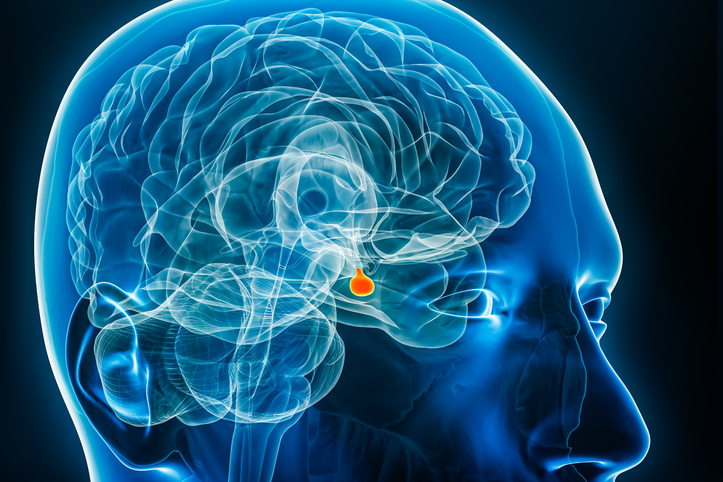
This leaflet gives a brief overview of the pituitary gland and the hormones it makes. The pituitary gland is found at the base of the brain and is 'pea-sized'. The pituitary gland is an overall controller of a number of other glands in the body, overseeing the function of these organs through hormones.
by Dr Hayley Willacy, FRCGP
Frequently asked questions
Can high prolactin make you feel tired or cause fatigue?
Yes, rarely, if a large prolactinoma presses on the rest of the pituitary gland and stops it from producing other hormones, symptoms like tiredness, fainting, low blood pressure, low blood sugar, or collapse can occur. These symptoms need urgent treatment.
Is a prolactinoma a type of cancer?
No, a prolactinoma is a small growth or tumour in the pituitary gland, but it is not cancerous. It occurs when prolactin-producing cells multiply more than usual.
How long does it take for prolactin levels to normalise with medication?
Usually, with medication (dopamine agonists), prolactin levels go down to normal in a few weeks. This medication can also shrink the tumour and is often taken long-term.
Can my prolactinoma be cured permanently?
For some individuals, a prolactinoma may be cured after approximately three years of taking medication, allowing them to stop treatment. However, prolactinomas can sometimes return even after successful treatment, requiring ongoing monitoring and potential retreatment.
Further reading and references
- Position statement on the use of dopamine agonists in endocrine disorders; Society for Endocrinology (Feb 2009 - reviewed Nov 2011)
- The Pituitary Foundation
- Yatavelli RKR, Bhusal K; Prolactinoma
- Inder WJ, Jang C; Treatment of Prolactinoma. Medicina (Kaunas). 2022 Aug 13;58(8). pii: medicina58081095. doi: 10.3390/medicina58081095.
- Shimon I; Giant Prolactinomas. Neuroendocrinology. 2019;109(1):51-56. doi: 10.1159/000495184. Epub 2018 Nov 7.
About the authorView full bio

Dr Hayley Willacy, FRCGP
General Practitioner, Medical Author
MBChB (1992), DRCOG, DFFP, MRCOG (Part 1) MRCGP (2007), DFSRH (2013), MSc - medical education (2020)
Dr Hayley Willacy was an NHS GP working in northwest England, who retired from clinical practice in 2022 after 30 years.
About the reviewerView full bio

Dr Toni Hazell, FRCGP
MBBS, BSc, FRCGP, DFSRH, Dip GU med, DRCOG, DCH (London, UK, 2000)
Dr. Toni Hazell qualified from St. Mary’s Hospital Medical School and did her VTS at Northwick Park Hospital.
Article history
The information on this page is written and peer reviewed by qualified clinicians.
Article also available in English, German, Spanish, French, Italian, Portuguese, Hindi, Hebrew, Arabic, and Swedish.
Next review due: 30 Oct 2027
31 Oct 2022 | Latest version
Join the conversation
Share your thoughts or experiences with others in our patient communities.

Ask, share, connect.
Browse discussions, ask questions, and share experiences across hundreds of health topics.

Feeling unwell?
Assess your symptoms online for free
Sign up to the Patient newsletter
Your weekly dose of clear, trustworthy health advice - written to help you feel informed, confident and in control.
By subscribing you accept our Privacy Policy. You can unsubscribe at any time. We never sell your data.
More in hormones
- Acromegaly
- Addison's disease
- Adrenal fatigue
- Congenital adrenal hyperplasia
- Diabetes insipidus
- Hormone replacement therapy (HRT)
- Hyperparathyroidism
- Hyponatraemia
- Hypoparathyroidism
- Iodine deficiency
- Jet lag
- Menopause - what you need to know
- Ovarian cyst
- Overactive thyroid gland
- Pelvic pain in women
- Perimenopause
- Pituitary gland disorders
- Synacthen test
- Thyroid and parathyroid problems
- Thyroid eye disease