תולעים עגולות
Nematodes
נבדק על ידי ד"ר היילי וילאסי, FRCGP עודכן לאחרונה על ידי Dr Colin Tidy, MRCGPעודכן לאחרונה 13 Dec 2022
עומד בהנחיות העריכה של Patient
- הורדהורד
- שתף
- Language
- דיון
- גרסת שמע
- הוסף למקורות מועדפים בגוגל
אנשי מקצוע רפואיים
מאמרי עיון מקצועיים מיועדים לשימוש של אנשי מקצוע בתחום הבריאות. הם נכתבים על ידי רופאים מבריטניה ומבוססים על ראיות מחקריות, הנחיות בריטיות ואירופאיות. ייתכן שתמצא את תולעים עגולות מאמר מועיל יותר, או אחד מהאחרים שלנו מאמרי הבריאות.
What are roundworms (nematodes)?
Roundworms (nematodes) have elongated, bilaterally long cylindrical bodies which contain an intestinal system and a large body cavity. Parasitic nematodes vary in length from several millimetres to approximately 2 metres and have larval stages and adult worms of both sexes. Approximately 60 species of roundworms are parasites of humans.1
Some roundworm infections can be transmitted directly from person to person but, in others, the nematode eggs must mature outside the host. The parasites may spend a part of their life cycle in the soil before becoming infective to humans. Nematodes commonly parasitic on humans include (click links below for separate articles which provide more detail):
Ascaris Lumbricoides.
Roundworm ascaris lumbricoides
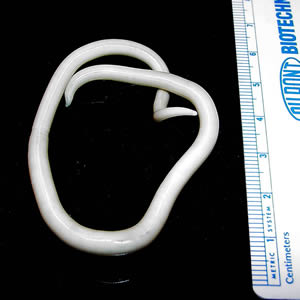
© CDC, Public Domain, via Wikimedia Commons
Filariasis, which is caused by thread-like filarial roundworms (nematodes) in the family Filarioidea (also known as 'filariae'). There are eight known filarial roundworms which use humans as the host. These are divided into three groups:
Lymphatic Filariasis - caused by the worms Wuchereria bancrofti, Brugia malayi, and Brugia timori.
Cutaneous Filariasis - caused by Loa loa (the African eye worm), Mansonella streptocerca ו Onchocerca volvulus.
Body Cavity Filariasis - caused by the worms Mansonella perstans ו Mansonella ozzardi.
Trichuriasis (Whipworm).
Trichinellosis.
Angiostrongyliasis.
Strongyloidiasis.
Gnathostomiasis.
Anisakiasis.
נדידת זחלים בעור is caused by skin penetration and subsequent migration of larvae of various roundworm parasites.
Helminth infections can affect the immune system in positive and negative ways. The host can benefit from suppression of collateral damage during parasite infection and from reduced allergic, autoimmune, and inflammatory reactions. However, helminth infection can also be detrimental in reducing vaccine responses, increasing susceptibility to co-infection and potentially reducing the body's protection against tumours.2
How common are roundworms (nematodes)?
The bowel of a child living in poverty in a developing country is likely to be parasitised with at least one nematode and, in many cases, multiple infection (eg, whipworms, ascaris, and hookworms), with resultant impairments in physical, intellectual, and cognitive development.1 3
The prevalence of roundworm infections throughout the world is generally increasing but varies according to levels of poverty, natural disasters and human conflicts.4
The spread of infection is also increasing in line with increased travel and mobility (eg, angiostrongyliasis and anisakiasis). However, some eradication programmes (notably for guinea worm disease) have been effective in reducing the burden of infection.
Roundworm infections are rare in the UK. Infections diagnosed in the UK are likely to have been acquired abroad. Travellers and migrant populations are most often affected. It is estimated that up to 20% of migrants from endemic countries may have helminth infections at the time of their arrival in the UK.5
Roundworm (nematode) treatment3
Control of roundworm (nematode) infections is based on drug treatment, improved sanitation and health education.
Antihelmintic drugs (eg, mebendazole, albendazole and tiabendazole) are often used for both symptomatic infections and for large-scale prevention of morbidity in children living in endemic areas. This has resulted in improvements in child health and education after deworming.
Concerns about the sustainability of periodic deworming with available drugs and the emergence of resistance mean that a great deal more needs to be done in terms of new drugs and developing effective vaccines, as well as education and alleviating poverty.
See the British National Formulary (BNF) treatment summary for helminth infections for further recommendations for treatment, and contact details for further advice on prophylaxis and treatment in the UK.6
עדכונים בלעדיים לאנשי מקצוע בתחום הבריאות
הישאר מעודכן עם העדכונים הקליניים האחרונים, תובנות מקצועיות והנחיות מבוססות ראיות. הניוזלטר של Patient Pro אוסף תוכן חיוני לאנשי מקצוע בתחום הבריאות - נשלח ישירות לתיבת הדואר הנכנס שלך.
על ידי הרשמה אתה מקבל את שלנו מדיניות הפרטיות שלנו. באפשרותך לבטל את המנוי בכל עת. לעולם לא נמכור את הנתונים שלך.
קריאה נוספת והפניות
- טפילים א-ת; המרכזים לבקרת מחלות ומניעתן
- Cox FEG; History of Human Parasitology
- Stepek G, Buttle DJ, Duce IR, et al; Human gastrointestinal nematode infections: are new control methods required? Int J Exp Pathol. 2006 Oct;87(5):325-41.
- Maizels RM, McSorley HJ; Regulation of the host immune system by helminth parasites. J Allergy Clin Immunol. 2016 Sep;138(3):666-675. doi: 10.1016/j.jaci.2016.07.007. Epub 2016 Jul 29.
- Bethony J, Brooker S, Albonico M, et al; Soil-transmitted helminth infections: ascariasis, trichuriasis, and hookworm. Lancet. 2006 May 6;367(9521):1521-32.
- Beyrer C, Villar JC, Suwanvanichkij V, et al; מחלות מוזנחות, סכסוכים אזרחיים וזכות לבריאות. לנסט. 18 אוגוסט 2007;370(9587):619-27.
- Roundworm; NICE CKS, March 2018 (UK access only)
- Helminth infections; British National Formulary (BNF).
אודות המחברצפה בפרופיל המלא

Dr Colin Tidy, MRCGP
רופא כללי, מחבר רפואי
MBBS, MRCGP, MRCP (Paediatrics), DCH
ד"ר קולין טיידי הוא רופא ב-NHS, הממוקם באוקספורדשייר.
אודות המבקרצפה בפרופיל המלא

Dr Hayley Willacy, FRCGP
רופא כללי, מחבר רפואי
MBChB (1992), DRCOG, DFFP, MRCOG (Part 1) MRCGP (2007), DFSRH (2013), MSc - medical education (2020)
ד"ר היילי וילאסי הייתה רופאה כללית ב-NHS שעבדה בצפון מערב אנגליה, ופרשה מעבודתה הקלינית בשנת 2022 לאחר 30 שנות עבודה.
היסטוריית המאמר
המידע בעמוד זה נכתב ונבדק על ידי קלינאים מוסמכים.
המאמר זמין גם ב אנגלית, גרמנית, ספרדית, צרפתית, איטלקית, פורטוגזית, הינדי, עברית, ערבית, and שוודית.
Next review due: 12 Dec 2027
13 Dec 2022 | הגרסה האחרונה

שאלו, שתפו, התחברו.
עיין בדיונים, שאל שאלות ושתף חוויות במאות נושאים בריאותיים.

מרגיש לא טוב?
הערך את הסימפטומים שלך באינטרנט בחינם
עוד בגסטרואנטרולוגיה
- נפיחות בטנית וגזים
- ניקור מיימת
- קמפילובקטריוזיס
- גידולים קרצינואידים
- עצירות במבוגרים
- מחלת קרוהן
- נגע דיולפואה
- הפטיטיס הנגרם מתרופות
- יובש בפה
- אנדוסקופיה רטרוגרדית כולנגיופנקראטוגרפיה
- Escherichia coli O157
- נמק
- תסמונת המעי הרגיז
- צהבת בהריון
- לאוקופלקיה
- תרומת איברים
- כיס לועי
- אנטרופתיה מאבדת חלבון
- תסמונת רוטור
- דימום מדרכי העיכול העליונות