Is handedness determined by genetics?
עומד בהנחיות העריכה של Patient
- הורדהורד
- שתף
- Language
- דיון
- Ask Patient
- גרסת שמע
- הוסף למקורות מועדפים בגוגל
Like most aspects of human traits, handedness is complex and appears to be influenced by multiple factors, including genetics and environment.
בחירות וידאו עבור Understanding geneticsספריית סרטונים
סקירה כללית
Like most aspects of human traits, handedness is complex and appears to be influenced by multiple factors, including genetics and environment.
Handedness, or hand preference, is the tendency to be more skilled and comfortable using one hand instead of the other for tasks such as writing and throwing a ball. Although the percentage varies worldwide, in Western countries, 85 to 90 percent of people are right-handed and 10 to 15 percent of people are left-handed. Mixed-handedness (preferring different hands for different tasks) and ambidextrousness (the ability to perform tasks equally well with either hand) are uncommon.
Hand preference becomes increasingly apparent in early childhood and tends to be consistent throughout life. However, little is known about its biological basis. Hand preference probably arises as part of the developmental process that differentiates the right and left sides of the body (called right-left asymmetry). More specifically, handedness appears to be related to differences between the right and left halves (hemispheres) of the brain. The right hemisphere controls movement on the left side of the body, while the left hemisphere controls movement on the right side of the body.
It was initially thought that a single gene controlled handedness. However, more recent studies suggest that multiple genes, perhaps up to 40, contribute to this trait. Each of these genes likely has a weak effect by itself, but together they play a significant role in establishing hand preference. Studies suggest that at least some of these genes help determine the overall right-left asymmetry of the body starting in the earliest stages of development. So far, researchers have identified only a few of the many genes thought to influence handedness.
Studies suggest that other factors also contribute to handedness. The prenatal environment and cultural influences may play a role.
Like many complex traits, handedness does not have a simple pattern of inheritance. Children of left-handed parents are more likely to be left-handed than are children of right-handed parents. However, because the overall chance of being left-handed is relatively low, most children of left-handed parents are right-handed. Identical twins are more likely than non-identical twins (or other siblings) to both be right-handed or left-handed, but many twins have opposite hand preferences.
Related patient information and medicines

Patient information leaflet
בדיקות גנטיות
Genetic testing is a type of medical test that identifies changes in chromosomes, genes or proteins. Genetic tests examine a person's DNA in a variety of ways to assess a person's genetic health. They are all designed to identify a particular gene that may cause a genetic. What is genetic testing. Genetic testing is a type of medical test that.

Patient information leaflet
תסמונת קרי דו שא
Cri du chat syndrome is a chromosome problem caused by a missing piece of chromosome 5. The syndrome is called cri du chat (French for cry of the cat) because affected babies oft... Understanding chromosomes and cell division Chromosomes are found in the centre (nucleus) of a cell. They carry genetic information in the form of genes. 'Genetic'.
Patient information leaflet
הפרעת קשב וריכוז במבוגרים
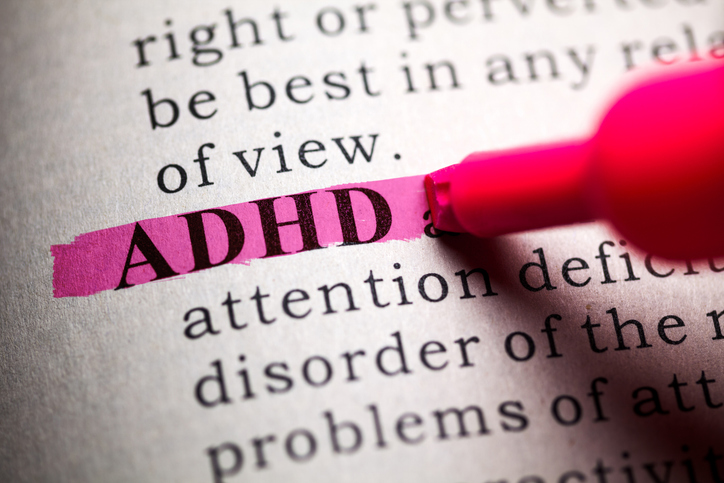
People who have other disorders affecting the development of the nervous system, such as autistic spectrum disorder (autism) Autism spectrum disorders are also more likely to have ADHD than people who don’t. Studies have found common genetic risk factors for ADHD and autism. Environmental factors most strongly associated with ADHD are low birth.

Patient information leaflet
שיני בינה
No. It is thought that between 5 and 40 people out of a hundred are missing one or more third molars. They may not come through for many reasons including genetics (if your parents didn't have them, you probably won't too). Other factors are the size and shape of your jaw, the teeth you already have and how you chew. Sometimes the wisdom tooth.

Patient information leaflet
תסמונת קליינפלטר
Klinefelter's syndrome is a genetic condition that only affects males. Affected males have an extra X chromosome. It is sometimes just called XXY. Between 1 in 500 and 1 in 1,000 boys are born with Klinefelter's syndrome (KS). Many people with KS are not diagnosed until they are adults, and it is believed that up to two thirds may never be.
Patient information leaflet
הקטנת חזה
This leaflet is provided by the British Association of Aesthetic Plastic Surgeons , the professional body responsible for the advancement of education and safety in aesthetic plastic surgery. The size of women's breasts may be determined by several factors, such as inherited genes, body weight and hormonal influences. They can, therefore, be a.
קריאה נוספת והפניות
- Is handedness determined by genetics?; MedlinePlus, National Library of Medicine.
- de Kovel CGF, Francks C. The molecular genetics of hand preference revisited. Sci Rep. 2019 Apr 12;9(1):5986. doi: 10.1038/s41598-019-42515-0. PubMed: 30980028; Free full-text available from PubMed Central: PMC6461639.
- Pfeifer LS, Schmitz J, Papadatou-Pastou M, Peterburs J, Paracchini S, Ocklenburg S. Handedness in twins: meta-analyses. BMC Psychol. 2022 Jan 15;10(1):11. doi: 10.1186/s40359-021-00695-3. PMID: 35033205. Free full-text available from PubMed Central: PMC8760823.
- Richards G, Segal NL. Handedness in twins reared apart: A review of the literature and new data. Neuropsychologia. 2023 Jun 6;184:108523. doi: 10.1016/j.neuropsychologia.2023.108523. Epub 2023 Apr 12. PMID: 37059260.
- Schijven D, Soheili-Nezhad S, Fisher SE, Francks C. Exome-wide analysis implicates rare protein-altering variants in human handedness. Nat Commun. 2024 Apr 2;15(1):2632. doi: 10.1038/s41467-024-46277-w. PMID: 38565598. Free full-text available from PubMed Central: PMC10987538.
- Sha Z, Pepe A, Schijven D, Carrión-Castillo A, Roe JM, Westerhausen R, Joliot M, Fisher SE, Crivello F, Francks C. Handedness and its genetic influences are associated with structural asymmetries of the cerebral cortex in 31,864 individuals. Proc Natl Acad Sci U S A. 2021 Nov 23;118(47):e2113095118. doi: 10.1073/pnas.2113095118. PMID: 34785596. Free full-text available from PubMed Central: PMC8617418.
שתפו את מחשבותיכם או חוויותיכם עם אחרים ב קהילות המטופלים שלנו.
גישה פשוטה לטיפולים ושירותי בריאות אמינים באינטרנט.
Common conditions
Get help with common conditions through the NHS, without a GP appointment.





הירשמו לניוזלטר של פיישנט
המנה השבועית שלך של עצות בריאות ברורות ואמינות - נכתבה כדי לעזור לך להרגיש מעודכן, בטוח ובשליטה.
על ידי הרשמה אתה מקבל את שלנו מדיניות הפרטיות שלנו. באפשרותך לבטל את המנוי בכל עת. לעולם לא נמכור את הנתונים שלך.