
מה תפקיד הלבלב?
נבדק על ידי ד"ר אדריאן בונסול, MBBSנכתב על ידי ד"ר רוג'ר הנדרסון, MBBSפורסם במקור 30 May 2018
עומד בהנחיות העריכה של Patient
- הורדהורד
- שתף
- Language
- דיון
- גרסת שמע
- הוסף למקורות מועדפים בגוגל
הלבלב הוא איבר בבטן העליונה. כימיקלים (אנזימים) המיוצרים על ידי תאים בלבלב עוברים למעי כדי לעזור בעיכול המזון. ההורמונים אינסולין וגלוקגון מיוצרים גם הם בלבלב ועוזרים לווסת את רמת הסוכר בדם.
What is the pancreas?
The pancreas is an organ which is about the size of a hand.
Cross-section of the gut
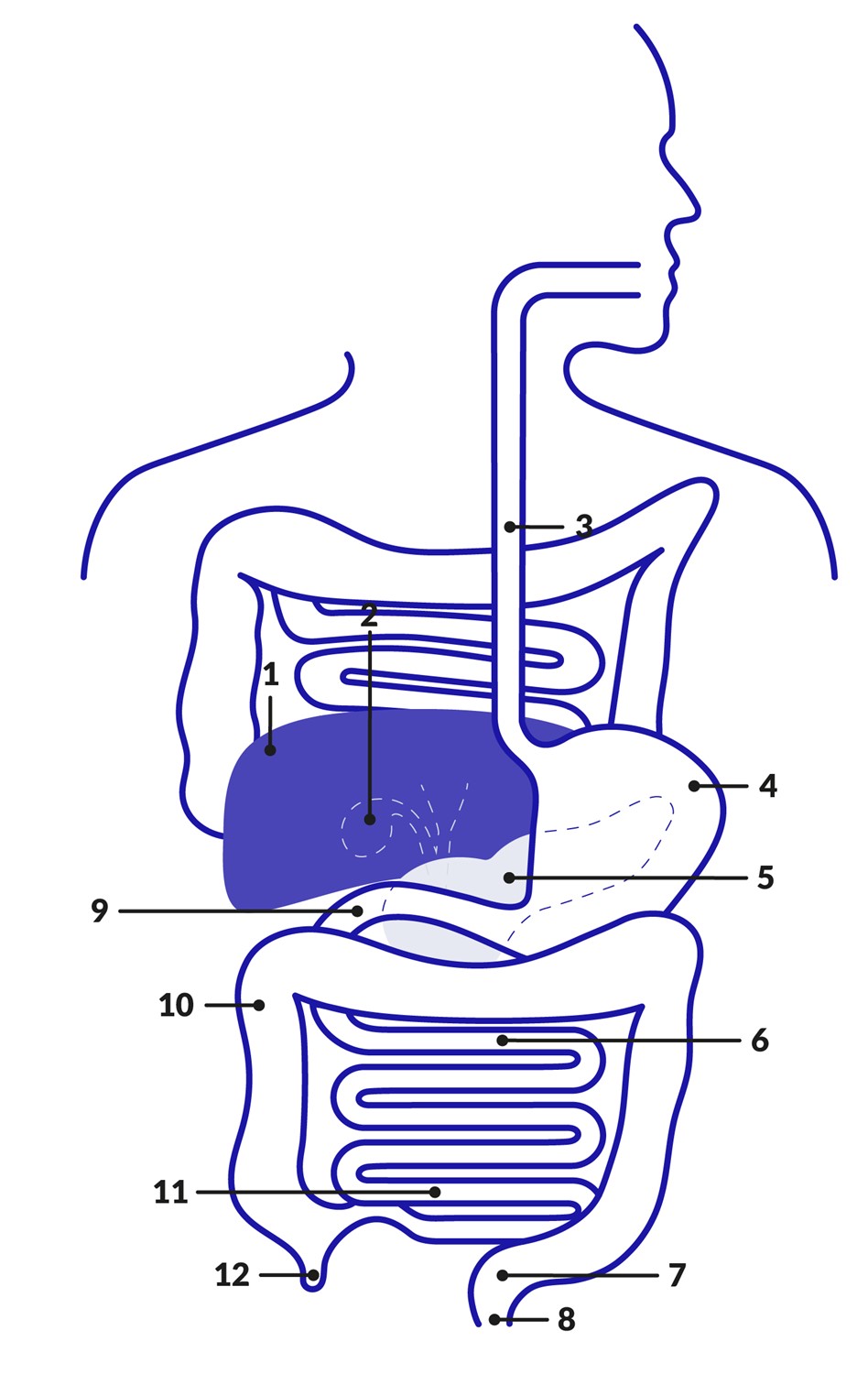
מפתח | |
|---|---|
1. Liver | 7. Rectum |
Where is the pancreas?
The pancreas is in the upper tummy (abdomen) and lies behind the stomach and guts (intestines). The pancreas has a connection via a tube (duct) to the first part of the gut (known as the duodenum) which is connected to the stomach. This connecting duct allows the chemicals (enzymes) produced by the pancreas to pass into the intestines.
מה תפקיד הלבלב?
ללבלב יש שתי פונקציות עיקריות:
To make digestive chemicals (enzymes) which help us to digest food. Enzymes help to speed up your body's processes.
To make hormones which regulate our metabolism. Hormones can be released into the bloodstream. They act as messengers, affecting cells and tissues in distant parts of your body.
About 90% of the pancreas is dedicated to making digestive enzymes. Cells called acinar cells within the pancreas produce these enzymes. The enzymes help to make proteins, fats and carbohydrates smaller. This helps the guts (intestines) to absorb these nutrients. The acinar cells also make a liquid which creates the right conditions for pancreatic enzymes to work. This is also known as pancreatic juice. The enzymes made by the pancreas include:
Pancreatic proteases (such as trypsin and chymotrypsin) - which help to digest proteins.
Pancreatic amylase - which helps to digest sugars (carbohydrates).
Pancreatic lipase - which helps to digest fat.
Approximately 5% of the pancreas makes hormones which help to regulate your body's metabolism. These hormones are made by several different cells which clump together like little islands (islets) within the pancreas. The islets are called islets of Langerhans and there are about one million islets dotted about in an adult pancreas. The hormones made by the cells in the islets of Langerhans within the pancreas include:
Insulin - which helps to regulate sugar levels in the blood.
Glucagon - which works with insulin to keep blood sugar levels balanced.
Somatostatin - which helps to control the release of other hormones.
Gastrin - which aids digestion in the stomach.
How does the pancreas work?
The pancreas
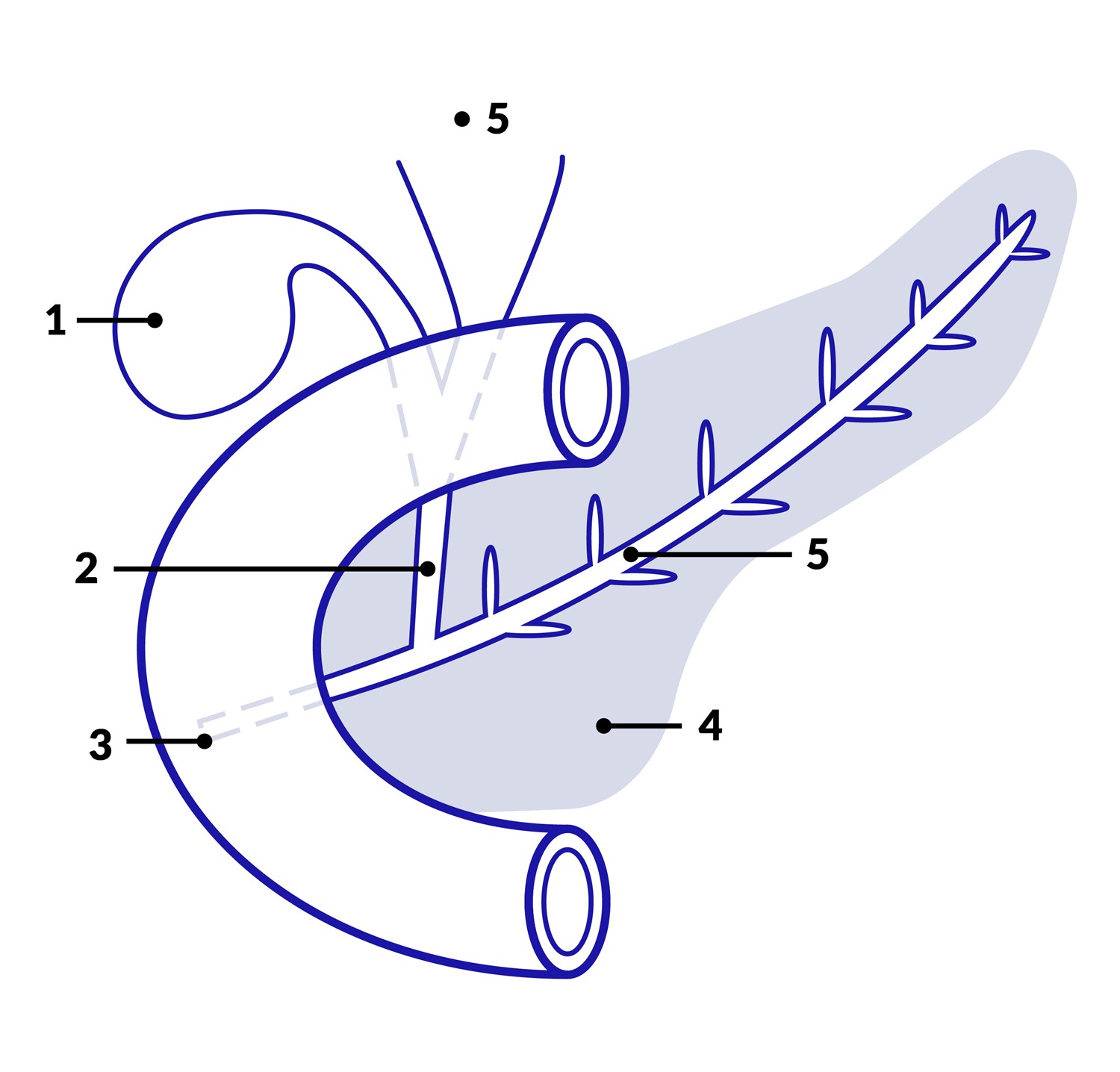
מפתח |
1. Gallbladder |
The digestive chemicals (enzymes) made by the pancreas are controlled by the body's nervous system and its hormones. When the body senses food in the stomach, electrical signals are sent to the pancreas via nerves. These signals stimulate the pancreas to put more enzymes into the pancreatic juice. Acinar cells respond by increasing the amount of enzymes they produce. The enzymes leave the cells and pass into tiny tubes (ducts). These ducts join together like branches of a tree to form the main pancreatic duct. The pancreatic duct drains the enzymes produced into the first part of the gut, known as the duodenum.
The enzymes are made in an inactive form so that they don't digest the pancreas itself. Once they enter the intestines the enzymes are activated and can begin breaking food down.
The main hormones released by the pancreas are insulin and glucagon. These hormones help to regulate the amount of sugar found in the blood and the body’s cells. The body's cells need energy to function. The most readily available form of energy is glucose, a type of sugar. Insulin helps to take glucose from the blood into the cells themselves. This allows the cells to function properly. Glucagon stimulates cells in the liver to release glucose into the blood when levels are low.
The pancreas carefully monitors the level of glucose in the blood. When levels of glucose are high in the blood, cells within the pancreas make insulin. Insulin gets released into the bloodstream where it causes glucose to move into cells. This decreases the amount of glucose in the bloodstream, lowering blood sugar levels. Low blood sugar levels stimulate the pancreas to make glucagon. Glucagon works on cells in the liver, causing the release of glucose. If sugar levels in the blood rise above normal, the pancreas stops releasing glucagon. Insulin may then be released to balance the system again.
This system helps to keep the level of glucose in your blood at a steady level. When you eat, levels of sugar in your blood rise and insulin helps to bring them down. Between meals, when your sugar levels fall, glucagon helps to keep them up.
Some disorders of the pancreas
בחירות המטופלים עבור בריאות עיכול כללית
בריאות מערכת העיכול
איך להיפטר מגזים כלואים: תרופות ביתיות שעובדות
רוב האנשים חווים גזים כלואים מדי פעם. זהו התחושה הנפוחה והלא נוחה בבטן או בחזה שפשוט לא נעלמת. זה בדרך כלל לא מזיק, אבל זה יכול להיות מביך ולפעמים די כואב. החדשות הטובות הן שכמה תרופות ביתיות פשוטות ושינויים באורח החיים יכולים לעשות הבדל גדול.
מאת ג'וש אלדרמן
בריאות מערכת העיכול
מהו גידול יתר של חיידקים במעי הדק (SIBO)?
SIBO (small intestinal bacterial overgrowth) is a common gut condition that's often confused with irritable bowel syndrome (IBS). What are the symptoms of SIBO and how is it treated?
מאת אמברלי דייוויס
אודות המחברצפה בפרופיל המלא

ד"ר רוג'ר הנדרסון, MBBS
רופא כללי, מחבר רפואי
MBBS, LMSSA
ד"ר רוג'ר הנדרסון הוסמך כרופא כללי בשנת 1985 וכותב עבור EMIS מאז תחילת 2013.
אודות המבקרצפה בפרופיל המלא

ד"ר אדריאן בונסול, MBBS
מחבר רפואי
תואר שני (כימיה), דוקטור לרפואה (בהצטיינות), דיפלומה ברפואת ילדים
מאז שנת 2000 אדריאן מועסק ברפואת ילדים דחופה וטיפול נמרץ בסידני, עם עניין מיוחד בטוקסיקולוגיה, טראומה והחייאה.
היסטוריית המאמר
המידע בעמוד זה נבדק על ידי קלינאים מוסמכים.
המאמר זמין גם ב אנגלית, גרמנית, ספרדית, צרפתית, איטלקית, פורטוגזית, הינדי, עברית, ערבית, and שוודית.
30 May 2018 | פורסם במקור
נכתב על ידי:
ד"ר רוג'ר הנדרסון, MBBSנבדק על ידי
ד"ר אדריאן בונסול, MBBS

שאלו, שתפו, התחברו.
עיין בדיונים, שאל שאלות ושתף חוויות במאות נושאים בריאותיים.

מרגיש לא טוב?
הערך את הסימפטומים שלך באינטרנט בחינם
הירשמו לניוזלטר של פיישנט
המנה השבועית שלך של עצות בריאות ברורות ואמינות - נכתבה כדי לעזור לך להרגיש מעודכן, בטוח ובשליטה.
על ידי הרשמה אתה מקבל את שלנו מדיניות הפרטיות שלנו. באפשרותך לבטל את המנוי בכל עת. לעולם לא נמכור את הנתונים שלך.
עוד בבריאות מערכת העיכול
- האם זה יכול להיות אבני מרה?
- מחלת קרוהן בילדים: איך לתמוך בילדך
- צרבת בלילה: איך לשפר את איכות השינה עם צרבת
- כיצד חיידקי המעי משפיעים על מצב הרוח, הריכוז ובריאות המוח
- איך להימנע מבעיות בבטן
- כיצד להתמודד עם גסטרואנטריטיס
- איך להתמודד עם צרבת במהלך הריון
- איך להיפטר מטחורים
- כיצד לטפל בעצירות וצואה שקשה להעביר
- איך לטפל בהרעלת מזון בבית
- האם זה עיכול לקוי או התקף לב?
- צואה - מה נחשב נורמלי?
- מערכת העיכול
- מה המשמעות של דם בצואה שלך
- מה הצואה שלך אומרת עליך?
- מהי הדיאטה הטובה ביותר למחלת קרוהן?
- מה לאכול כשיש לך גסטרואנטריטיס
- מה הקשר בין חרדה לבריאות המעיים?
- אילו מאכלים מעוררים תסמונת המעי הרגיז?
- מדוע חלה עלייה במקרי דלקת כבד בילדים?