Why phones should be banned from the bedroom
Peer reviewed by Dr Laurence KnottLast updated by Dr Laurence KnottLast updated 26 Sept 2017
Meets Patient’s editorial guidelines
- DownloadDownload
- Share
- Language
- Discussion
- Audio Version
- Add to preferred sources on Google
If human evolution goes the way it has over the past few thousand years, it won’t be long before the first few babies are born with mobile phones in their hands. The relationship we have with our phones goes far beyond any reasonable need to establish telephonic communication. The theory is that what we have in our hands are not phones but syringes, ready to inject little packets of dopamine, the ‘pleasure chemical’.
Researchers found that the use of information technology, particularly smart phones, causes chemical changes in the brain similar to those we experience when we drink alcohol, have sex or are given money. The use of smart phones is addictive, especially when we share details of our lives on social media.
Getting a digital dose
So every time we get a like on Facebook, a text message or an email, our dopamine level is given a boost and we feel good. Simon Sinek, author, motivational speaker and marketing consultant, believes this is a particular problem of the millennial generation (those born from 1984) who were brought up with a sense of entitlement. Denied nothing by their parents, they grew up to believe that their every need should be instantly satisfied. Finding the real world was not like that, they needed to find coping strategies to deal with the inevitable drop in self-esteem that followed.
Some used alcohol, some drugs and others turned to their smart phones. There’s nothing like that little ping on your phone notifying you that someone somewhere is making contact.
The theory holds out so far but has its detractors. Every generation has its problems and many believe this is over-generalising. Animal studies suggest that dopamine is not quite the pleasure chemical it was once thought to be.
Nevertheless, whatever neurobiochemical high jinks are going on, the evidence that smart phone use is addictive continues to grow. Studied measuring the part of the brain associated with pleasure, gratification and reward (the mesolimbic system) show that activity does increase whenever we use smart phones, particularly to access social media.
Why is smart phone addiction important?
It’s not as if people have needed organ transplants from smart phone dependency or catch nasty infections from sharing phones. The fact is that smart phone addiction has been shown to damage finances, destroy relationships and prevent people from achieving their full potential in the workplace and in society as a whole.
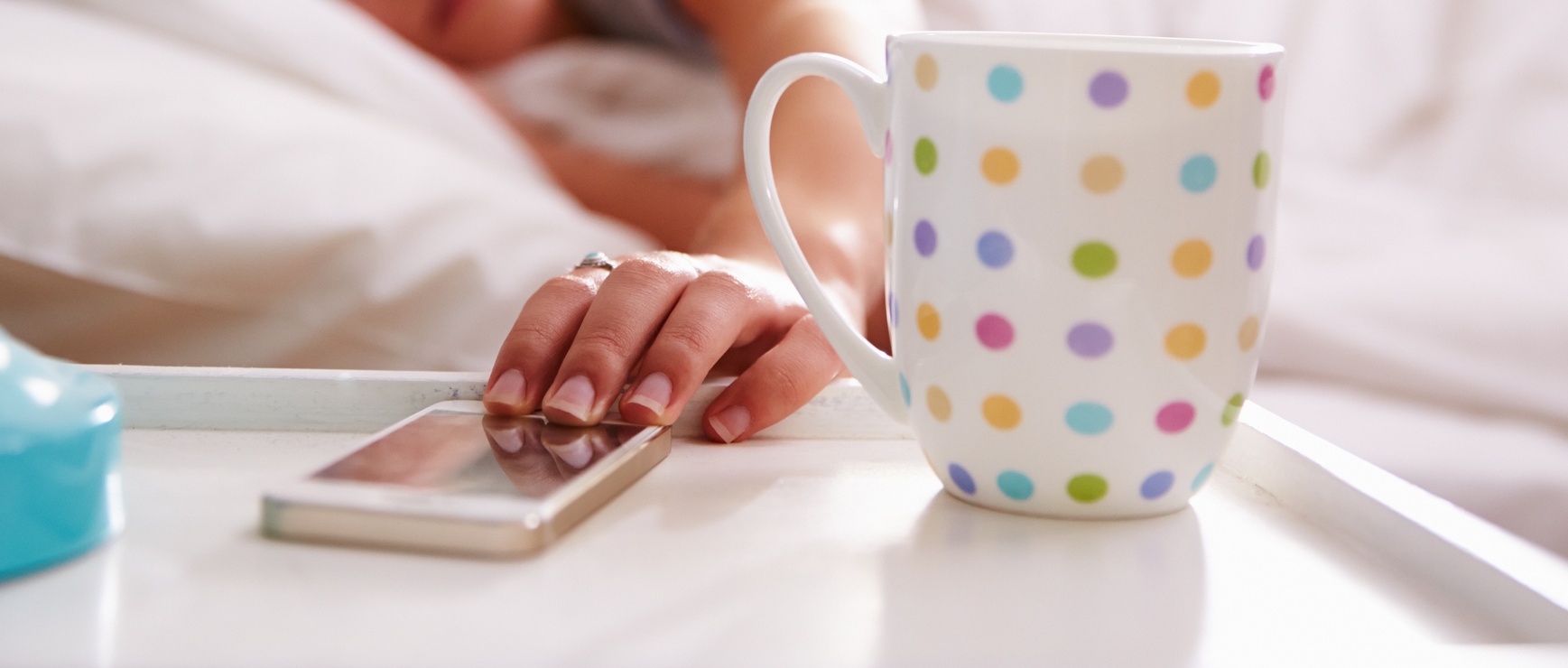
Taking a smart phone into the bedroom raises the problem to a whole new level. Studies suggest that the use of smart phones in the bedroom is associated with a delay in the sleep cycle, so people go to sleep later and wake later. Not good news if you have to get up in the morning.
If it’s your partner who’s taking their mobile phone into the bedroom, it might be worth mentioning that the glow eminating from their side of the bed isn't doing either of you any good.
Like celebrities that hate each other (see British Journal of Gwyneth Paltrow and Madonna) it has long been known that dopamine and melatonin are mutually antagonistic.
Explaining our device vice
Whatever the link between dopamine and addiction, it’s known that levels rise when the mesolimbic system is activated. It’s tempting to suggest that anything which stimulates the mesolimbic system is going to inhibit melatonin production. So the last thing you need is a huge boost of mesolimbic activity before you try to sleep.
There is of course another issue; LED screens. Studies with e-readers showed that exposure to blue light (which looks white but is perversely in the blue spectrum) is known to affect the
levels of melanopsin, a photopigment with many functions, including those associated with sleep.
Taking a smart phone into the bedroom is not in itself harmful. If it’s switched off, and you don’t use it.
But add in the availability and addictive potential of the technology, the chances are that the phone will get switched on sooner or later. Having just closed down your laptop in the living room, your mesolimbic system is already in overdrive. You can’t sleep, you’re bored, and maybe a little bit down after underperforming at work (because you were tired from your lack of sleep the night before). Is anybody still awake? Might as well check out what your Facebook friends in Australia are up to.
So what’s the solution?
It’s simple. Don’t take your smart phone into the bedroom.
This is where the voice of the true addict pipes up. ‘But I charge my phone in the bedroom’. So charge your phone in the living room. ‘Someone might need me in an emergency.’ Be honest. When did anyone last need you at night in an emergency? Best of all, ‘I use my phone as an alarm clock’. So buy an alarm clock. You can get them for a fiver - just don't choose one with a huge glowing screen if you actually want to sleep.
I’m not one of those doctors who’s under the illusion that just because advice is good, it will be taken. There will be people who would rather lose an eye than an iPhone.
In that case, you’re in a damage limitation scenario. Apps which enable your phone to adjust to ambient lighting are available, some shipped free with the phone. The theory is that reduced LED lighting will maintain your melanopsis levels, and people do find them helpful.
For those who genuinely have to take emergency phone calls at night there are apps which unplug you from the internet whilst keeping the phone function working, and ‘dumb’ retro-phones which have no internet connection at all.
Patient picks for Sleep and insomnia

Healthy living
How to stop snoring ruining your sleep
With two in five of us snoring, chances are you're either the one making the noise or the one lying awake listening to it. For some, snoring is an occasional annoyance after a few drinks or a heavy cold. For others, it's a nightly battle that leaves both partners exhausted and can even strain relationships. Fortunately, snoring isn't something you simply have to put up with. From quick fixes that may help immediately to longer-term solutions that address the underlying cause, there are plenty of ways to sleep more soundly.
by Heather Ainsworth
Healthy living
What causes sleepwalking and how can you stop?
While sleepwalking can be something we joke about, it is a serious issue for many people. Sleepwalking can affect all aspects of someone's life, from their energy levels to their relationships. It is thought that sleepwalking is more common in children, but adults can and do suffer. However, sleepwalking can be managed.
by Emily Jane Bashforth
About the authorView full bio

Dr Laurence Knott
General Practitioner, Medical Author
BSc (Hons) Biochemistry, MBBS
Dr Laurence Knott qualified in 1973 and has had extensive experience as a General Practitioner.
About the reviewerView full bio
Dr Laurence Knott
General Practitioner, Medical Author
BSc (Hons) Biochemistry, MBBS
Dr Laurence Knott qualified in 1973 and has had extensive experience as a General Practitioner.
Article history
The information on this page is peer reviewed by qualified clinicians.
Article also available in English, German, Spanish, French, Italian, Portuguese, Hindi, Hebrew, Arabic, and Swedish.
26 Sept 2017 | Latest version
Join the conversation
Share your thoughts or experiences with others in our patient communities.

Ask, share, connect.
Browse discussions, ask questions, and share experiences across hundreds of health topics.

Feeling unwell?
Assess your symptoms online for free
Sign up to the Patient newsletter
Your weekly dose of clear, trustworthy health advice - written to help you feel informed, confident and in control.
By subscribing you accept our Privacy Policy. You can unsubscribe at any time. We never sell your data.
More in healthy living
- Building healthy boundaries for a fresh start to the new year
- Can we trust BMI charts for kids?
- Can you lose weight and be body positive?
- Diabetes burnout - how mindfulness can support your mental wellbeing
- Does stress cause weight gain?
- How does Wegovy work for weight loss?
- How to improve your self-esteem and be kinder to yourself
- How to look after your mental health this winter
- How to stop ‘mum guilt’ from impacting your mental health
- Is Pilates good for weight loss?
- Is your exercise routine giving you acne?
- LGBTQ+ travel: how to stay safe
- Spotting depression in your partner
- The best resistance band workouts to build muscle
- Tips for a healthier online life
- What are sleep trackers and do they work?
- What are the risks of alcohol as you get older?
- What is Tai Chi Walking - and is it worth a try?
- Young people who seek mental health support forced to cope on their own