17-beta hydroxysteroid dehydrogenase 3 deficiency
עודכן לאחרונה 31 Jan 2025
עומד בהנחיות העריכה של Patient
- הורדהורד
- שתף
- Language
- דיון
- Ask Patient
- גרסת שמע
- הוסף למקורות מועדפים בגוגל
17-beta hydroxysteroid dehydrogenase 3 deficiency is a condition that affects male sexual development. People with this condition are genetically male, with one X and one Y chromosome in each cell, and they have male gonads (testes). Their bodies, however, do not produce enough of a male sex hormone (androgen) called testosterone. Testosterone has a critical role in male sexual development, and a shortage of this hormone disrupts the formation of the external sex organs before birth.
בחירות וידאו עבור Genetic conditionsספריית סרטונים
תיאור
17-beta hydroxysteroid dehydrogenase 3 deficiency is a condition that affects male sexual development. People with this condition are genetically male, with one X and one Y chromosome in each cell, and they have male gonads (testes). Their bodies, however, do not produce enough of a male sex hormone (androgen) called testosterone. Testosterone has a critical role in male sexual development, and a shortage of this hormone disrupts the formation of the external sex organs before birth.
Most people with 17-beta hydroxysteroid dehydrogenase 3 deficiency are born with external genitalia that appear female. In some cases, the external genitalia do not look clearly male or clearly female. Still other affected infants have genitalia that appear predominantly male, often with an unusually small penis (micropenis) or the urethra opening on the underside of the penis (hypospadias).
During puberty, people with this condition develop some male secondary sex characteristics, such as increased muscle mass, deepening of the voice, and development of male pattern facial and body hair. In addition to these changes typical of adolescent boys, some affected individuals may also experience breast enlargement (gynecomastia). Despite having testes, people with this disorder are generally unable to father children (infertile).
Inheritance patterns
The source lists the following possible inheritance patterns: Autosomal recessive. More than one pattern can apply in different cases.
Related genes
Other names
17-beta hydroxysteroid dehydrogenase III deficiency
17-ketosteroid reductase deficiency of testis
17-KSR deficiency
Neutral 17-beta-hydroxysteroid oxidoreductase deficiency
Pseudohermaphroditism, male, with gynecomastia
Testosterone 17-beta-dehydrogenase deficiency
Related patient information and medicines
Patient information leaflet
תלסמיה
מהו thalassaemia. Thalassaemia is an inherited (genetic) condition affecting the blood. There are different types of thalassaemia. Depending on which type you have, thalassaemia may cause no illness at all, or may be a serious lifelong condition requiring treatment. What causes thalassaemia. The cause is an inherited (genetic) change,.

Patient information leaflet
בדיקת דם ליילוד
Mothers of all newborn babies are offered testing for certain rare but serious health conditions by testing blood taken from the baby's heel. ... Medium-chain acyl-Co-A dehydrogenase deficiency (MCADD)- this is a very rare, but potentially life-threatening, inherited disorder, where fat cannot be broken down by the body as well as usual. Babies.
Patient information leaflet
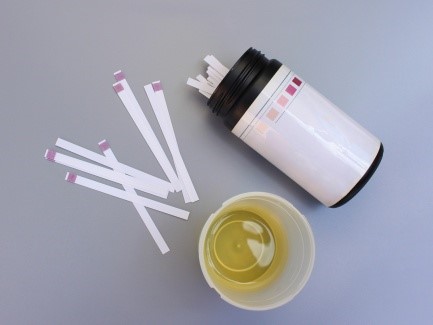
קטונים בשתן
High levels of ketones in your body can cause: Tummy (abdominal) pain. Feeling sick (nausea). Being sick (vomiting). Diarrhoea. The ketones that most often appear in the urine when fat instead of glucose for energy is used are called acetoacetate and beta-hydroxybutyric acid. What are the causes of ketones in urine. The causes of high levels of.
Patient information leaflet
האם אני יכול לקחת ציפורן השטן וויטמין C יחד?
Kidney stones (oxalate) High doses of vitamin C can increase the amount of oxalate in your urine, significantly raising the risk of developing kidney stones, especially if you have a history of them. G6PD deficiency If you have glucose-6-phosphate dehydrogenase (G6PD) deficiency, high doses of vitamin C can cause your red blood cells to break down.
Patient information leaflet
האם אני יכול לקחת אדקל-D3 ואומגה-3 יחד?
יש no known harmful interaction between Adcal-D3 and Omega-3 (fish oil) supplements. In fact, taking them together may be slightly beneficial for bone health. Why this happens Adcal-D3 contains calcium and vitamin D3. Omega-3 fatty acids do not interfere with how the body absorbs or processes calcium or vitamin D. Some studies suggest that.

Patient information leaflet
טלוגן אפלוביום
Telogen effluvium (hair loss) מטופל? a condition where more than normal amounts of hair fall out. There is a general 'thinning' of the hair. Unlike some other hair and scalp conditions, it is temporary and the hair growth usually recovers. What is telogen effluvium. Telogen effluvium is rapid hair loss that is caused by stress or a change to your.
קריאה נוספת והפניות
- 17-beta hydroxysteroid dehydrogenase 3 deficiency; MedlinePlus, National Library of Medicine.
- Ben Rhouma B, Kallabi F, Mahfoudh N, Ben Mahmoud A, Engeli RT, Kamoun H, Keskes L, Odermatt A, Belguith N. Novel cases of Tunisian patients with mutations in the gene encoding 17beta-hydroxysteroid dehydrogenase type 3 and a founder effect. J Steroid Biochem Mol Biol. 2017 Jan;165(Pt A):86-94. doi: 10.1016/j.jsbmb.2016.03.007. Epub 2016 Mar 5.
- Bertelloni S, Balsamo A, Giordani L, Fischetto R, Russo G, Delvecchio M, Gennari M, Nicoletti A, Maggio MC, Concolino D, Cavallo L, Cicognani A, Chiumello G, Hiort O, Baroncelli GI, Faienza MF. 17beta-Hydroxysteroid dehydrogenase-3 deficiency: from pregnancy to adolescence. J Endocrinol Invest. 2009 Sep;32(8):666-70. doi: 10.1007/BF03345738. Epub 2009 May 12.
- Castro CC, Guaragna-Filho G, Calais FL, Coeli FB, Leal IR, Cavalcante-Junior EF, Monlleo IL, Pereira SR, Silva RB, Gabiatti JR, Marques-de-Faria AP, Maciel-Guerra AT, Mello MP, Guerra-Junior G. Clinical and molecular spectrum of patients with 17beta-hydroxysteroid dehydrogenase type 3 (17-beta-HSD3) deficiency. Arq Bras Endocrinol Metabol. 2012 Nov;56(8):533-9. doi: 10.1590/s0004-27302012000800012.
- Engeli RT, Tsachaki M, Hassan HA, Sager CP, Essawi ML, Gad YZ, Kamel AK, Mazen I, Odermatt A. Biochemical Analysis of Four Missense Mutations in the HSD17B3 Gene Associated With 46,XY Disorders of Sex Development in Egyptian Patients. J Sex Med. 2017 Sep;14(9):1165-1174. doi: 10.1016/j.jsxm.2017.07.006.
- Faienza MF, Giordani L, Delvecchio M, Cavallo L. Clinical, endocrine, and molecular findings in 17beta-hydroxysteroid dehydrogenase type 3 deficiency. J Endocrinol Invest. 2008 Jan;31(1):85-91. doi: 10.1007/BF03345572.
- Galdiero M, Vitale P, Simeoli C, Afeltra L, Melis D, Alviggi C, Cariati F, Lo Calzo F, Di Somma C, Colao A, Pivonello R. The 17beta-hydroxysteroid dehydrogenase type 3 deficiency: a case report of an 18-year patient and review of the literature. Minerva Endocrinol. 2013 Mar;38(1):113-22.
- Hassan HA, Mazen I, Gad YZ, Ali OS, Mekkawy M, Essawi ML. Mutational Profile of 10 Afflicted Egyptian Families with 17-beta-HSD-3 Deficiency. Sex Dev. 2016;10(2):66-73. doi: 10.1159/000445311. Epub 2016 Apr 14.
- Mendonca BB, Gomes NL, Costa EM, Inacio M, Martin RM, Nishi MY, Carvalho FM, Tibor FD, Domenice S. 46,XY disorder of sex development (DSD) due to 17beta-hydroxysteroid dehydrogenase type 3 deficiency. J Steroid Biochem Mol Biol. 2017 Jan;165(Pt A):79-85. doi: 10.1016/j.jsbmb.2016.05.002. Epub 2016 May 6.
- Yu B, Liu Z, Mao J, Wang X, Zheng J, Xiong S, Cui M, Ma W, Huang Q, Xu H, Huang B, Nie M, Wu X. Novel mutations of HSD17B3 in three Chinese patients with 46,XY Disorders of Sex Development. Steroids. 2017 Oct;126:1-6. doi: 10.1016/j.steroids.2017.07.009. Epub 2017 Aug 1.
שתפו את מחשבותיכם או חוויותיכם עם אחרים ב קהילות המטופלים שלנו.
גישה פשוטה לטיפולים ושירותי בריאות אמינים באינטרנט.
Common conditions
Get help with common conditions through the NHS, without a GP appointment.





הירשמו לניוזלטר של פיישנט
המנה השבועית שלך של עצות בריאות ברורות ואמינות - נכתבה כדי לעזור לך להרגיש מעודכן, בטוח ובשליטה.
על ידי הרשמה אתה מקבל את שלנו מדיניות הפרטיות שלנו. באפשרותך לבטל את המנוי בכל עת. לעולם לא נמכור את הנתונים שלך.