Congenital dyserythropoietic anaemia
עודכן לאחרונה 4 במרץ 2025
עומד בהנחיות העריכה של Patient
- הורדהורד
- שתף
- Language
- דיון
- Ask Patient
- גרסת שמע
- הוסף למקורות מועדפים בגוגל
Congenital dyserythropoietic anaemia (CDA) is a rare group of inherited blood disorders that affects the development of red blood cells. In people with CDA, immature red blood cells do not develop into normal, mature cells. As a result, affected individuals have a significant reduction in the number of functional red blood cells (anaemia). The term "dyserythropoietic" refers to the abnormal red blood cell shape that occurs in people with this condition. People with CDA typically have mild to moderate anaemia. In some cases, affected individuals have severe anaemia that may require frequent blood transfusions to replenish the supply of red blood cells.
תיאור
Congenital dyserythropoietic anaemia (CDA) is a rare group of inherited blood disorders that affects the development of red blood cells. In people with CDA, immature red blood cells do not develop into normal, mature cells. As a result, affected individuals have a significant reduction in the number of functional red blood cells (anaemia). The term "dyserythropoietic" refers to the abnormal red blood cell shape that occurs in people with this condition. People with CDA typically have mild to moderate anaemia. In some cases, affected individuals have severe anaemia that may require frequent blood transfusions to replenish the supply of red blood cells.
The signs and symptoms of CDA can include tiredness (fatigue), weakness, yellowing of the skin and eyes (jaundice), and an enlarged liver and spleen (hepatosplenomegaly). CDA also causes the body to absorb too much iron (iron overload), which can damage tissues and organs.
There are multiple types of CDA. Each type has a different genetic cause and distinct but overlapping patterns of signs and symptoms.
CDA type I is characterised by moderate to severe anaemia that typically begins in childhood or adolescence, although the condition can be detected before birth in some cases. In addition to the signs and symptoms common to all types of CDA, individuals with CDA type I can have skeletal issues, including short stature or abnormalities of the fingers or toes.
The anaemia associated with CDA type II can range from mild to severe, and it usually develops in adolescence or early adulthood. Individuals with CDA type II may develop hard deposits in the gallbladder called gallstones in addition to the usual signs and symptoms of CDA.
CDA type III can result in anaemia that ranges from mild to severe, depending on the genetic cause, and typically begins in infancy or childhood. Some people with CDA type III do not receive a diagnosis until later in life because they have very mild symptoms. In some cases, individuals with CDA type III develop a blood disorder known as monoclonal gammopathy, which can lead to a cancer of white blood cells (multiple myeloma). Some people with CDA type III have eye abnormalities that can cause vision impairment.
CDA type IV is characterised by moderate to severe anaemia that typically develops early in life, although the condition can be detected before birth in some cases. Affected individuals can have extensive swelling caused by fluid accumulation before birth (hydrops fetalis). In addition to the signs and symptoms that are common to all types of CDA, individuals with CDA type IV often have short stature.
Inheritance patterns
The source lists the following possible inheritance patterns: Autosomal recessive; Autosomal dominant+1 affected parent. More than one pattern can apply in different cases.
Related genes
Other names
Anaemia, dyserythropoietic, congenital
CDA
congenital dyserythropoietic anaemia
Related patient information and medicines
Patient information leaflet
ספרוציטוזיס תורשתי
Hereditary spherocytosis (HS) הוא inherited condition of red blood cells. The disease can be mild and go unrecognised in some people. What is hereditary spherocytosis. Hereditary spherocytosis (HS) הוא inherited condition that affects your red blood cells. The red blood cells are those that carry oxygen around the body. What are the features.

Patient information leaflet
תכונת תאי מגל
If you inherit a gene from one of your parents, called a sickle cell gene, you have a condition called sickle cell trait. If you inherit a sickle cell gene from both parents, you get a double dose of... תכונת תאי מגל means having one gene for a condition called אנמיה חרמשית (SCD) Sickle cell disease. Sickle cell blood test Sickle cell.
Patient information leaflet
פורפיריה
Erythropoietic protoporphyria. Congenital erythropoietic porphyria (also known as Günther's disease). Mixed porphyrias This type of porphyria can lead to symptoms of both acute porphyria and cutaneous porphyria. The body then uses some of the excess stored iron to make new red b... Congenital erythropoietic porphyria This is a very rare form of.
Patient information leaflet
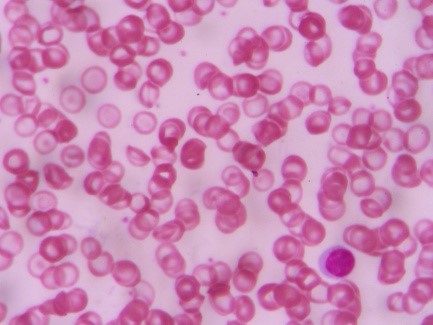
מחלת תאי מגל
Sickle cell trait is not the same as sickle cell disease. Sickle cell disease Sickle cell disease (SCD) is a serious group of conditions which are inherited (genetic). It affects the red blood cells in the blood. Sickle cell anaemia is the name of a specific form of אנמיה חרמשית in which there are two sickle cell genes (see below). What is.

Patient information leaflet
אנמיה
אנמיה means that you have fewer red blood cells than normal or you have less haemoglobin than תינוקות רגילים in each red blood cell. In either case, a reduced amount of oxygen is carried around in the bloodstream. Anaemia types and causes Iron-deficiency anaemia Lack of iron is the most common type of anaemia in the UK. This is called iron-deficiency.
Patient information leaflet
אנמיה מחוסר ברזל
Iron-deficiency anaemia is a common type of anaemia that is caused by a lack of iron. Symptoms include pale skin and lack of energy. For example, there is an increased risk of having a low-birth-weight baby, preterm (premature) delivery and postnatal depression. Low iron reserves in the baby may also lead to anaemia in the newborn baby. Causes of.
קריאה נוספת והפניות
- Congenital dyserythropoietic anaemia; MedlinePlus, National Library of Medicine.
- Denecke J, Marquardt T. Congenital dyserythropoietic anemia type II (CDAII/HEMPAS): where are we now? Biochim Biophys Acta. 2009 Sep;1792(9):915-20. doi: 10.1016/j.bbadis.2008.12.005. Epub 2008 Dec 25.
- Dgany O, Avidan N, Delaunay J, Krasnov T, Shalmon L, Shalev H, Eidelitz-Markus T, Kapelushnik J, Cattan D, Pariente A, Tulliez M, Cretien A, Schischmanoff PO, Iolascon A, Fibach E, Koren A, Rossler J, Le Merrer M, Yaniv I, Zaizov R, Ben-Asher E, Olender T, Lancet D, Beckmann JS, Tamary H. Congenital dyserythropoietic anemia type I is caused by mutations in codanin-1. Am J Hum Genet. 2002 Dec;71(6):1467-74. doi: 10.1086/344781. Epub 2002 Nov 14.
- Heimpel H, Anselstetter V, Chrobak L, Denecke J, Einsiedler B, Gallmeier K, Griesshammer A, Marquardt T, Janka-Schaub G, Kron M, Kohne E. Congenital dyserythropoietic anemia type II: epidemiology, clinical appearance, and prognosis based on long-term observation. Blood. 2003 Dec 15;102(13):4576-81. doi: 10.1182/blood-2003-02-0613. Epub 2003 Aug 21.
- Heimpel H, Schwarz K, Ebnother M, Goede JS, Heydrich D, Kamp T, Plaumann L, Rath B, Roessler J, Schildknecht O, Schmid M, Wuillemin W, Einsiedler B, Leichtle R, Tamary H, Kohne E. Congenital dyserythropoietic anemia type I (CDA I): molecular genetics, clinical appearance, and prognosis based on long-term observation. Blood. 2006 Jan 1;107(1):334-40. doi: 10.1182/blood-2005-01-0421. Epub 2005 Sep 1.
- Heimpel H. Congenital dyserythropoietic anemias: epidemiology, clinical significance, and progress in understanding their pathogenesis. Ann Hematol. 2004 Oct;83(10):613-21. doi: 10.1007/s00277-004-0892-5. Epub 2004 Jul 20.
- Iolascon A, Andolfo I, Russo R. Congenital dyserythropoietic anemias. Blood. 2020 Sep 10;136(11):1274-1283. doi: 10.1182/blood.2019000948.
- Olijnik AA, Roy NBA, Scott C, Marsh JA, Brown J, Lauschke K, Ask K, Roberts N, Downes DJ, Brolih S, Johnson E, Xella B, Proven M, Hipkiss R, Ryan K, Frisk P, Makk J, Stattin EM, Sadasivam N, McIlwaine L, Hill QA, Renella R, Hughes JR, Gibbons RJ, Groth A, McHugh PJ, Higgs DR, Buckle VJ, Babbs C. Genetic and functional insights into CDA-I prevalence and pathogenesis. J Med Genet. 2021 Mar;58(3):185-195. doi: 10.1136/jmedgenet-2020-106880. Epub 2020 Jun 9.
- Renella R, Wood WG. The congenital dyserythropoietic anemias. Hematol Oncol Clin North Am. 2009 Apr;23(2):283-306. doi: 10.1016/j.hoc.2009.01.010.
- Russo R, Iolascon A, Andolfo I, Marra R, Rosato BE. Updates on clinical and laboratory aspects of hereditary dyserythropoietic anemias. Int J Lab Hematol. 2024 Aug;46(4):595-605. doi: 10.1111/ijlh.14307. Epub 2024 May 15.
- Russo R, Marra R, Andolfo I, De Rosa G, Rosato BE, Manna F, Gambale A, Raia M, Unal S, Barella S, Iolascon A. Characterization of Two Cases of Congenital Dyserythropoietic Anemia Type I Shed Light on the Uncharacterized C15orf41 Protein. Front Physiol. 2019 May 22;10:621. doi: 10.3389/fphys.2019.00621. eCollection 2019.
- Sandstrom H, Wahlin A. Congenital dyserythropoietic anemia type III. Haematologica. 2000 Jul;85(7):753-7.
- Schwarz K, Iolascon A, Verissimo F, Trede NS, Horsley W, Chen W, Paw BH, Hopfner KP, Holzmann K, Russo R, Esposito MR, Spano D, De Falco L, Heinrich K, Joggerst B, Rojewski MT, Perrotta S, Denecke J, Pannicke U, Delaunay J, Pepperkok R, Heimpel H. Mutations affecting the secretory COPII coat component SEC23B cause congenital dyserythropoietic anemia type II. Nat Genet. 2009 Aug;41(8):936-40. doi: 10.1038/ng.405. Epub 2009 Jun 28.
- Tamary H, Dgany O, Proust A, Krasnov T, Avidan N, Eidelitz-Markus T, Tchernia G, Genevieve D, Cormier-Daire V, Bader-Meunier B, Ferrero-Vacher C, Munzer M, Gruppo R, Fibach E, Konen O, Yaniv I, Delaunay J. Clinical and molecular variability in congenital dyserythropoietic anaemia type I. Br J Haematol. 2005 Aug;130(4):628-34. doi: 10.1111/j.1365-2141.2005.05642.x.
- Tamary H, Dgany O. Congenital Dyserythropoietic Anemia Type I. 2009 Apr 21 [updated 2021 Jul 29]. In: Adam MP, Bick S, Mirzaa GM, Wallace SE, Amemiya A, editors. GeneReviews(R) [Internet]. Seattle (WA): University of Washington, Seattle; 1993-2026. Available from http://www.ncbi.nlm.nih.gov/books/NBK5313/
- Wickramasinghe SN, Wood WG. Advances in the understanding of the congenital dyserythropoietic anaemias. Br J Haematol. 2005 Nov;131(4):431-46. doi: 10.1111/j.1365-2141.2005.05757.x.
שתפו את מחשבותיכם או חוויותיכם עם אחרים ב קהילות המטופלים שלנו.
גישה פשוטה לטיפולים ושירותי בריאות אמינים באינטרנט.
Common conditions
Get help with common conditions through the NHS, without a GP appointment.





הירשמו לניוזלטר של פיישנט
המנה השבועית שלך של עצות בריאות ברורות ואמינות - נכתבה כדי לעזור לך להרגיש מעודכן, בטוח ובשליטה.
על ידי הרשמה אתה מקבל את שלנו מדיניות הפרטיות שלנו. באפשרותך לבטל את המנוי בכל עת. לעולם לא נמכור את הנתונים שלך.