
Sleep diary
Peer reviewed by Dr Hayley Willacy, FRCGP Last updated by Danny ChadburnLast updated 11 Sept 2017
Meets Patient’s editorial guidelines
- DownloadDownload
- Share
- Language
- Discussion
- Audio Version
- Add to preferred sources on Google
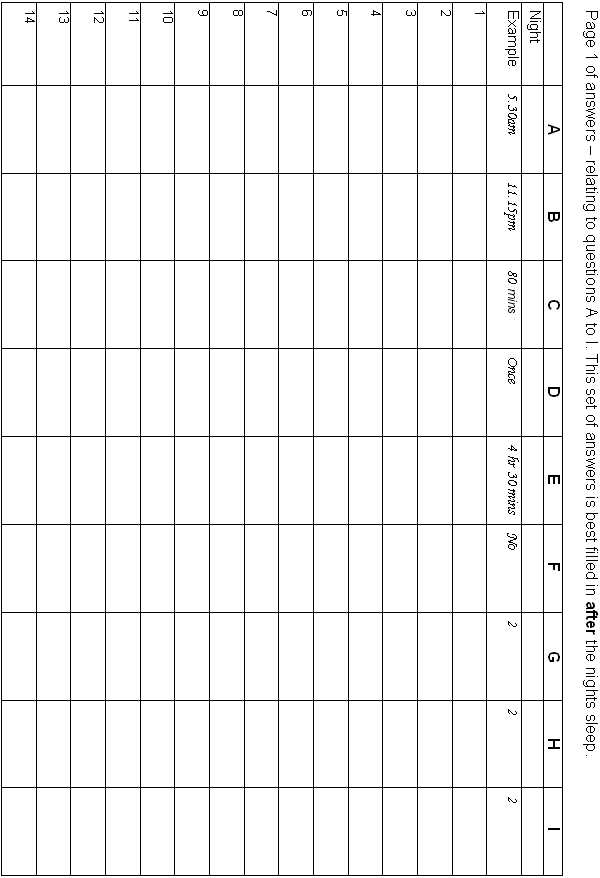
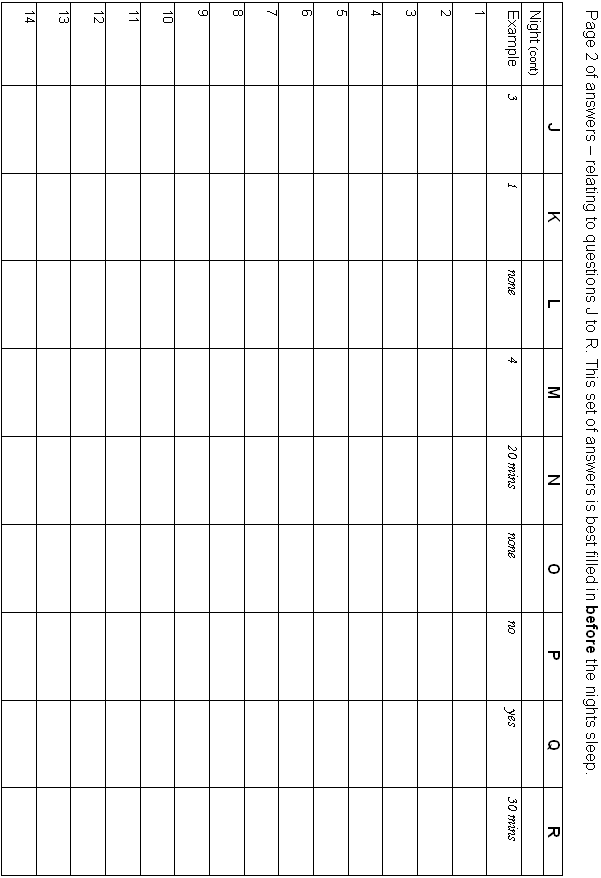
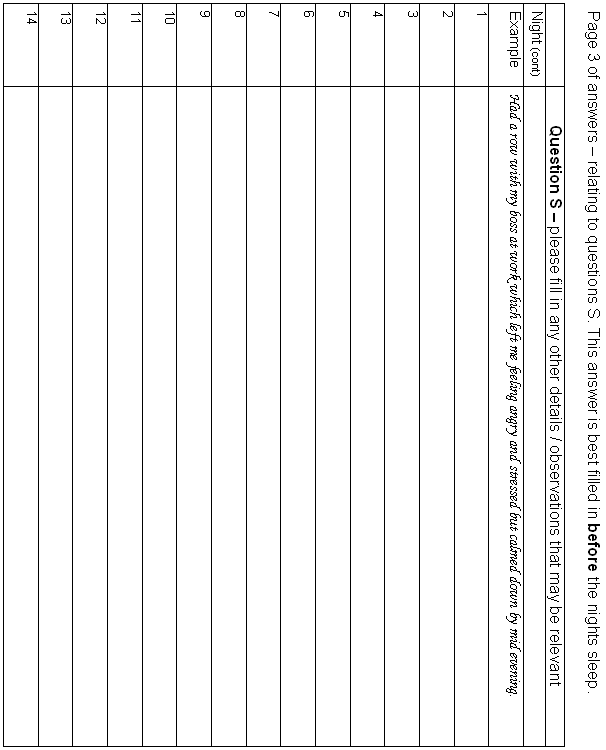
Please answer questions A to S each day over the next two weeks. There should be three sheets of paper for answers to be written in boxes. The aim is to measure the pattern and quality of your sleep, and factors that may affect your sleep over the course of two weeks.
Questions A to I relate to the night's sleep. Try to answer these soon after getting up each day when the details of the previous night are fresh in your mind.
Questions J to S relate to to the day leading up to the night's sleep. Try to answer these at least an hour before you go to bed when the details are fresh in your mind.
A. What time did you wake up this morning?
B. What time did you go to bed last night?
C. About how long did it take to first fall asleep? (Record in minutes - for example, 70 mins.)
D. How many times did you wake up during the night (enough to be fully aware)?
E. How long did you sleep last night in total? (In hours and minutes - for example, 4 hr 30 mins.)
F. Did you take any sleeping tablets last night to help you sleep?
G. How generally well do you feel today? Record on a scale 1-4. 1 - not well at all. 2 - just OK. 3 - fine. 4 - very well.
H. How energetic do you feel today? Record on a scale 1-4. 1 - lethargic. 2 - slow but OK. 3 - fine. 4 - very energetic.
I. How enjoyable was your sleep last night? Record on a scale 1-4. 1 - not at all. 2 - just OK. 3 - fine. 4 - very good.
J. How many cups of caffeine drinks (tea, coffee, cola, etc) did you have before 5 pm?
K. How many cups of caffeine drinks (tea, coffee, cola, etc) did you have after 5 pm?
L. How many units of alcohol did you have before 5 pm? One unit of alcohol is about equal to: half a pint of ordinary-strength beer/lager, or a small pub measure (25 ml) of spirits, or a standard pub measure (50 ml) of sherry or port, or a small glass of ordinary-strength wine.
M. How many units of alcohol did you have after 5 pm?
N. How much moderate or vigorous physical activity/exercise did you do before 9 pm? (Record in minutes - for example, 40 mins.) Moderate physical activity/exercise includes brisk walking, jogging, dancing, swimming, heavy DIY, gardening, etc.
O. How much moderate or vigorous physical activity/exercise did you do after 9 pm?
P. Did you take any street drugs (cocaine, amfetamines, heroin, etc)? Yes/No. If yes, write down which one(s).
Q. Did you have any naps during the day or evening? Yes/No.
R. If you did nap, how long in total were the naps? Record in minutes.
S. Fill in any other details that may be relevant. For example, if you were particularly stressed, anxious, depressed or ill.
sleep diary questions 1
Sleep diary question 2
Sleep diary questions 3
Patient picks for Sleep and insomnia
Healthy living
Good sleep matters: it isn't just about clocking hours
Healthy sleep isn't just about quantity, getting enough quality sleep is essential for your overall well-being - and it plays a vital role in your heart health too. We look at the research which shows how your sleep can influence your cardiovascular and metabolic health.
by Lawrence Higgins
Healthy living
How to sleep better
Insomnia is very common - with at least 1 in 3 people having problems sleeping. But simple changes can make a difference to your ability to sleep well. So how do you and your pillow become friends again?
by Amberley Davis
About the author

Danny Chadburn
Head of Content
Danny was the previous Head of Content at Patient.
About the reviewerView full bio

Dr Hayley Willacy, FRCGP
General Practitioner, Medical Author
MBChB (1992), DRCOG, DFFP, MRCOG (Part 1) MRCGP (2007), DFSRH (2013), MSc - medical education (2020)
Dr Hayley Willacy was an NHS GP working in northwest England, who retired from clinical practice in 2022 after 30 years.
Article history
The information on this page is peer reviewed by qualified clinicians.
Article also available in English, German, Spanish, French, Italian, Portuguese, Hindi, Hebrew, Arabic, and Swedish.
11 Sept 2017 | Latest version
Join the conversation
Share your thoughts or experiences with others in our patient communities.

Ask, share, connect.
Browse discussions, ask questions, and share experiences across hundreds of health topics.

Feeling unwell?
Assess your symptoms online for free
Sign up to the Patient newsletter
Your weekly dose of clear, trustworthy health advice - written to help you feel informed, confident and in control.
By subscribing you accept our Privacy Policy. You can unsubscribe at any time. We never sell your data.
More in healthy living
- 5 best Dry January apps for 2024
- 6 health benefits of swimming
- Are dance workouts good for keeping fit?
- Can we trust BMI charts for kids?
- Can you blame your weight on your genes?
- Does alcohol cause cancer?
- HIIT for weight loss: how does it compare to traditional cardio?
- HIIT or weights: which is best for weight loss?
- How gut bacteria affect mood, focus and brain health
- How to deal with stress through exercise
- How to lower your BMI and lose weight healthily
- Is running bad for your knees?
- Should you 'come out' to your doctor?
- Size matters: why our oversized portions are contributing to the obesity crisis
- Trouble sleeping? The culprit may be something you ate
- Weekend workouts might be enough for your health
- What are the long-term benefits of exercise?
- What to do if your weight is getting you down
- Why does drinking alcohol affect your sleep?
- Why you don't need to detox