
9 סימנים לרמות טסטוסטרון נמוכות אצל גברים
נבדק על ידי Dr Colin Tidy, MRCGPנכתב על ידי Heather Ainsworthפורסם במקור 24 Nov 2025
עומד בהנחיות העריכה של Patient
- הורדהורד
- שתף
- Language
- דיון
- Ask Patient
- גרסת שמע
- הוסף למקורות מועדפים בגוגל
If you’ve been feeling unusually tired, moody, or losing interest in things you used to enjoy, low testosterone could be the reason - and it's more common than you think.
Explore testosterone treatment options
קבלו ייעוץ רפואי מקצועי בנוחות של ביתכם. השלימו ייעוץ מקוון קצר, הזמין 24/7, ובקשתכם תיבדק על ידי איש צוות רפואי הרשום בבריטניה. משלוח למחרת זמין עבור טיפולים מתאימים.

בחירות וידאו עבור בריאות כללית לגבריםספריית סרטונים
Why is testosterone important?
Testosterone is a key hormone that plays a major role in men’s health. It helps support muscle growth, strength, sex drive, mood, and overall energy levels1. Think of it as one of the body’s main 'performance regulators.'
As men age, testosterone levels naturally decline - but stress, lifestyle, and certain health conditions can cause levels to drop faster than expected.
Recognising the signs of low testosterone early is important as a lack of it can affect both your physical and mental health.
Signs of low testosterone in men
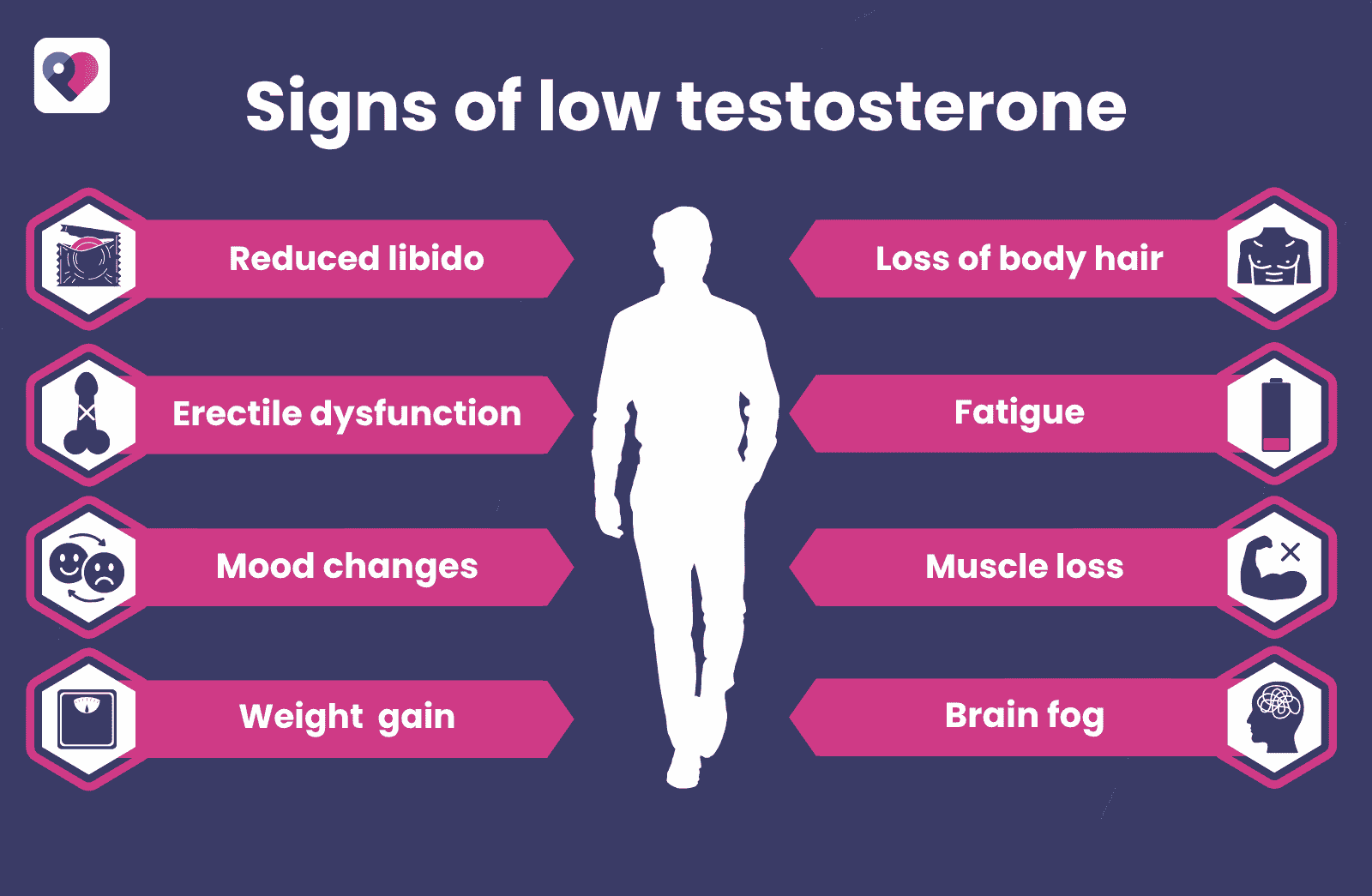
גרפיקה: הת'ר איינסוורת'
What are the signs of low testosterone?
1. Reduced libido
Low testosterone can directly affect your sex drive (libido)2. Men with reduced hormone levels often notice a decreased interest in sexual activity or intimacy, which can impact relationships and overall quality of life.
2. Loss of body hair
Testosterone helps regulate hair growth3. A drop in levels can lead to thinning or loss of hair on the face, chest, or body over time.
3. Fatigue
Feeling unusually tired (fatigue), even after enough sleep, is a common symptom of low testosterone4. It can reduce energy levels and make everyday tasks feel more exhausting than usual.
4. Depressed mood
Hormonal changes can influence brain chemistry. Men with low testosterone may experience irritability, sadness, or even דיכאון5, sometimes without realising the hormonal link.
5. Loss of muscle mass and strength
Testosterone plays a key role in building and maintaining muscle1. Lower levels can make it harder to gain or retain muscle, and strength may decline over time.
6. Increase in body fat
A drop in testosterone can contribute to an increase in body fat, especially around the stomach6. This can also increase the chance of metabolic issues such as insulin resistance.
7. Difficulty concentrating or brain fog
Low testosterone may affect cognitive function, making it harder to focus, remember details, or stay mentally sharp during the day7.
8. Increase in breast tissue
Low testosterone levels can lead to the development of excess breast tissue (gynecomastia) in men8. This is often a gradual change but can be noticeable and sometimes uncomfortable.
9. Erectile dysfunction
Testosterone helps regulate sexual function, including erections. Low levels may make it harder to achieve or maintain an erection9, though other health factors can also contribute.
How to test for low testosterone
If you think you may have low testosterone, the first step is to speak with a doctor or healthcare professional.
Testing isn’t something you can accurately do at home - your doctor will order a simple blood test that measures your testosterone levels, usually taken in the morning when levels are highest.
Depending on the results, they may repeat the test or check other hormones to get a clearer picture of what’s going on.
From there, your doctor can discuss your options, which may include lifestyle changes, further testing, or potential treatment.
How much testosterone should you have?
Testosterone levels can vary from person to person but for adult men, total testosterone levels typically fall between 300 and 1,000 ng/dL (nanograms per decilitre)2.
However, what matters most is not just the number, but how you feel. Some men may experience symptoms even if their levels are technically within the normal range.
That’s why it’s important to look at both your test results and your day-to-day symptoms if something feels off.
סיכום
Low testosterone is a common hormonal imbalance that can impact energy, mood, muscle strength, and overall wellbeing - especially in men over 30.
Symptoms to watch for include fatigue, reduced libido, loss of muscle mass, increased body fat (particularly around the stomach), mood changes such as irritability or depression, loss of body hair, low motivation, and trouble concentrating.
If these signs sound familiar, it may be time to speak with your doctor about testing and treatment options.
קריאה נוספת
1. Rojas-Zambrano et al: Benefits of Testosterone Hormone in the Human Body
2. Sizar et al: Male Hypogonadism
3. Inui S, Itami S: Androgen actions on the human hair follicle
5. Shores et al: Low testosterone levels predict incident depressive illness in older men
6. Kelly et al: Testosterone and obesity
8. Robeva et al: Causes and Metabolic Consequences of Gynecomastia in Adult Patients
9. Martínez-Jabaloyas et al: Testosterone levels in men with erectile dysfunction
בחירות המטופלים עבור בריאות כללית לגברים

בריאות הגבר
Becoming Dad - the identity shift nobody really talks about
Becoming a father changes your life. But have you ever stopped to consider how it might shape you as a person? We talk a lot about the sleepless nights and new responsibilities when a baby arrives. But something we don't talk about nearly enough is what happens to a man's sense of identity, sense of self, when he becomes a father.
by Laura Greenwood
בריאות הגבר
Is 'male menopause' real?
Menopause is a natural stage of life that women go through as they age. During this time, their reproductive hormone levels fluctuate and gradually decline, causing a range of physical and emotional symptoms. But can men experience something similar? Often referred to as ‘male menopause’, hormonal changes as men get older can also affect their health and wellbeing. We explore the symptoms, causes, and science behind 'male menopause' and why it deserves more attention.
מאת ויקטוריה ראו
אודות המחברצפה בפרופיל המלא
נכתב על ידי

Heather Ainsworth
מנהל SEO
BA (Hons) Business and Marketing, IDM Cert DDM, MHFAider®
הת'ר היא מנהלת ה-SEO ב-Patient ומדריכת עזרה ראשונה לבריאות הנפש. היא גם כותבת בריאות קבועה, מכסה מגוון רחב של נושאים עם עניין מיוחד ברווחה נפשית, בריאות נשים ובריאות הוליסטית.
אודות המבקרצפה בפרופיל המלא

Dr Colin Tidy, MRCGP
רופא כללי, מחבר רפואי
MBBS, MRCGP, MRCP (Paediatrics), DCH
ד"ר קולין טיידי הוא רופא ב-NHS, הממוקם באוקספורדשייר.
שתפו את מחשבותיכם או חוויותיכם עם אחרים ב קהילות המטופלים שלנו.
הירשמו לניוזלטר של פיישנט
המנה השבועית שלך של עצות בריאות ברורות ואמינות - נכתבה כדי לעזור לך להרגיש מעודכן, בטוח ובשליטה.
על ידי הרשמה אתה מקבל את שלנו מדיניות הפרטיות שלנו. באפשרותך לבטל את המנוי בכל עת. לעולם לא נמכור את הנתונים שלך.