Hereditary multiple osteochondromas
עודכן לאחרונה 18 Aug 2020
עומד בהנחיות העריכה של Patient
- הורדהורד
- שתף
- Language
- דיון
- Ask Patient
- גרסת שמע
- הוסף למקורות מועדפים בגוגל
Hereditary multiple osteochondromas is a condition in which people develop multiple benign (noncancerous) bone tumours called osteochondromas. The number of osteochondromas and the bones on which they are located vary greatly among affected individuals. The osteochondromas are not present at birth, but approximately 96 percent of affected people develop multiple osteochondromas by the time they are 12 years old. Osteochondromas typically form at the end of long bones and on flat bones such as the hip and shoulder blade.
בחירות וידאו עבור Genetic conditionsספריית סרטונים
תיאור
Hereditary multiple osteochondromas is a condition in which people develop multiple benign (noncancerous) bone tumours called osteochondromas. The number of osteochondromas and the bones on which they are located vary greatly among affected individuals. The osteochondromas are not present at birth, but approximately 96 percent of affected people develop multiple osteochondromas by the time they are 12 years old. Osteochondromas typically form at the end of long bones and on flat bones such as the hip and shoulder blade.
Multiple osteochondromas can disrupt bone growth and can cause growth disturbances of the arms, hands, and legs, leading to short stature. Often these problems with bone growth do not affect the right and left limb equally, resulting in uneven limb lengths (limb length discrepancy). Bowing of the forearm or ankle and abnormal development of the hip joints (hip dysplasia) caused by osteochondromas can lead to difficulty walking and general discomfort. Multiple osteochondromas may also result in pain, limited range of joint movement, and pressure on nerves, blood vessels, the spinal cord, and tissues surrounding the osteochondromas.
Osteochondromas are typically benign; however, in some instances these tumours become malignant (cancerous). Researchers estimate that people with hereditary multiple osteochondromas have a 1 in 20 to 1 in 200 lifetime risk of developing cancerous osteochondromas (called sarcomas).
Inheritance patterns
The source lists the following possible inheritance patterns: Autosomal dominant. More than one pattern can apply in different cases.
Related genes
Other names
Bessel-Hagen disease
אקלאזיס דיאפיזי
Exostoses, multiple hereditary
Familial exostoses
Hereditary multiple exostoses
Multiple cartilaginous exostoses
Multiple congenital exostosis
Multiple hereditary exostoses
Multiple osteochondromas
Multiple osteochondromatosis
Related patient information and medicines

Patient information leaflet
סרטן עצם ראשוני
Paget's disease of bone Paget's disease of bone. This is a disease of the bone which occurs in some older people. An osteochondroma (chondroma). This is a non-cancerous (benign) bone tumour which occasionally turns into a chondrosarcoma. Certain rare inherited disorders including: Li-Fraumeni syndrome, hereditary multiple exostoses (HME) and.

Patient information leaflet
רטינובלסטומה
רטינובלסטומה is a genetic disease. Genetic diseases are disorders of the 46 chromosomes which contain the coding (DNA) that our body needs in order to build and grow its cells. Retinoblastoma is caused by abnormalities on chromosome 13, which allow the tumour to develop. These abnormalities can be inherited from a parent, or happen for the first.

Patient information leaflet
מיאלומה
In many cases, treatment with chemotherapy and other treatments can control the disease, ease symptoms and prolong survival for a number of years. What is myeloma. Myeloma is a type of blood cancer. Cancer The cancer involves certain white blood cells called plasma cells. The cancerous plasma cells build up in the bone marrow. They also make a lot.
Patient information leaflet
טרשת נפוצה
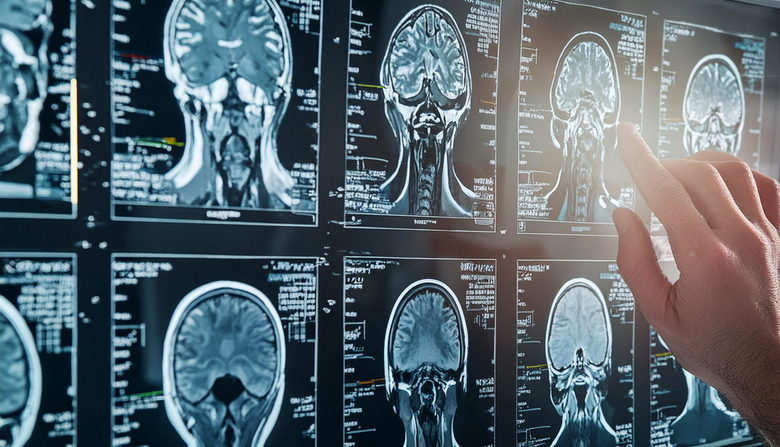
Multiple sclerosis is a disorder of the brain and spinal cord. It can cause various symptoms. What is multiple sclerosis. Multiple sclerosis (MS) is a disease where patches of inflammation occur in parts of your brain and/or spinal cord. This can cause damage to parts of your brain and lead to various symptoms (described below). It is more than.

Patient information leaflet
דיכוי חיסוני
(TNF stands for anti בשלפוחית השתן necrosis factor, and some of the "mab". Methotrexate Methotrexate. Ciclosporin Ciclosporin, an immunosuppressant. Tacrolimus Tacrolimus to prevent organ rejection. Sirolimus Sirolimus to prevent organ rejection. Cyclophosphamide Cyclophosphamide. Leflunomide Leflunomide tablets for arthritis. These medicines are used to.
Patient information leaflet
ציסטות אפידרמואידיות ופילאריות
ציסטות אפידרמואידיות ופילאריות are commonly referred to as 'sebaceous cysts' (pronounced 'seb-ay-shuss'). They are overgrowths of skin cells (called keratin) held together in a little capsule, or sac. They are harmless smooth lumps just under the surface of the skin. They are not related to cleanliness, nor will exfoliating stop them occurring. Pilar.
קריאה נוספת והפניות
- Hereditary multiple osteochondromas; MedlinePlus, National Library of Medicine.
- Alvarez CM, De Vera MA, Heslip TR, Casey B. Evaluation of the anatomic burden of patients with hereditary multiple exostoses. Clin Orthop Relat Res. 2007 Sep;462:73-9. doi: 10.1097/BLO.0b013e3181334b51.
- Bovee JV. Multiple osteochondromas. Orphanet J Rare Dis. 2008 Feb 13;3:3. doi: 10.1186/1750-1172-3-3.
- Jager M, Westhoff B, Portier S, Leube B, Hardt K, Royer-Pokora B, Gossheger G, Krauspe R. Clinical outcome and genotype in patients with hereditary multiple exostoses. J Orthop Res. 2007 Dec;25(12):1541-51. doi: 10.1002/jor.20479.
- Komura S, Matsumoto K, Hirakawa A, Akiyama H. Natural History and Characteristics of Hand Exostoses in Multiple Hereditary Exostoses. J Hand Surg Am. 2021 Sep;46(9):815.e1-815.e12. doi: 10.1016/j.jhsa.2020.12.011. Epub 2021 Feb 26.
- Legler J, Benaroch LR, Pirshahid AA, Serhan O, Cheng D, Bartley D, Carey T, Rasoulinejad P, Singh S, Thornley P. Rate of Spinal Osteochondromas Diagnosed in Pediatric Patients With Hereditary Multiple Osteochondromas: A Systematic Review and Meta-Analysis. J Pediatr Orthop. 2025 Sep 1;45(8):e718-e723. doi: 10.1097/BPO.0000000000002975. Epub 2025 Apr 23.
- Pedrini E, Jennes I, Tremosini M, Milanesi A, Mordenti M, Parra A, Sgariglia F, Zuntini M, Campanacci L, Fabbri N, Pignotti E, Wuyts W, Sangiorgi L. Genotype-phenotype correlation study in 529 patients with multiple hereditary exostoses: identification of "protective" and "risk" factors. J Bone Joint Surg Am. 2011 Dec 21;93(24):2294-302. doi: 10.2106/JBJS.J.00949.
- Pei Y, Wang Y, Huang W, Hu B, Huang D, Zhou Y, Su P. Novel mutations of EXT1 and EXT2 genes among families and sporadic cases with multiple exostoses. Genet Test Mol Biomarkers. 2010 Dec;14(6):865-72. doi: 10.1089/gtmb.2010.0040. Epub 2010 Nov 1.
- Petersen RB, Buch CD, Faergemann C, Nymark T. Bone deformities with hereditary multiple osteochondromas. Dan Med J. 2025 Apr 29;72(5):A11230696. doi: 10.61409/A11230696.
- Sefcik R, Earl D, Thorpe S. Hereditary Multiple Osteochondromas. 2000 Aug 3 [updated 2026 Jan 29]. In: Adam MP, Bick S, Mirzaa GM, Wallace SE, Amemiya A, editors. GeneReviews(R) [Internet]. Seattle (WA): University of Washington, Seattle; 1993-2026. Available from http://www.ncbi.nlm.nih.gov/books/NBK1235/
- Tepelenis K, Papathanakos G, Kitsouli A, Troupis T, Barbouti A, Vlachos K, Kanavaros P, Kitsoulis P. Osteochondromas: An Updated Review of Epidemiology, Pathogenesis, Clinical Presentation, Radiological Features and Treatment Options. In Vivo. 2021 Mar-Apr;35(2):681-691. doi: 10.21873/invivo.12308.
שתפו את מחשבותיכם או חוויותיכם עם אחרים ב קהילות המטופלים שלנו.
גישה פשוטה לטיפולים ושירותי בריאות אמינים באינטרנט.
Common conditions
Get help with common conditions through the NHS, without a GP appointment.





הירשמו לניוזלטר של פיישנט
המנה השבועית שלך של עצות בריאות ברורות ואמינות - נכתבה כדי לעזור לך להרגיש מעודכן, בטוח ובשליטה.
על ידי הרשמה אתה מקבל את שלנו מדיניות הפרטיות שלנו. באפשרותך לבטל את המנוי בכל עת. לעולם לא נמכור את הנתונים שלך.