זיהום פטרייתי במפשעה
Tinea cruris
נבדק על ידי Dr Toni Hazell, FRCGPעודכן לאחרונה על ידי Dr Philippa Vincent, MRCGPעודכן לאחרונה 9 Jan 2025
עומד בהנחיות העריכה של Patient
- הורדהורד
- שתף
- Language
- דיון
- גרסת שמע
- הוסף למקורות מועדפים בגוגל
זיהום פטרייתי במפשעה (טינאה קרוריס) הוא זיהום של עור המפשעה הנגרם על ידי פטרייה. זהו בעיה נפוצה, במיוחד אצל ספורטאים ובקרב קשישים. טיפול בקרם אנטי-פטרייתי בדרך כלל עובד היטב. הטיפים המובאים להלן עשויים לעזור במניעת הישנות.
במבט חטוף
Tinea cruris is a fungal skin infection in the groin area.
Symptoms include itchiness, redness, and a scaly rash with a definite border.
It is sometimes called "jock itch" and is common in athletes.
Self-care includes keeping the area dry and wearing loose clothing.
Antifungal creams are often used for treatment.
See a doctor if the rash is painful, causes a fever, or does not improve after a week of treatment.
What is tinea cruris?
Tinea cruris is a fungal skin infection of the groin. Some types of fungal germs (fungi) are commonly found on human skin. These fungi usually cause no problems. However, under certain circumstances, they can multiply and cause an infection. The most common fungus causing a fungal groin infection is trichophyton rubrum.
The conditions that fungi like best are warm, moist and airless areas of skin. This includes the groin, the armpits and the area under the breasts.
Fungal skin infection is also known as intertrigo. This is a word that means "between" and "rubbing". The fungal infection is more likely to take hold because there is so much skin-to-skin contact in these areas - in the groin this is where the scrotum rubs on the skin of the thighs or the thighs rub together.
Tinea cruris in the groin is sometimes called "jock itch" because it is common in athletes. This is because the groin tends to become warm and moist during sports activities.
What does tinea cruris look like?
Fungal groin infection (tinea cruris)
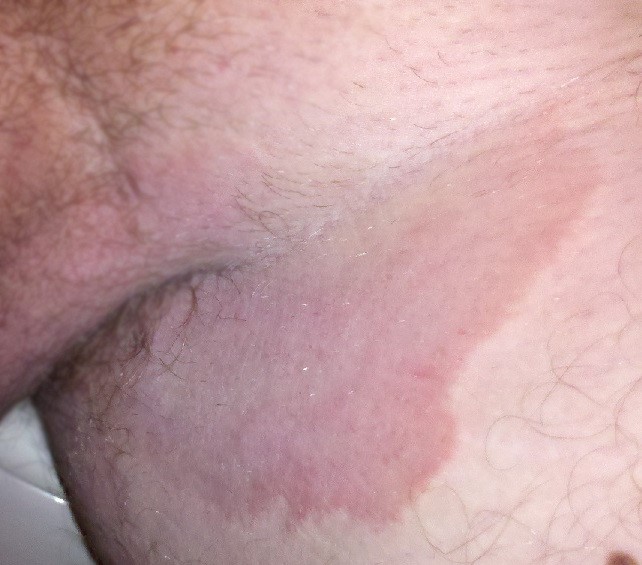
© ByRobertgascoin,via Wikimedia Commons
Jock itch
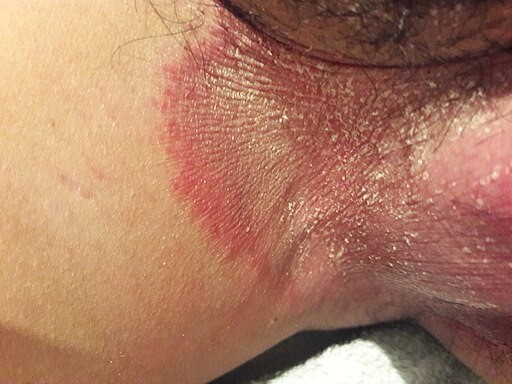
© Gerardolagunes, CC BY-SA 3.0, via Wikimedia Commons
Tinea cruris symptoms
Symptoms of tinea cruris include:
Itchiness. The groin becomes itchy and can be sore, mainly in the crease between the top of the leg and the genitals.
Scrotum. In men the scrotum may also be itchy or sore.
אדמומיות. The skin in the groin area becomes red and slightly scaly. There is usually a definite edge or border. Both sides are commonly affected.
Spreading away from the groin. The rash often spreads a short way down the inside of both thighs.
Smell. Sometimes a musty yeasty smell is noticeable.
Sometimes the infection spreads to the skin on other parts of the body (or may have first started in another area, such as athlete's foot (tinea pedis)). Fungal infections usually remain on the skin and do not usually go deeper into the body; they are not usually serious.
Fungal groin infections are more common in men than women.
When to see a doctor about tinea cruris
Medical advice should be sought if:
The rash is painful or a fever develops.
The rash has not improved after a week or two of using a topical antifungal medicine as recommended by a pharmacist.
The rash hasn't cleared up fully after three weeks of treatment.
People with a weakened body defence (immune system), eg, diabetes or having chemotherapy, may need more treatment so should seek medical advice sooner if the rash is not improving.
Risk factors for fungal groin infection
סוכרת.
השמנת יתר.
A weakened immune system.
Tinea cruris diagnosis
Appearance. The diagnosis can usually be made by the features of the rash which is usually obvious.
Skin scrapings. Occasionally, if there is doubt about the diagnosis, skin scrapings can be sent to the laboratory to identify features that would indicate a fungal infection.
ביופסיית עור. If there is any concern about the diagnosis then a specialist (dermatologist) referral may be made. This would be unusual. Occasionally a skin biopsy may be required.
Tinea cruris treatment
Self-care.
Wear loose-fitting clothes made of cotton or material designed to keep moisture away from the skin.
Avoid tight-fitting clothes such as leggings.
Maintain good hygiene by washing the affected skin areas daily.
Dry thoroughly after washing, especially in the skin folds.
Avoid scratching which may spread the infection to other sites.
Do not share towels, and wash them frequently, to reduce the risk of passing on the infection to someone else.
Wash clothes and bed linen frequently to get rid of any fungal spores.
If a child is affected, it is not necessary to exclude them from school or nursery.
Topical antifungal creams. A topical antifungal cream can be used if there is mild, non-extensive disease. Options include:
Treatment with a topical antifungal cream may be repeated in the future if there are recurrent episodes of mild, non-extensive disease. An antifungal powder can be used (eg, miconazole) but creams are recommended as being more effective.
Steroid cream. A mildly-potent topical corticosteroid can be used in addition to a topical antifungal cream if there is associated marked inflammation, eg, hydrocortisone 1% cream, applied once daily for a maximum of 7 days. A topical corticosteroid preparation should not be used alone as it can make the fungal infection worse.
Oral antifungal treatment. For severe or extensive disease, adults can be prescribed oral antifungal treatment, such as:
Oral itraconazole או oral griseofulvin can be used if terbinafine cannot be used or causes any side effects.
A child with severe or extensive disease would be referred to a specialist (paediatric dermatologist).
Tinea cruris outcome
Tinea cruris usually clears up in 1 to 3 weeks with treatment, including antifungal creams. However, for people who are particularly susceptible, such as athletes and those who sweat a lot, recurrences are common and the problem may become long term (chronic).
Preventing recurrent tinea cruris
To prevent any recurring tinea cruris (fungal groin infection) self-care should be used, as outlined in the treatment above:
Wash the groin daily; then dry thoroughly. Drying is the most important part of this. It is very important to delay putting on underwear until the groin is fully dry. The damp groin is then an ideal site for fungi to multiply. A hairdryer is very useful to dry the area if the groin is more hairy or difficult to dry. However, ensure that the hairdryer is not too hot.
Change underwear daily. Fungi may multiply in flakes of skin in unwashed underwear.
Check for athlete's foot (tinea pedis) and treat it if present. Athlete's foot is a common fungal infection of the toes. In a typical case of athlete's foot, the skin between the toes is itchy and flaky - especially between the outer two toes. The fungi from athlete's foot may spread to the groin. The same creams are used to treat athlete's foot and tinea cruris.
Do not share towels with people in communal changing rooms. Wash towels frequently.
Do not share towels if suffering from tinea cruris.
בחירות המטופלים עבור זיהומים פטרייתיים

זיהומים
זיהומים פטרייתיים בריאות
A fungus is a tiny type of germ that usually doesn't cause any problems. They are all around us: you can only see them with a microscope. But in some situations, particularly if you have other serious illnesses, fungi (the plural of fungus) can infect your lungs. This can be very serious and requires specialist care.
מאת ד"ר קולין טיידי, MRCGP

זיהומים
פטרת בגברים
פטרת היא זיהום נפוץ, הנגרם על ידי פטרייה הנקראת קנדידה. קנדידה חיה בדרך כלל על העור שלנו בכמויות קטנות מבלי לגרום לבעיות. עם זאת, לפעמים היא יכולה לגרום לזיהומים. זיהומים קנדידאליים יכולים להשפיע על מערכות גוף רבות, אך לרוב גורמים לבעיות באזור המין, בפה (פטרת הפה) או על העור. פטרת אצל גברים היא די נפוצה, אם כי נשים נוטות יותר לקבל פטרת מאשר גברים. פטרת היא בדרך כלל זיהום קל שנעלם במהירות עם טיפול.
מאת ד"ר היילי וילאסי, FRCGP
שאלות נפוצות
Can I use hydrocortisone cream alone to treat tinea cruris?
No, a topical corticosteroid preparation like hydrocortisone 1% cream should not be used alone to treat tinea cruris, as it can worsen the fungal infection. It should only be used in addition to a topical antifungal cream, and for a maximum of 7 days, if there is significant inflammation.
How long does it typically take for tinea cruris to clear up with treatment?
With appropriate treatment, including antifungal creams, tinea cruris usually clears up within 1 to 3 weeks. However, for individuals who are particularly prone to it, such as athletes or those who sweat a lot, recurrences are common.
Is tinea cruris more common in men or women?
Fungal groin infections, or tinea cruris, are more common in men than in women.
What should I do if the infection keeps coming back?
If you experience recurrent tinea cruris, it's important to consistently follow self-care measures. This includes washing the groin daily and drying thoroughly, changing underwear daily, checking for and treating athlete's foot, and avoiding sharing towels. If recurrences are persistent, medical advice may be helpful.
Should children with tinea cruris be kept home from school or nursery?
No, if a child is affected by tinea cruris, it is not necessary to exclude them from school or nursery.
קריאה נוספת והפניות
- זיהומים פטרייתיים בעור; DermNet NZ
- זיהום פטרייתי בעור - גוף ומפשעה; NICE CKS, יולי 2023 (גישה בבריטניה בלבד)
- Tinea corporis (body), cruris (groin) and incognito (steroid exacerbated); Primary Care Dermatology Society.
אודות המחברצפה בפרופיל המלא

Dr Philippa Vincent, MRCGP
רופא כללי, מחבר רפואי
MB BS, Bsc, MRCGP (2000), DCH, DFSRH, DRCOG
ד"ר Philippa וינסנט הוא רופא משפחה ב-NHS העובד בצפון לונדון.
אודות המבקרצפה בפרופיל המלא

Dr Toni Hazell, FRCGP
MBBS, BSc, FRCGP, DFSRH, Dip GU med, DRCOG, DCH (London, UK, 2000)
ד"ר טוני הייזל סיימה את לימודיה בבית הספר לרפואה של בית החולים סנט מרי ועשתה את התמחותה בבית החולים נורת'וויק פארק.
היסטוריית המאמר
המידע בעמוד זה נכתב ונבדק על ידי קלינאים מוסמכים.
המאמר זמין גם ב אנגלית, גרמנית, ספרדית, צרפתית, איטלקית, פורטוגזית, הינדי, עברית, ערבית, and שוודית.
Next review due: 8 Jan 2028
9 Jan 2025 | הגרסה האחרונה

שאלו, שתפו, התחברו.
עיין בדיונים, שאל שאלות ושתף חוויות במאות נושאים בריאותיים.

מרגיש לא טוב?
הערך את הסימפטומים שלך באינטרנט בחינם
הירשמו לניוזלטר של פיישנט
המנה השבועית שלך של עצות בריאות ברורות ואמינות - נכתבה כדי לעזור לך להרגיש מעודכן, בטוח ובשליטה.
על ידי הרשמה אתה מקבל את שלנו מדיניות הפרטיות שלנו. באפשרותך לבטל את המנוי בכל עת. לעולם לא נמכור את הנתונים שלך.