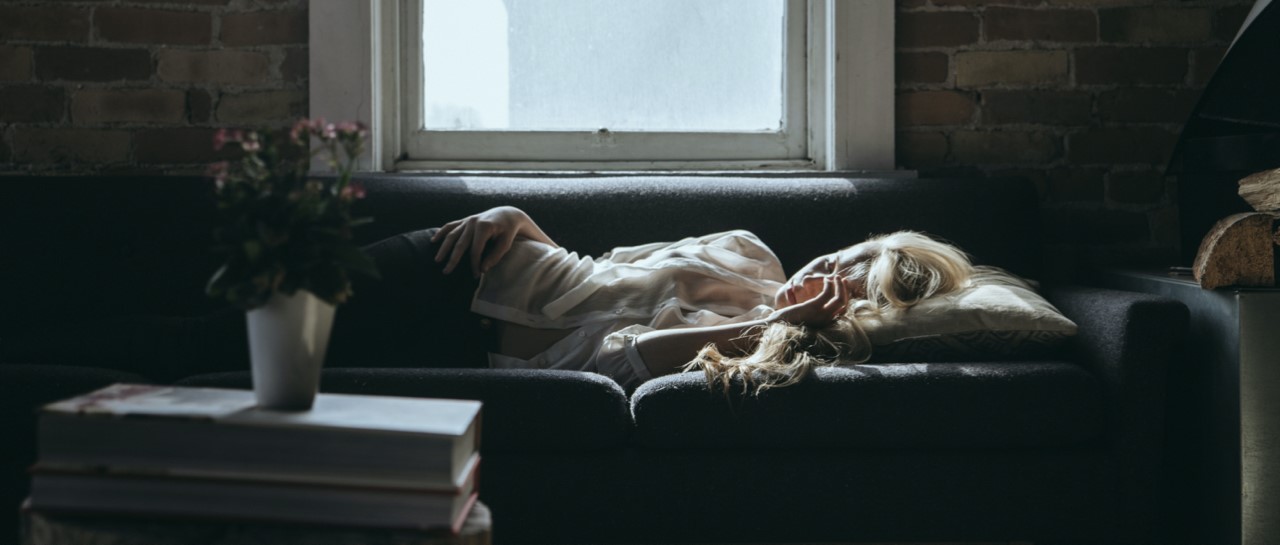
Why lockdown is making us feel exhausted
Peer reviewed by Dr Sarah JarvisLast updated by Lydia SmithLast updated 17 Jun 2020
Meets Patient’s editorial guidelines
- DownloadDownload
- Share
- Language
- Discussion
- Audio Version
- Add to preferred sources on Google
Living through a global health crisis takes its toll on your physical and mental well-being. As the weeks go on under quarantine, lots of people have experienced a rollercoaster of emotions and feelings - from sadness and anger to tiredness and feeling groggy.
Use Patient's coronavirus checker tool if you have any symptoms of fever, a new cough or loss of smell or taste. Until you have used the tool and been advised what action to take, please stay at home and avoid contact with other people.
Since the coronavirus lockdown was imposed in March, we have suddenly had to get used to spending more time at home. People who are lucky enough to be able to work remotely haven't been commuting, we haven't been going to pubs and many of us haven't seen friends or relatives for weeks.
Key workers aside, lots of us are physically doing far less than we used to. Despite this, many report feeling exhausted and run down. But why?
"My short-term memory is completely shot and I have huge issues concentrating," says John*, who says his friends nicknamed him 'Google' because of his ability to remember things. "Now, I'm reading things in documents to then type on screen and I can't even remember more than three or four words of a sentence.
"It's not lack of sleep particularly, just generic mental exhaustion," he adds. "It's from juggling housework, work, schoolwork support, wanting to ensure I make the most of time with my daughter and give her the mental support she needs, and supporting my wife who is a key worker."
Mental strain
One of the key reasons why being under lockdown during a health pandemic is draining is because we're experiencing a lot of mental strain, says Dr Sarita Robinson, principal lecturer in psychology at the University of Central Lancashire.
"We expect to feel tired when we have been on a run or have completed an exercise class. However, high levels of mental effort and increased anxiety can also make us tired too," she says.
"This is because when we face psychological stressors, our bodies still mount a physiological response - we can enter fight or flight mode - and this takes up energy. So our heart rate increases and we start to feel more alert and energised. However, keeping the body in this high state of alert really takes its toll on our energy levels."
This is why we feel tired when we are facing financial or health concerns. It also happens when we have to adapt to an unfamiliar way of doing things, such as life under lockdown. "We are having to work out new ways of doing pretty much everything from entertaining the kids, remote working to socialising with friends," Robinson says.
Anxiety and poor sleep
We're living through a period of increased anxiety over our health, vulnerable loved ones, finances and job security. With the future looking uncertain and the public instructed to stay at home, many of us are feeling isolated and stressed - and it is affecting our sleep.
"Anxiety, depression and stress are exhausting by their nature. Anxiety feeds on uncertainty and this is rife now - the 'what ifs' are endless," says Dr Jilly Gibson Miller, of the department of psychology at the University of Sheffield. "Although this is a totally normal response to such a threatening situation, these conditions have a huge impact on body and mind - people's ability to concentrate, their motivation and energy levels, and most importantly, their sleep."
With our routines upended, we may be going to bed later, waking throughout the night, lying in or napping during the day." When normal sleep patterns are disturbed like this for a long period of time, the circadian rhythm is disrupted and plays havoc with our ability to function during the day," Miller says.
Anxiety and sleep problems also work in a cyclical way - essentially, it's a two-way street. "The impact of anxiety on tiredness is a cycle where worrying can cause poor sleep," Miller explains. "This causes tiredness, which depletes our psychological resources and increases anxiety, which disrupts our sleep and ability to cope even further. You can see how it is exhausting."
Burdensome tasks
Although essential to slow and prevent the spread of coronavirus, the lockdown has created difficult situations for many people - many of which are exhausting. Parents are now juggling working from home while caring for children who aren't in school, without the help of relatives or friends. A lot of people have lost jobs and incomes and are working longer hours to pay bills and rent.
"The lockdown has added extra burdensome tasks into many people's lives, such as home schooling, childcare, and supporting elderly or vulnerable relatives or neighbours," Miller says. "That quickly depletes energy levels."
Many people have been furloughed too, leaving them without a schedule or purpose. "For others, the monotony and boredom associated with being quarantined can simply be tiring, when a lack of stimulation and structure mean that you drift into a state of apathy," she adds.
How to feel more energised during lockdown
Although many people want to return to some sort of normality, we can only do so when it is safe. So what can we do to combat feelings of exhaustion under lockdown?
Improve your sleep
It can be easier said than done, but it's important to try to reduce your anxiety to help you sleep better. "Improve your sleep-wake cycle - aim to go to bed at around the same time every night and wake up around the same time every morning, regardless of how well you've slept," Miller says.
Try to avoid eating too late at night and avoid the excessive consumption of alcohol and caffeine. It's tempting to reach for the wine if you're struggling to sleep, but it won't help - research shows it reduces the amount of time in the restorative rapid eye movement (REM) stage of sleep which helps you feel most rested when you wake.
You should also try to avoid looking at your phone screen, laptop or TV as the light emitted can impact your sleep quality. Although you might want to keep up to date with current events, switching the news off can help reduce anxiety. Take time to do things you find calming, whether it's reading, cooking, walking or try a new activity as a distraction.
Create a routine
It's easy to feel groggy and unmotivated when you're not in your usual schedule, so it's important to create a routine for your sleep and mealtimes, work and rest. "It's important you prioritise this so that you can create certainty to combat anxiety and also a 'new normal' that you can slowly adapt to," Miller says.
It's also important to factor in more time to rest. If you're working from home, take time off and schedule in regular breaks to get fresh air and unwind. Make sure you have a cut-off point, so you have enough downtime to relax.
Exercise and eat well
We need to keep to a regular exercise routine in order to remain physically healthy. However, exercise also has a good influence on our mental health and can lower anxiety levels.
"So although in the short term you might be tired from exercising, in the longer term exercise can boost your energy levels," says Robinson. "Happy, upbeat music is also another great way to lift your spirits and help you feel more energised. This is because of emotional contagion - we can catch emotions from the music we play."
It's easy to fall into a routine of snacking on unhealthy, salty or fatty foods under lockdown, but eating well will help boost your energy levels too. Try to avoid sugar, too. While it does give you a rush of energy, this wears off quickly. Make sure you stay hydrated by drinking plenty of fluids too - the government recommends six to eight glasses of non-alcoholic fluid every day.
It's important to eat a range of foods to get enough iron - found in red meat, green vegetables and fortified foods such as breakfast cereals - as well as at least five portions of fruit and vegetables a day. Starchy foods like potatoes, bread and pasta help maintain energy levels, but try to choose wholegrain as they contain more fibre. If you have type 2 diabetes, you may want to limit carbohydrates.
Seek professional help
"If you feel your mood and anxiety levels are getting worse, seek professional help," Miller says. "We all need a little help from time to time and this is no ordinary situation so don't hesitate to reach out."
Your GP will be able to advise on the best course of action for you. Exhaustion can be linked to other medical conditions too, such as anaemia, so if you are persistently and constantly tired, it may be a good idea to visit your doctor to rule out any underlying issues.
It's also important to be kind to yourself. You may not be as productive or motivated as usual - and that's OK. "Give yourself credit for any little achievement in this time of heightened anxiety and uncertainty," Miller says.
Patient picks for Pandemic articles
COVID-19
How have Brits neglected their oral health during the pandemic?
New research reveals 1 in 3 Brits have let their oral health slip since the start of the pandemic, driven by a lack of routine and other health-related issues taking priority over looking after their teeth and gums.
by Emily Jane Bashforth
COVID-19
How to stay on top of unhealthy habits in lockdown
When the first lockdown was brought in, many of us vowed not to let it get the better of us. With more time to kill at home, we walked, signed up to online courses and learned how to crochet. A year on, however, it's getting increasingly difficult to eat well, stay active and engage in wholesome hobbies. So how can we avoid unhealthy habits as the pandemic continues?
by Lydia Smith
About the authorView full bio

Lydia Smith
Feature writer
BA, MA, MSc
Lydia Smith is an award-winning journalist and feature writer who has written extensively on women's health and mental health. She is currently studying for an MSc in psychology.
About the reviewerView full bio

Dr Sarah Jarvis
Clinical Consultant
MA (Cantab), BM, BCh (Oxon), DRCOG, FRCGP, MBE
After training in medicine at Cambridge and Oxford, Dr Sarah Jarvis MBE became a GP.
Article history
The information on this page is peer reviewed by qualified clinicians.
Article also available in English, German, Spanish, French, Italian, Portuguese, Hindi, Hebrew, Arabic, and Swedish.
17 Jun 2020 | Latest version
Join the conversation
Share your thoughts or experiences with others in our patient communities.

Ask, share, connect.
Browse discussions, ask questions, and share experiences across hundreds of health topics.

Feeling unwell?
Assess your symptoms online for free
Sign up to the Patient newsletter
Your weekly dose of clear, trustworthy health advice - written to help you feel informed, confident and in control.
By subscribing you accept our Privacy Policy. You can unsubscribe at any time. We never sell your data.
More in cOVID-19
- Coping with anxiety around COVID-19 uncertainty
- COVID-19: Can lockdowns change our personalities?
- COVID-19: How contagious is Omicron?
- COVID-19: Is Omicron a bigger threat than the Delta variant?
- How to contribute to COVID-19 research
- How to make face masks and coverings more comfortable
- How to protect yourself from COVID-19 and flu in pregnancy
- Not quite 'back to normal': a guide to post-pandemic family healing
- Should we wear face masks after the pandemic?
- What are the latest rules on face masks in the UK?
- What are the options for COVID treatment at home?
- What are the school COVID rules October 2023?
- What are the symptoms of the COVID-19 variant Pirola?