Milia
נבדק על ידי Dr Hayley Willacy, FRCGP עודכן לאחרונה על ידי Dr Philippa Vincent, MRCGPLast updated 18 Apr 2023
עומד בהנחיות העריכה של Patient
- הורדהורד
- שתף
- Language
- דיון
- גרסת שמע
- Add to preferred sources on Google
Milia are very small, raised, pearly-white or yellowish bumps on the skin. They are most often seen on the skin around the cheeks, nose, eyes and eyelids, forehead and chest. However, they can occur anywhere on the body. Milia are very common in newborn babies but can affect people of any age. In babies, milia clear by themselves and no treatment is needed. In other people, they may take longer to clear. In persistent cases, treatment may be suggested.
At a glance
Milia are small, raised, pearly-white or yellowish bumps on the skin.
They are tiny skin cysts filled with a protein called keratin.
Milia are common in newborn babies, usually disappearing by 12 weeks.
In children and adults, milia often clear by themselves without treatment.
You should not try to squeeze or treat milia yourself, as this can cause scarring or infection.
If persistent or widespread, a skin specialist can offer removal treatments.
Preventing sun damage and correctly using steroid creams may reduce some types of milia.
במאמר זה:
Video picks for פריחות בעור
המשך לקרוא למטה
What are milia?
A milium is a small, raised bump on the skin. It is a type of tiny skin cyst filled with a protein called keratin.
Many are usually found together and so they are called milia (the plural of milium).
What do milia look like?
חזרה לתוכןMilia in a newborn
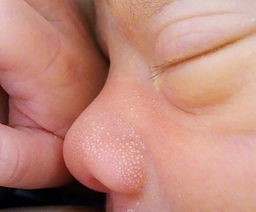
© Serephine, CC0, via Wikimedia Commons
As can be seen in the picture, milia are usually each about 1 or 2 millimetres across and are pearly-white or yellowish. They appear to be small white bumps on the face.
They are most often seen on the skin around the cheeks, nose, eyes and eyelids, forehead and chest but they can occur anywhere on the body.
המשך לקרוא למטה
Types and causes of milia
חזרה לתוכןThere are different types of milia.
Neonatal milia
These are milia that are seen in young babies soon after they are born. They are very common and are usually found around the nose area but may also occur on the scalp, cheeks, upper body and inside the mouth. They are thought to arise from sweat glands that aren't fully developed or mature. Around half of all babies develop neonatal milia. In fact, because they are so common, they are actually considered as normal in newborn babies - often they are called "milk spots" although they are nothing to do with milk. They usually disappear by 12 weeks of age.
Primary milia
These are milia that can occur in both children and adults. They occur in an area of skin that has otherwise been normal without any previous damage or injury.
Secondary milia
These are milia that develop in an area of skin, anywhere on the body, that has previously been damaged or injured. For example, after a burn or a blistering rash. The milia develop as the skin heals and it is thought that damage to the sweat glands may be an underlying cause. Secondary milia also sometimes develop after some skin creams have been used.
Milia en plaque
Milia of this type are extremely rare. The milia develop on an inflamed, raised patch of skin known as a plaque which may be several centimetres across. The cause of milia en plaque is not fully understood. It usually occurs behind the ears, on an eyelid or on the cheeks or jaw area. This type of milia tends to particularly affect middle-aged women.
Multiple eruptive milia
The milia appear in crops, or patches, of milia that develop over a period of weeks or months. The crops usually appear on the face, the upper arms and the upper trunk. Milia of this type are also extremely rare.
Milia symptoms
חזרה לתוכןMilia do not usually cause any symptoms but,they can occasionally become itchy.
המשך לקרוא למטה
How are milia diagnosed?
חזרה לתוכןMilia are usually diagnosed by their typical appearance and generally no investigations are needed. However, occasionally, if the diagnosis is uncertain or if milia en plaque are suspected, a skin biopsy might be recommended.
During a skin biopsy, a small piece of skin is removed so that it can be examined under a microscope. There are different ways that a skin biopsy can be carried out. For example, by shaving away a small piece of skin or by using a special instrument to punch a tiny hole in the skin.
How long do milia last?
חזרה לתוכןMilia are harmless and, in most cases, they will eventually clear by themselves. In babies, they clear after a few weeks. However, in some people, milia can persist for months or longer. Secondary milia are sometimes permanent.
Milia treatment
חזרה לתוכןBecause they normally clear by themselves, milia do not usually need any treatment. However, some people find them unsightly and so opt for treatment to remove milia.
Milia removal
Milia may be removed using a fine needle and then squeezing, or pricking, out the contents. No anaesthetic is needed. However, it is not recommended to squeeze or try to treat milia yourself. This can lead to skin damage and scarring or infection.
If milia become very widespread and persistent, various other treatments may be suggested, usually by a skin specialist (a dermatologist). They include:
Cryotherapy: a type of treatment that freezes skin lesions. Where a patch of skin has changed in appearance, it is known as a skin lesion.
Laser treatment.
Dermabrasion: a procedure that removes the topmost layers of the affected skin.
Chemical peeling: a treatment where a chemical is applied to the face to burn off skin lesions.
In the rare type of milia called milia en plaque, certain creams such as isotretinoin or tretinoin are sometimes suggested as treatment, or the antibiotic tablet, minocycline.
Can milia be prevented?
חזרה לתוכןMost milia cannot be avoided, particularly neonatal milia. The risk of developing secondary milia development can be reduced by avoiding excessive sun exposure, only using steroid creams for the length of time they are prescribed and regularly exfoliating and cleansing the skin to remove dead skin cells.
Patient picks for פריחות בעור

בריאות העור, הציפורניים והשיער
קרטוזה אקטינית
קרטוזיס אקטיני (המכונה גם קרטוזיס סולרי) הוא מצב העור הנפוץ ביותר הנגרם מנזקי שמש. זהו תוצאה של נזק לעור שנגרם על ידי השמש במשך שנים רבות. קרטוזות אקטיניות הן בדרך כלל כתמים מחוספסים וקשקשיים באזורים החשופים לשמש כמו הראש והפנים. קרטוזות אקטיניות נפוצות, במיוחד אצל אנשים מבוגרים, רבים מהם יש יותר מאחת. בדרך כלל הן אינן מזיקות אך יש סיכון קטן שהן עלולות בסופו של דבר להפוך לסרטן עור ולכן ייתכן שיומלץ על טיפול.
מאת ד"ר דאג מקקנזי, MRCGP

בריאות העור, הציפורניים והשיער
פריחה פולימורפית כתוצאה מחשיפה לאור
Polymorphic light eruption is a skin rash that can happen when you go out in the sun.
by Dr Hayley Willacy, FRCGP
שאלות נפוצות
Can I remove milia at home?
It is not recommended to squeeze or try to treat milia yourself, as this can lead to skin damage, scarring, or infection. While a fine needle can be used to remove them in a clinical setting, self-removal is not advised.
Are milia contagious?
No, milia are not contagious. They are small skin cysts filled with keratin and are not spread from person to person.
What is the difference between primary and secondary milia?
Primary milia develop on skin that has not been previously damaged or injured, and can occur in both children and adults. Secondary milia, on the other hand, develop in an area of skin that has been damaged, for example, after a burn, blistering rash, or use of certain skin creams, as the skin heals.
If milia are usually harmless, why would anyone want to remove them?
While milia do not usually cause any physical symptoms and often clear by themselves, some people find them unsightly and therefore choose to have them removed for cosmetic reasons.
What kind of specialist would treat persistent milia?
If milia become very widespread and persistent, a skin specialist, known as a dermatologist, may suggest various treatments.
Can certain creams cause milia?
Yes, secondary milia can sometimes develop after some skin creams have been used.
What are the long-term effects of milia?
Milia are harmless and generally clear by themselves, often within a few weeks for babies. In some cases, milia can persist for months or longer. Secondary milia can sometimes be permanent.
קריאה נוספת והפניות
- O'Connor NR, McLaughlin MR, Ham P; עור תינוקות: חלק א'. פריחות נפוצות. רופא משפחה אמריקאי. 1 בינואר 2008;77(1):47-52.
- Milium, milia; DermNet NZ
המשך לקרוא למטה
About the authorView full bio

ד"ר מישל רייט, MRCGP
General Practitioner, Medical Author
MB, ChB, MRCGP, DCH, DRCOG
Dr Michelle Wright qualified in 1997 in the UK and worked as a GP in London before moving to Switzerland. She has been an author with EMIS since 2007.
About the reviewerView full bio

Dr Hayley Willacy, FRCGP
General Practitioner, Medical Author
MBChB (1992), DRCOG, DFFP, MRCOG (Part 1) MRCGP (2007), DFSRH (2013), MSc - medical education (2020)
Dr Hayley Willacy was an NHS GP working in northwest England, who retired from clinical practice in 2022 after 30 years.
היסטוריית המאמר
המידע בעמוד זה נכתב ונבדק על ידי קלינאים מוסמכים.
Next review due: 16 Apr 2028
18 Apr 2023 | הגרסה האחרונה
15 Mar 2012 | פורסם במקור
נכתב על ידי:
ד"ר מישל רייט, MRCGP

שאלו, שתפו, התחברו.
עיין בדיונים, שאל שאלות ושתף חוויות במאות נושאים בריאותיים.

מרגיש לא טוב?
הערך את הסימפטומים שלך באינטרנט בחינם
הירשמו לניוזלטר של פיישנט
המנה השבועית שלך של עצות בריאות ברורות ואמינות - נכתבה כדי לעזור לך להרגיש מעודכן, בטוח ובשליטה.
By subscribing you accept our מדיניות הפרטיות שלנו. באפשרותך לבטל את המנוי בכל עת. לעולם לא נמכור את הנתונים שלך.