דימום תת-עכבישי
נבדק על ידי Dr Krishna Vakharia, MRCGPעודכן לאחרונה על ידי Dr Colin Tidy, MRCGPעודכן לאחרונה 13 דצמבר 2022
עומד בהנחיות העריכה של Patient
- הורדהורד
- שתף
- Language
- דיון
- Ask Patient
- גרסת שמע
- הוסף למקורות מועדפים בגוגל
A subarachnoid haemorrhage (SAH) is a form of stroke in which bleeding occurs into the fluid-filled space surrounding the brain (called the subarachnoid space). It is usually caused by the rupture of a small berry-like swelling (called a berry aneurysm) on one of the arteries in the brain.
SAH is a medical emergency. The risk of a further bleed is greatest during the first 24 hours from when the symptoms started.
במבט חטוף
דימום תת-עכבישי הוא דימום סביב המוח, בדרך כלל כתוצאה ממפרצת שהתפוצצה.
התסמין האופייני ביותר הוא כאב ראש פתאומי, מתפרץ וחמור מאוד.
תסמינים נוספים יכולים לכלול הקאות, פרכוסים או שינוי במצב ההכרה.
אם יש לך כאב ראש חמור ופתאומי במיוחד עם הקאות, פנה לייעוץ רפואי.
עישון, צריכת אלכוהול גבוהה ולחץ דם גבוה מגבירים את הסיכון.
מטרת הטיפול היא לעצור דימום נוסף ולמנוע פגיעה מוחית.
What is a subarachnoid haemorrhage?
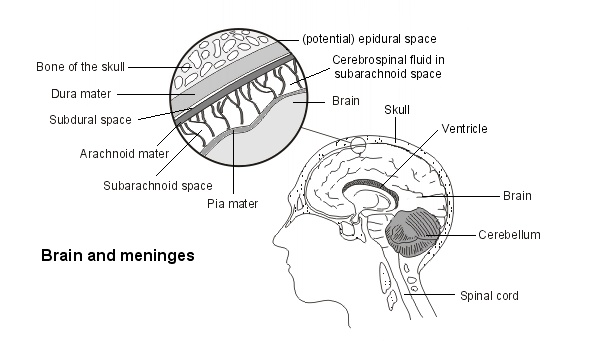
A subarachnoid haemorrhage (SAH) occurs when there is bleeding around the brain into the subarachnoid space. This is a space between two of the protective layers which surround the brain. These are the pia mater, which covers the brain directly, and the arachnoid mater, which is separated from the pia mater by a space filled with fluid. This fluid, the cerebrospinal fluid, is there to cushion and protect the brain from injury.
The bleeding usually comes from a burst (ruptured) berry aneurysm, most commonly at the back of the brain. Berry aneurysms are small berry-shaped swellings on the arteries which supply the brain, usually at a junction where an artery divides into two. These are relatively common in the general population, particularly in older patients, although most never rupture.
Brain and meninges
How serious is a subarachnoid haemorrhage?
Subarachnoid haemorrhage (SAH) is very serious. More than 1 in 4 people with a subarachnoid haemorrhage will die within the first six months after the subarachnoid haemorrhage. Of the survivors, about 1 in 3 are unable to live independently.
Who is affected by subarachnoid haemorrhage?
SAH usually affects adults under the age of 60 years, with the average age of affected patients around 50 years. Children are not usually affected.
Women are affected slightly more often than men.
Patients of African descent are slightly more commonly affected than patients of white descent.
The condition is also more common in Finland and Japan, where the rates are around three times those in Europe.
Patients who smoke, use excessive alcohol or have high blood pressure are at greater risk.
First-degree relatives of people who have had an SAH are at greater risk.
How common is subarachnoid haemorrhage?
Around 8 people out of every 100,000 per year will have an SAH.
SAH causes around 6 out of 100 of all strokes.
How does subarachnoid haemorrhage occur?
More than 8 out of 10 cases of SAH are caused by the bursting (rupture) of berry aneurysms. About 1 in every 25 adults will have one or more berry aneurysms. However, an SAH rupturing is a relatively rare event.
Larger berry aneurysms (bigger than 7 mm) are more likely to rupture (smaller ones can grow larger over time). Rupture is more likely to occur if the elastic tissue in the walls of the berry aneurysm is weakened or strained by:
Uncontrolled high blood pressure.
High alcohol use.
עישון.
שימוש בקוקאין.
Certain inherited conditions which cause weakening of the blood vessels. These include autosomal dominant polycystic kidney disease (ADPKD). These conditions cause only 1-2 in every 100 cases of SAH.
Other causes of SAH, accounting for fewer than 2 out of every 10 cases, include:
Head and neck trauma, when bleeding from injury to the brain or the structures around it can track into the subarachnoid space.
Abnormal blood vessels such as those that may be present in a brain tumour.
Brain infection such as דלקת מוח.
Vasculitis, when blood vessels inside the brain become swollen and inflamed. This can occur either due to infection or to conditions affecting the immune system.
Subarachnoid haemorrhage symptoms
כאב ראש
The most characteristic feature is a sudden explosive headache.
The headache is severe, often described as the most severe headache ever experienced. It is sometimes referred to as a thunderclap headache. However, the term thunderclap headache is more commonly used for some other types of sudden headache, including primary sexual headache.
Usually the headache lasts for a week or two. It is usually a dull, all-over headache. It may occasionally last only a few seconds or even less. The person may even look round and accuse someone of hitting him or her on the back of the head.
About 1 in 10 sudden explosive headaches are found to be due to SAH.
If you have an episode of sudden severe headache - coming on in minutes or less and being worse than headaches you have normally experienced - seek medical advice at once.
להיות חולה (הקאה)
Vomiting is very common in SAH. Vomiting also occurs with migraine and with other severe headaches. However, if you have an unusually severe sudden headache with vomiting you should seek medical advice.
Seizures and altered consciousness
A few people with SAH have a seizure due to irritation of the brain by the bleeding. Confusion or altered consciousness may also develop. If someone is unconscious they cannot tell you they have a headache. If someone complains of a severe headache then becomes unexpectedly drowsy, make sure that medical attendants are aware that the headache came first, as this suggests SAH.
Are there warning symptoms for subarachnoid haemorrhage?
Some people with SAH will have had some warning signs in the days or hours before the SAH occurs. The most common are:
Brief sudden headaches (the most common symptom).
סחרחורת.
Eye pain.
Double vision or lost vision.
Loss of sensation or movement.
These symptoms may be caused by early small leaks of blood from the aneurysm as it starts to burst (rupture). However, they may not last long, and of course they may not be recognised as possibly serious by doctors or patients.
Subarachnoid haemorrhage CT scan
If a subarachnoid haemorrhage is suspected then a סריקת טומוגרפיה ממוחשבת (CT) should be performed as soon as possible. This will nearly always confirm the diagnosis.
Other investigations may include cerebral angiography. A lumbar puncture (spinal tap) may be needed if the CT scan is normal but a subarachnoid haemorrhage is still suspected.
Subarachnoid haemorrhage treatment
Treatment of SAH
Initial treatment is aimed at:
Stabilising the person.
Preventing further bleeding
Preventing further brain injury.
Medicines are used - for example, to:
Improve blood supply to damaged parts of the brain.
Prevent seizures which can worsen brain damage.
Surgery is used in some patients:
People with SAH are usually referred to a specialist neurosurgical unit.
Treatment usually consists of blocking off the aneurysm, either:
Through blocking it from the inside by using a special platinum coil (endovascular coiling); או
Through clipping it closed (neurosurgical clipping).
Patients need to be monitored for some time to avoid complications. These are fluid on the brain (hydrocephalus), further shortage of oxygen to the brain and low blood pressure.
Long-term management of SAH
This is aimed at:
Reducing risk of recurrence - treating high blood pressure, reducing alcohol intake and, if the person smokes, stopping smoking.
Specialist rehabilitation service for disabilities.
What is the outlook for patients with subarachnoid haemorrhage?
About 1 in 4 people die within the first six months after a subarachnoid haemorrhage. About 1 in 8 people die before reaching hospital. However more than 8 out of every 10 people admitted to a neurosurgical unit with a confirmed subarachnoid haemorrhage will survive.
Improvement will continue for about 18 months after the SAH.
Most affected people will have some impairment but some do well.
The things which increase the chance of doing better are:
A smaller bleed.
A younger age.
Remaining conscious at the time of the SAH.
About 1 in 2 people report changes with memory, mood or speech one year after a subarachnoid haemorrhage.
Can subarachnoid haemorrhage be prevented?
It is not known why some people with berry aneurysms in the brain go on to develop SAH. However, it is known that certain avoidable risk factors make it more likely:
לחץ דם גבוה
עישון
Excessive alcohol intake
Cocaine use
Avoiding these risk factors is the first way to reduce the risk of SAH.
The factors that affect the health of the walls of your brain's (cerebral) blood vessels are the same factors that affect your risk of heart disease (cardiovascular risk). Therefore, lifestyle measures which generally reduce cardiovascular risk will help prevent SAH. These include:
Healthy diet, following a five-a-day healthy eating plan.
Keeping a healthy מדד מסת הגוף (BMI), which will help prevent SAH.
What should I do if I know I have an aneurysm?
Berry aneurysms are common. They are present in around 4 in every 100 adults, being more common with greater age. They are probably the result of wear and tear on the cerebral arteries at their point of greatest weakness - the point where they divide into two.
Aneurysms less than 7 mm in diameter tend not to burst (rupture). If you have an aneurysm which is less than 7 mm in size, you may be advised that, as long as you keep your blood pressure well controlled and maintain a healthy lifestyle, your risk of SAH is no greater than that of the general population. The decision is more difficult if your aneurysm is larger than 7 mm, or you have several aneurysms. You might be offered repeat scanning, at intervals, to see if your aneurysm is growing, and to review the decision.
The alternative is to clip or block the aneurysm, even whilst it is small. The risks of surgery are significant, particularly if you are older. The risk of rupture also increases with age. These are not easy decisions.
Incidentally found aneurysms
Because they are common, berry aneurysms are often found incidentally. That is, you are found to have a berry aneurysm when having a CT scan for another reason. If this happens you will need specialist advice as to whether you need to consider operative treatment for your aneurysm. Many factors will be taken into account when advising you, including:
הגיל שלך.
The number of aneurysms you have.
Where the aneurysms are.
How large they are.
Any underlying conditions that might put you at greater risk.
People who have had an SAH and who have unruptured aneurysms
Those who have already had an SAH are usually offered treatment for other aneurysms, which is again an option between blocking the aneurysm from the inside using a platinum coil (endovascular coiling) or clipping it closed (neurosurgical clipping).
Screening for aneurysms
Routine testing to check for aneurysms in relatives has not been shown to be of any benefit. Any testing is based on an assessment of each relative's own risk and is usually limited to people with at least two first-degree relatives (father, mother, sister or brother) who have had a subarachnoid haemorrhage.
ד"ר מרי לות' היא מחברת או המחברת המקורית של עלון זה.
בחירות המטופלים עבור פגיעת ראש
מוח ועצבים
המטומה חוץ-דורלית
המטומה חוץ-דוראלית היא הצטברות של דם במרחב 'פוטנציאלי' בין הגולגולת לבין הקרום המגן החיצוני שמכסה את המוח (הדורא מאטר). היא בדרך כלל מתרחשת כתוצאה מפגיעת ראש. זהו מצב חמור ונדרשת טיפול חירום, לעיתים קרובות בצורת ניתוח להסרת ההמטומה.
מאת ד"ר טוני הייזל, FRCGP
מוח ועצבים
זעזוע מוח
זעזוע מוח הוא פגיעת מוח טראומטית קלה שיכולה להתרחש לאחר מכה בראש או זעזוע פתאומי וחזק.
מאת ד"ר פיליפה וינסנט, MRCGP
שאלות נפוצות
מה ההבדל בין דימום תת-עכבישי לסוגים אחרים של שבץ?
דימום תת-עכבישי (SAH) הוא סוג ספציפי של דימום סביב המוח. למרות שהוא מסווג כשבץ, הוא שונה מהשבצים האיסכמיים הנפוצים יותר (הנגרמים על ידי חסימה של אספקת הדם למוח). SAH מהווה כ-6 מתוך כל 100 שבצים.
אם אני חווה 'כאב ראש רעם', האם זה תמיד אומר שיש לי דימום תת-עכבישי?
לא, לא תמיד. בעוד שדימום תת-עכבישי הוא סיבה נפוצה לכאב ראש רעם – כאב ראש פתאומי, מתפרץ וחמור – מונח זה משמש גם לסוגים אחרים של כאבי ראש פתאומיים. עם זאת, אם אתה חווה כאב ראש רעם, עליך לפנות לייעוץ רפואי מיד.
מדוע מפרצות ברי נוטות להיקרע בחלק האחורי של המוח?
המאמר מציין כי מפרצות ברי נוטות להתפוצץ בעיקר בחלק האחורי של המוח. זה קורה בדרך כלל בנקודת חיבור שבה עורק מתפצל לשניים, שהן נקודות חולשה בכלי הדם.
מה הסיכויים לטיפול מוצלח בדימום תת-עכבישי אם אגיע לבית החולים?
יותר מ-8 מתוך כל 10 אנשים שמתקבלים ליחידה נוירוכירורגית עם דימום תת-עכבישי מאושר ישרדו. המוקד הראשוני של הטיפול הוא לייצב את האדם, למנוע דימום נוסף ולמנוע פגיעה מוחית נוספת.
האם אני יכול למנוע היווצרות של מפרצות ברי?
לא ידוע מדוע אנשים מסוימים מפתחים מפרצות ברי. מאמינים שהן תוצאה של 'בלאי' בעורקי המוח, במיוחד במקומות שבהם הם מתפצלים. עם זאת, ניתן לנקוט צעדים להפחתת הסיכון לקרע במפרצת ברי (שגורם ל-SAH) על ידי הימנעות מגורמי סיכון כמו לחץ דם גבוה, עישון, צריכת אלכוהול מופרזת ושימוש בקוקאין. אורח חיים בריא, כולל פעילות גופנית סדירה ותזונה טובה, גם כן מסייע.
לאחר דימום תת-עכבישי (SAH), כמה זמן נמשך תהליך ההחלמה ואילו השפעות ארוכות טווח עשויות להיות?
שיפור לאחר דימום תת-עכבישי יכול להימשך כ-18 חודשים. בעוד שחלק מהאנשים מסתדרים היטב, רוב האנשים המושפעים יחוו פגיעה כלשהי. כ-50% מהאנשים מדווחים על שינויים בזיכרון, במצב הרוח או בדיבור שנה לאחר דימום תת-עכבישי.
קריאה נוספת והפניות
- Ziu E, Mesfin FB; Subarachnoid Hemorrhage. StatPearls, 2022.
- Etminan N, Chang HS, Hackenberg K, et al; Worldwide Incidence of Aneurysmal Subarachnoid Hemorrhage According to Region, Time Period, Blood Pressure, and Smoking Prevalence in the Population: A Systematic Review and Meta-analysis. JAMA Neurol. 2019 May 1;76(5):588-597. doi: 10.1001/jamaneurol.2019.0006.
- Stroke and TIA; NICE CKS, אוגוסט 2020 (גישה בבריטניה בלבד)
- כאב ראש - הערכה; NICE CKS, מרץ 2022 (גישה בבריטניה בלבד)
- Subarachnoid haemorrhage caused by a ruptured aneurysm: diagnosis and management; NICE guideline (November 2022)
אודות המחברצפה בפרופיל המלא
עודכן על ידי

Dr Colin Tidy, MRCGP
רופא כללי, מחבר רפואי
MBBS, MRCGP, MRCP (Paediatrics), DCH
ד"ר קולין טיידי הוא רופא ב-NHS, הממוקם באוקספורדשייר.
נכתב על ידי

Dr Mary Elisabeth Lowth, FRCGP
MA (Cantab), MB, BChir, DFFP, DRCOG, PG Cert, Med Ed, FRCGP, MA (London)
Dr Mary Lowth qualified in Cambridge in 1988 and has been a GP and expedition doctor for 30 years, a medical educator and MRCGP examiner for 20 years and a law and ethics academic for 10 years. As a GP her special interests are paediatrics, ethics and womens health, and sexual health medicine.
אודות המבקרצפה בפרופיל המלא

Dr Krishna Vakharia, MRCGP
קצין רפואה ראשי לבריאות, Optum UK
MBChB, MRCGP(2013), BMedSci (hons), DFSRH, DRCOG, PGDipDerm (Distn)
ד"ר קרישנה וקאריה היא רופאת משפחה ב-NHS. היא גם בוחנת קבועה לדיפלומה לתואר שני בדרמטולוגיה מעשית באוניברסיטת קרדיף וכן משמשת כקצינת הרפואה הראשית לבריאות ב-Optum UK.
שתפו את מחשבותיכם או חוויותיכם עם אחרים ב קהילות המטופלים שלנו.
גישה פשוטה לטיפולים ושירותי בריאות אמינים באינטרנט.
Common conditions
Get help with common conditions through the NHS, without a GP appointment.





הירשמו לניוזלטר של פיישנט
המנה השבועית שלך של עצות בריאות ברורות ואמינות - נכתבה כדי לעזור לך להרגיש מעודכן, בטוח ובשליטה.
על ידי הרשמה אתה מקבל את שלנו מדיניות הפרטיות שלנו. באפשרותך לבטל את המנוי בכל עת. לעולם לא נמכור את הנתונים שלך.