אבני שקדים
Tonsilloliths
נבדק על ידי Dr Toni Hazell, FRCGPעודכן לאחרונה על ידי Dr Philippa Vincent, MRCGPעודכן לאחרונה 17 Dec 2024
עומד בהנחיות העריכה של Patient
- הורדהורד
- שתף
- Language
- דיון
- גרסת שמע
- הוסף למקורות מועדפים בגוגל
Tonsil stones are stones which can form at the back of the throat within the tonsils. They are not serious but can sometimes cause problems with a sore throat or bad breath.
במבט חטוף
Tonsil stones are white or yellow collections of debris at the back of the throat.
They are made of minerals, cells, tissues, and bacteria that harden in tonsil crevices.
Symptoms can include bad breath, discomfort swallowing, or an irritating cough.
Good oral hygiene, gargling, and avoiding smoking may help prevent them.
Some tonsil stones can be removed at home using gargling or gentle irrigation.
What are tonsil stones?
Tonsil stones, otherwise known as tonsilloliths, are a white or yellow accumulation of debris at the back of the throat. They tend to occur in people who have large or craggy tonsils.
Tonsils are the soft lumps at the back of your throat, one at each side. They are lymph nodes which sometimes enlarge to help fight infection.
Not everyone has visible tonsils - people whose tonsils are not visible are unlikely to develop tonsilloliths. Some people have large tonsils with craggy ridges in them.
What do tonsil stones look like?
אבני שקדים
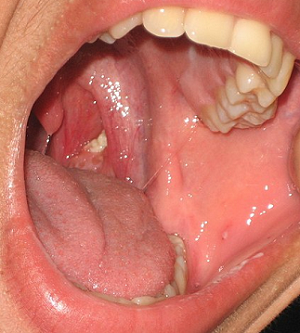
© By Glacko2021 at English Wikipedia, via Wikimedia Commons
They look like small white, yellow or pale grey pebbles, in the nooks and crannies of the tonsils.
What causes tonsil stones?
Tonsil stones are made up of minerals - mainly calcium salts. Debris from the surrounding cells, tissues and bacteria gets stuck in the crevices of the tonsils and then hardens (becomes calcified). They can be hard, like tiny rocks, or quite soft. They are usually quite small, but can sometimes get bigger.
They are not cancerous growths, and they are not attached to the tissues around them, but instead are stuck in the crevices of the tonsils.
Tonsil stones can actually help the immune system by blocking bacteria and viruses from entering the body.
Tonsilloliths can occur at any age but are more common in adults than in children. Some people just develop one, whereas others can have more than one at a time. In some people, when they get rid of one, another forms somewhere else on their tonsils.
Why do I keep getting tonsil stones?
Some people are more prone than others to developing tonsil stones.
גורמי סיכון כוללים:
עישון.
Poor oral hygiene.
Recurrent tonsil infections.
Having tonsillar crypts.
Tonsillar crypts are the folds, gaps and crevices found in some people's tonsils. They are more common in larger or craggy-looking tonsils.
What are the symptoms of tonsil stones?
Often there are no symptoms of tonsil stones at all, though when there are they may include :
A feeling of something being stuck at the back of the throat.
Discomfort swallowing.
A bad taste in the mouth.
An irritating cough.
כאב אוזניים (sometimes a problem in the mouth can 'radiate' to the ear due to the way that the pain signal is carried along nerves).
Are any tests needed for tonsil stones?
Usually tonsil stones (tonsilloliths) can be seen at the back of the mouth and no special tests are needed. Sometimes they are seen coincidentally on X-rays or scans which have been done for other reasons.
How to get rid of tonsil stones
In many cases tonsil stones can be removed at home. Treatment is not necessarily needed, especially if there are no symptoms.
Salt water gargle. Try gargling with mouthwash or a salty water solution. This may dislodge the tonsil stones.
Gentle irrigation. This involves gently shooting water at the back of the mouth to try to dislodge tonsil stones. It is possible to buy a syringe specially for this purpose, which has a curved tip, or an irrigation kit. It is important to follow the instructions carefully, as it is possible to damage the tonsils if too much force is used. This may cause pain and bleeding.
Cotton swabbing. Gently massaging around the tonsils with a cotton swab can push the tonsil stone loose.
Surgical removal. An ear, nose and throat (ENT) surgeon can remove tonsil stones which are causing problems but this will only be done if the tonsil stones are:
Large in size.
Painful.
Causing repeated bacterial infections and sore throats.
A dentist may be able to help with the problem and can make the referral if needed.
How to prevent tonsil stones
Good oral hygiene helps with preventing tonsil stones. Teeth should be brushed twice a day, as advised by dentists, including the spaces in between them, to stop any debris accumulating.
Consider a tongue scraper to keep the tongue clear of any gunk or germs which might contribute to a stone forming.
Regular gargling with a mouthwash or salt water solution may also help.
להימנע עישון ו excess alcohol which can cause the mouth to be dry and may make tonsilloliths or tonsil stones more likely to build up.
For some people, an operation to flatten the surfaces of the tonsils may help to stop persisting problems with tonsilloliths recurring. This is called cryptolysis and can be done either by laser treatment or another type of treatment called coblation cryptolysis. This may need a general anaesthetic but is not available on the NHS.
Occasionally, removal of the tonsils (tonsillectomy) is recommended to prevent ongoing problems with tonsil stones.
בחירות המטופלים עבור גרון ושקדים

אוזן, אף וגרון
קדחת בלוטות
קדחת בלוטות (המוכרת גם כמונונוקלאוזיס זיהומי) היא זיהום ויראלי שלרוב משפיע על בני נוער ומבוגרים צעירים. למרות שהיא יכולה לגרום לחלק מהאנשים להרגיש חולים מאוד, החלמה מלאה היא בדרך כלל המצב.
מאת ד"ר פיליפה וינסנט, MRCGP

אוזן, אף וגרון
דלקת גרון
לרינגיטיס היא דלקת של ריריות תיבת הקול שלך (לרינקס), שגורמת לך לקול צרוד. לרוב היא נגרמת על ידי זיהום, בדרך כלל וירוס.
מאת ד"ר רוזלין אדלמן, MRCGP
שאלות נפוצות
Are tonsil stones a sign of anything serious?
No, tonsil stones are generally not a sign of a serious underlying condition. They are not cancerous growths. They are simply accumulations of debris, minerals, and bacteria that harden in the crevices of your tonsils.
Can tonsil stones be painful?
While many people experience no symptoms, tonsil stones can sometimes cause discomfort. This might include a feeling of something being stuck in the throat, difficulty swallowing, or even earache, as pain signals can radiate through nerves.
How common are tonsil stones?
Tonsil stones can occur at any age, but they tend to be more common in adults than in children. Some individuals may only develop one, while others might have multiple stones at once or experience them recurring after one is removed.
Can a GP remove tonsil stones?
The article does not explicitly state whether a GP can remove tonsil stones. However, it mentions that an ear, nose, and throat (ENT) surgeon can remove problematic tonsil stones and a dentist may also be able to assist or make a referral if needed. For removal at home, methods like gargling, gentle irrigation, or cotton swabbing are suggested.
Do tonsil stones get bigger over time?
Tonsil stones are usually quite small. However, the article notes that they can sometimes get bigger with continued accumulation of minerals and debris.
קריאה נוספת והפניות
- Bamgbose BO, Ruprecht A, Hellstein J, et al; The prevalence of tonsilloliths and other soft tissue calcifications in patients attending oral and maxillofacial radiology clinic of the university of iowa. ISRN Dent. 2014 Jan 22;2014:839635. doi: 10.1155/2014/839635. eCollection 2014.
- הליטוזיס; NICE CKS, September 2024 (UK access only)
- Shikino K, Ikusaka M; Tonsillolith. Clin Case Rep. 2021 Jun 22;9(6):e04243. doi: 10.1002/ccr3.4243. eCollection 2021 Jun.
אודות המחברצפה בפרופיל המלא

ד"ר מרי הארדינג, MRCGP
רופא כללי, מחבר רפואי
BA, MA, MB, BChir, MRCGP, DFFP
ד"ר מרי הארדינג סיימה את לימודיה בבית הספר לרפואה של אוניברסיטת קיימברידג' בשנת 1989.
אודות המבקרצפה בפרופיל המלא

Dr Toni Hazell, FRCGP
MBBS, BSc, FRCGP, DFSRH, Dip GU med, DRCOG, DCH (London, UK, 2000)
ד"ר טוני הייזל סיימה את לימודיה בבית הספר לרפואה של בית החולים סנט מרי ועשתה את התמחותה בבית החולים נורת'וויק פארק.
היסטוריית המאמר
המידע בעמוד זה נכתב ונבדק על ידי קלינאים מוסמכים.
המאמר זמין גם ב אנגלית, גרמנית, ספרדית, צרפתית, איטלקית, פורטוגזית, הינדי, עברית, ערבית, and שוודית.
הסקירה הבאה מתוכננת ל: 16 דצמבר 2027
17 Dec 2024 | הגרסה האחרונה
13 Sept 2018 | פורסם במקור
נכתב על ידי:
ד"ר מרי הארדינג, MRCGP

שאלו, שתפו, התחברו.
עיין בדיונים, שאל שאלות ושתף חוויות במאות נושאים בריאותיים.

מרגיש לא טוב?
הערך את הסימפטומים שלך באינטרנט בחינם
הירשמו לניוזלטר של פיישנט
המנה השבועית שלך של עצות בריאות ברורות ואמינות - נכתבה כדי לעזור לך להרגיש מעודכן, בטוח ובשליטה.
על ידי הרשמה אתה מקבל את שלנו מדיניות הפרטיות שלנו. באפשרותך לבטל את המנוי בכל עת. לעולם לא נמכור את הנתונים שלך.