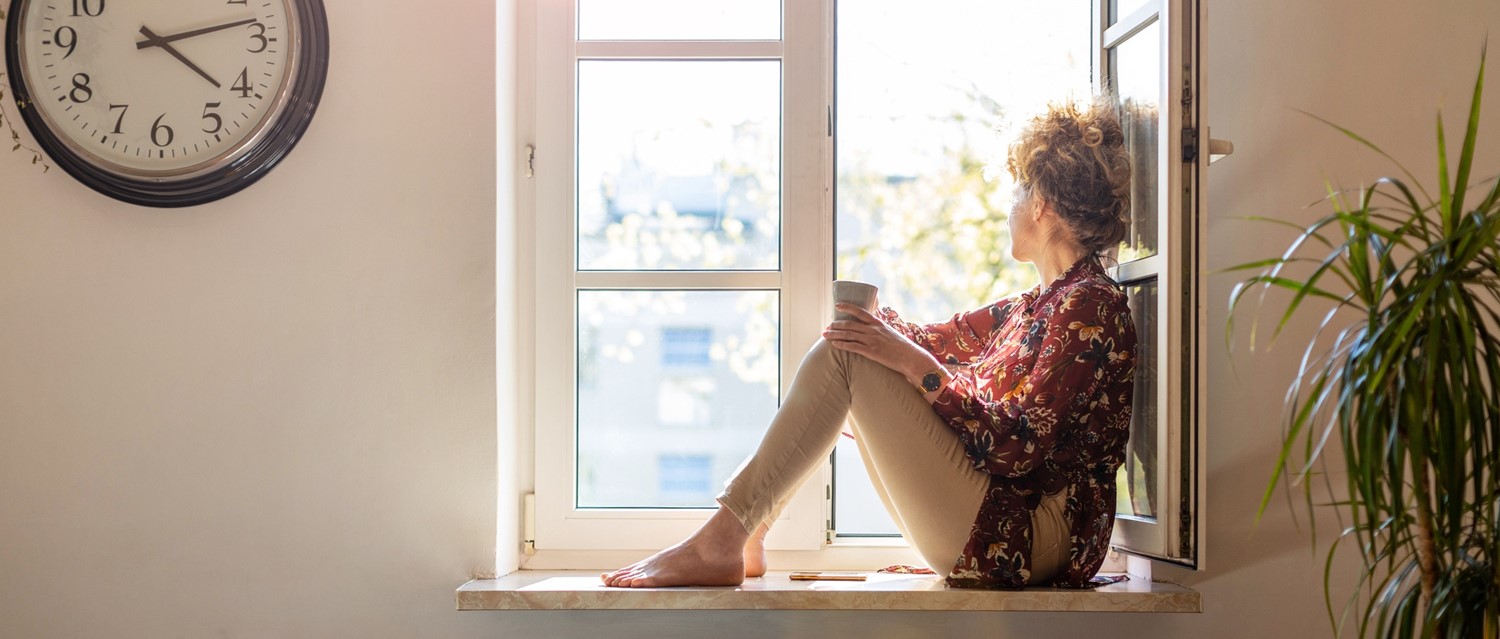
How to hang on to a lockdown lifestyle
Peer reviewed by Dr Sarah JarvisLast updated by Ellie BroughtonLast updated 15 Jul 2021
Meets Patient’s editorial guidelines
- DownloadDownload
- Share
- Language
- Discussion
- Audio Version
- Add to preferred sources on Google
Despite crises at home, at work and in our health, lockdown forced us to find new hobbies and habits, and give up commitments or crutches that we were bored with. As restrictions around the Delta variant lift, experts explain ways to hang on to the best bits of a bad year.
As COVID-19 restrictions lift in the UK and millions get vaccinated, the fear and uncertainty of 2020 are beginning to fade. Although fresh challenges are never far away - rising case numbers, new variants, the threat of a fourth lockdown - at least the isolation, anxiety and losses we went through last year are not as new and strange as they were. Most of us have learned to cope.
Whether it's a new breakfast in bed habit, weekly film club, lunchtime run or Friday night park beers, many of us are keen to hang on to routines that have made the last year bearable. Whatever we turned to, the fact is: not every aspect of lockdown was bad. In an Ipsos MORI poll in March, 42% of people in the UK said they won't miss anything about lockdown - but a surprising 54% said they will.
The impact of lockdowns
We know now that existing health inequalities deepened during the pandemic as life for many women, people in precarious or low-paid work, and people of colour got harder:
Women and girls did more housework, gave birth alone, and were more likely to be laid off or put out of work.
Workers in insecure jobs are twice as likely to die of COVID-19, research by the Trade Union Congress found a few months ago.
Last year evidence showed that people of colour faced a higher risk from COVID-19, and there was a distinct paucity of research into why, or recommendations on how to reduce their risk.
Dr Simon Poole, a GP and author, says patients at his practice in Cambridge have been quite frank with him about how lockdown affected their health.
"While there are people who used lockdown to reset lifestyles, it is no doubt true that for many people, it has been tough mentally, and physically - for example, some people have not been able to get access to places to exercise," he says. "As a consequence the stress has affected some people in terms of diabetes control becoming worse, alcohol consumption increasing, or gaining weight."
Despite the challenges, some of us have found ways to make the most of difficult circumstances. Surveys in 2020 found that many people in the UK cooked and shared food more during lockdown, and paid more attention to their diets - a minority (15%) even managed to cut back on alcohol. Over in Belgium, a survey of over 15,000 people found that the majority maintained or increased their exercise habits in lockdown. So where lockdown created some little positives, people are keen to hang on to them.
Food memories
Jo Travers is a registered dietician, and author of The Low-Fad Diet. For almost all her clients, she says, lockdown amplified shame and anxiety around food and alcohol. Eating disorders, which Travers specialises in, were much worse. People found themselves bingeing on food or drinking too much from boredom, and people in shared houses began avoiding the kitchen so that flatmates would not see or comment on what they ate or drank.
But, she says, a few clients managed to work on their relationship with food - some by cooking more. She encourages anyone who built a good home cooking habit in lockdown to stick with it. "Make sure you've got things in the house that you can eat and things in the freezer so you can just go home and cook," she says. "It's great if you have a few meals in your repertoire that are really easy, and a couple of nights when you always cook for yourself.”
There's good reason to do it, too: there's evidence that home cooking helps us avoid being sucked in by food ads, upsize deals and impulsive cake purchases.
As restrictions ease, Travers has noticed that excitement about spending time with friends again sometimes carries an element of food anxiety with it - particularly for events like barbecues or dinners out.
Tips like her 'split-your-plate' rule (half vegetables, one quarter protein and one quarter carbs) deal with that. "If you get really confident that you can go anywhere and do anything, you don't need to worry about your nutrition because that is pretty much the only rule you need."
Saying no
Emma Reed Turrell is a psychotherapist, and the author of Please Yourself: How to Stop People-Pleasing and Transform the Way You Live. In lockdown she noticed that some of her clients also worked hard to keep changing and growing. She noticed that clients who often said yes to things - sometimes out of a people-pleasing habit - had a brainwave during lockdown as routines changed.
"For example, one of my clients stopped hosting a wider-family Sunday lunch every week and started spending more time with her own family," Reed Turrell says. "She also started listening to a lot of podcasts and doing a lot of personal development reading, and ended up changing her whole career."
Clients now report that as restrictions are easing, they're struggling to say no (not having had to do so for long periods in the last year or so). So in sessions, Reed Turrell runs 'dress rehearsals' with clients who have a big conversation coming up, or gets them to literally write 'scripts' down so they have a list of pre-prepared 'No' answers for when they need them.
Lived experience
Some people used their time in lockdown to understand themselves or their health better, and some accessed support for the first time. Colin Rattray, 53, says that, like Reed Turrell's clients, his life in lockdown gave him freedom - although maybe a bit too much. For example, he found that Zoom socials sometimes led to a bit too much drinking. On the plus side, though, like Travers' clients he got more into cooking.
He also started attending a peer support group online for people with diabetes (via Diabetes Scotland, part of Diabetes UK) and says he still gets a lot out of it.
"The amount of people that I've met and just thought, 'Oh, my God', but then they turned out to be absolutely brilliant," Colin says. "I've been so dishonest with myself over the last 20 or 30 years, that's my problem. But they're so honest. It's incredible."
Hearing other people's experiences helped him see the good in his own situation, he says, and attending encouraged him to manage his diabetes more closely - for example, he stopped drinking five months ago.
"The support group allows you to interact with people that you hadn't met before. At first it seems like you only have one thing in common," he says. "Then you realise you have way more than one thing in common because you all had the same issues, the same problems, and the same obstacles to overcome."
Patient picks for General information
COVID-19
COVID-19: What is herd immunity and will we ever reach it?
As more people are vaccinated against COVID-19, there has been a lot of discussion about whether the UK will ever reach herd immunity. However, with the chance of reinfection higher with the Omicron variant - even among the fully vaccinated - whether this will happen remains to be seen. But what exactly is herd immunity and how does it work?
by Lydia Smith
COVID-19
How to help your child adjust to a post-COVID world
As we go back to some kind of normal, many parents will be worried about the ways the pandemic has affected their kids. Might school closures and social distancing have left a lasting legacy? And how can parents help children cope with the changes that lie ahead?
by Abi Millar
About the author

Ellie Broughton
About the reviewerView full bio

Dr Sarah Jarvis
Clinical Consultant
MA (Cantab), BM, BCh (Oxon), DRCOG, FRCGP, MBE
After training in medicine at Cambridge and Oxford, Dr Sarah Jarvis MBE became a GP.
Article history
The information on this page is peer reviewed by qualified clinicians.
Article also available in English, German, Spanish, French, Italian, Portuguese, Hindi, Hebrew, Arabic, and Swedish.
15 Jul 2021 | Latest version
Join the conversation
Share your thoughts or experiences with others in our patient communities.

Ask, share, connect.
Browse discussions, ask questions, and share experiences across hundreds of health topics.

Feeling unwell?
Assess your symptoms online for free
Sign up to the Patient newsletter
Your weekly dose of clear, trustworthy health advice - written to help you feel informed, confident and in control.
By subscribing you accept our Privacy Policy. You can unsubscribe at any time. We never sell your data.
More in cOVID-19
- 19th July: staying safe as COVID-19 restrictions ease
- Can lifestyle changes reduce your COVID-19 risk?
- Can the COVID vaccine affect the menstrual cycle?
- Coping with anxiety around COVID-19 uncertainty
- COVID-19: Can lockdowns change our personalities?
- COVID-19: Should vulnerable people shield because of Omicron?
- Has the pandemic had an impact on child obesity?
- How to contribute to COVID-19 research
- Should you worry about your lockdown drinking habits?
- Tips for restarting your exercise routine after lockdown
- What are the school COVID rules October 2023?
- What we know about the IHU COVID-19 variant
- Why is ME/CFS research key to understanding long COVID?
- Why it's a good thing if you feel unwell after your COVID-19 booster jab