רעילות ויטמין D: 5 סימנים שלקחת יותר מדי
נבדק על ידי Dr Colin Tidy, MRCGPנכתב על ידי Heather Ainsworthפורסם במקור 26 Oct 2025
עומד בהנחיות העריכה של Patient
- הורדהורד
- שתף
- Language
- דיון
- גרסת שמע
- הוסף למקורות מועדפים בגוגל
With the days getting shorter and sunlight in short supply, many of us reach for vitamin D supplements to stay healthy and avoid deficiency. However, taking more than you should isn't good for you and can lead to vitamin D toxicity.
Here’s how to recognise the signs of excess vitamin D and how to keep your levels safe.
What is vitamin D toxicity?
Vitamin D toxicity happens when your body has too much vitamin D, usually caused by taking too many supplements. It’s rare from sunlight or diet alone but taking high-dose supplements over time, especially during the darker winter months to avoid a חוסר, can put you at risk1.
Excess vitamin D raises calcium levels in the blood, causing symptoms such as feeling sick, tiredness, frequent peeing, kidney problems, and, in severe cases, heart issues.
Adults typically need 10 micrograms (400 international units) daily, with a safe upper limit of 100 micrograms (4,000 international units)2. While vitamin D is essential for bone and immune health, exceeding this without medical guidance can result in vitamin D toxicity.
Spotting the warning signs early helps ensure vitamin D continues to support your health - not harm it.
Signs of vitamin D toxicity
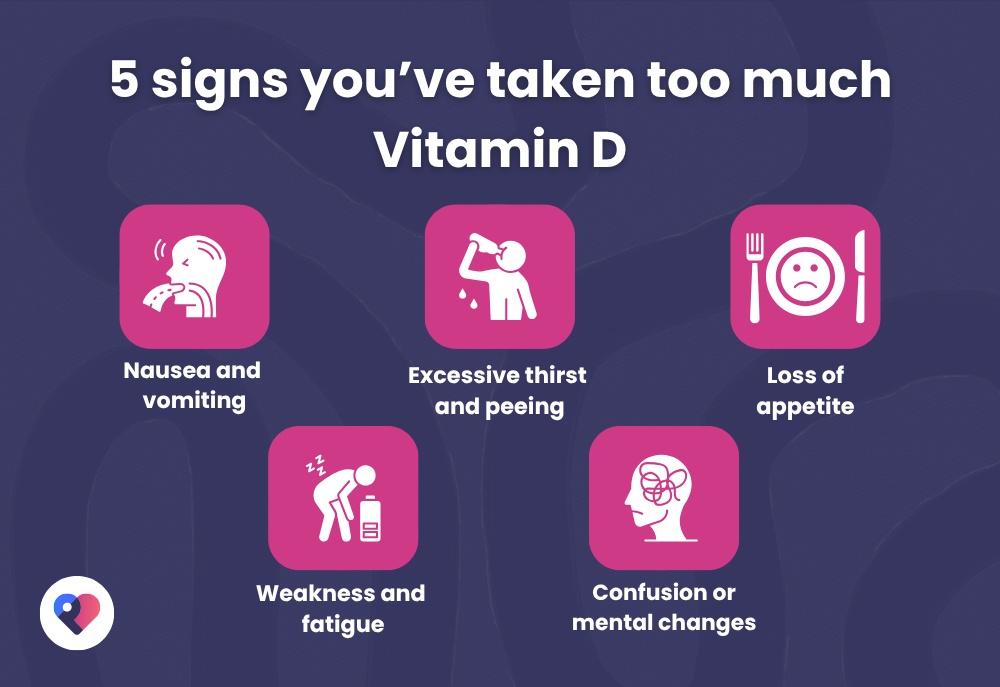
Signs you've taken too much vitamin D
1. Nausea and vomiting
One of the earliest signs of vitamin D toxicity is feeling sick (nausea) or being sick (vomiting). When your body has too much vitamin D, it increases calcium absorption in the gut - and that excess calcium can upset your stomach3.
You might feel queasy after meals, lose your appetite, or even experience bouts of being sick. If this sounds familiar and you’ve been taking high-dose supplements, it may be time to have your vitamin D and calcium levels checked.
2. Loss of appetite
A decreased appetite is another subtle but important warning sign that your vitamin D levels are too high. This happens because excess vitamin D raises calcium in the blood, which can affect how your body processes food and energy1.
You might notice you’re eating less without trying to, or that food simply doesn’t appeal to you like it used to. Over time, this can lead to unintended weight loss or nutritional deficiencies.
3. Frequent peeing and excessive thirst
Feeling unusually thirsty or running to the bathroom more often than usual? That could be your body’s way of trying to flush out excess calcium caused by too much vitamin D.
This combination of frequent peeing and constant thirst can mimic the symptoms of other conditions, such as סוכרת, which is why it’s important not to ignore it.
If your water intake has suddenly skyrocketed but you still feel dehydrated, it’s worth talking to your doctor about a possible vitamin D overload.
4. Weakness, fatigue, or muscle pain
While vitamin D is known for supporting muscle and bone health, too much of it can cause muscle pain and fatigue1. High calcium levels can interfere with normal muscle contraction, leaving you feeling weak, sluggish, or sore.
If you’re waking up tired despite getting enough sleep or your muscles ache for no clear reason, it might not just be stress or overexertion - it could be a sign that your vitamin D supplement is doing more harm than good.
5. Confusion or mental changes
In severe cases of vitamin D toxicity, high calcium levels can affect your brain, leading to confusion, irritability, or trouble concentrating2. Some people describe it as 'brain fog' or a feeling of being mentally off-balance.
These neurological symptoms can be alarming and often indicate that calcium levels are dangerously high. If you notice sudden changes in mood, memory, or focus - especially alongside other symptoms - seek medical advice immediately.
What to do if you've taken too much vitamin D
Stop taking vitamin D immediately – discontinue any supplements until you’ve spoken with a healthcare provider.
Contact a healthcare professional – call your doctor or 111 for guidance.
Monitor for symptoms of toxicity – watch for nausea, vomiting, excessive thirst, frequent peeing, weakness, or confusion.
Stay hydrated – drink plenty of water unless your doctor advises otherwise, as hydration helps reduce high calcium levels.
Review all supplements – check other supplements or fortified foods to prevent further excess.
How to safely take vitamin D
When taking vitamin D supplements, always stick to the recommended daily dose of 10 micrograms (400 international units) for most adults.
Take your supplement with meals that include healthy fats for better absorption, and aim for short, safe sun exposure - around 10-30 minutes - a few times a week.
Avoid taking multiple high-dose supplements, and when using vitamin D long-term, have your blood levels checked regularly by your doctor.
סיכום
Vitamin D is vital for your overall health - but more isn’t always better. While deficiency is common, overdoing it with supplements can push your calcium levels too high and lead to uncomfortable, even dangerous, side effects.
To stay safe, stick to recommended dosages, watch out for signs you’ve taken too much, and monitor your blood levels.
קריאה נוספת
1. Asif et al: Vitamin D Toxicity
2. Marcinowska-Suchowierska et al: Vitamin D Toxicity-A Clinical Perspective
3. P Lee et al: Vitamin D Toxicity: A 16-Year Retrospective Study at an Academic Medical Center
בחירות המטופלים עבור ויטמינים ותוספי תזונה

תזונה ודיאטה
ביוטין: האם ויטמינים לצמיחת שיער באמת עובדים?
If you are interested in hair growth supplements, then chances are you've heard of biotin. In recent years, this vitamin has grown in popularity and is widely available in the cosmetic industry. What exactly is biotin, and can it really promote longer, healthier hair?
מאת אמברלי דייוויס

תזונה ודיאטה
קים צ'י וכרוב כבוש: מהם היתרונות של אכילת מזונות מותססים?
טיקטוק ואינסטגרם מלאים במשפיענים שטוענים למעמד של מזון על עבור כל מיני מוצרי מזון - חלקם אפילו לא בריאים, שלא לדבר על עליונות. אבל כשמדובר בקימצ'י וכרוב כבוש, מחקרים מציעים שמזונות מותססים אלו עשויים באמת לתרום למערכת עיכול בריאה. אבל למה?
מאת אמברלי דייוויס
אודות המחברצפה בפרופיל המלא

Heather Ainsworth
מנהל SEO
BA (Hons) Business and Marketing, IDM Cert DDM, MHFAider®
הת'ר היא מנהלת ה-SEO ב-Patient ומדריכת עזרה ראשונה לבריאות הנפש. היא גם כותבת בריאות קבועה, מכסה מגוון רחב של נושאים עם עניין מיוחד ברווחה נפשית, בריאות נשים ובריאות הוליסטית.
אודות המבקרצפה בפרופיל המלא

Dr Colin Tidy, MRCGP
רופא כללי, מחבר רפואי
MBBS, MRCGP, MRCP (Paediatrics), DCH
ד"ר קולין טיידי הוא רופא ב-NHS, הממוקם באוקספורדשייר.
היסטוריית המאמר
המידע בעמוד זה נבדק על ידי קלינאים מוסמכים.
המאמר זמין גם ב אנגלית, גרמנית, ספרדית, צרפתית, איטלקית, פורטוגזית, הינדי, עברית, ערבית, and שוודית.
Next review due: 26 Oct 2028
26 Oct 2025 | פורסם במקור
נכתב על ידי:
Heather Ainsworthנבדק על ידי
Dr Colin Tidy, MRCGP

שאלו, שתפו, התחברו.
עיין בדיונים, שאל שאלות ושתף חוויות במאות נושאים בריאותיים.

מרגיש לא טוב?
הערך את הסימפטומים שלך באינטרנט בחינם
הירשמו לניוזלטר של פיישנט
המנה השבועית שלך של עצות בריאות ברורות ואמינות - נכתבה כדי לעזור לך להרגיש מעודכן, בטוח ובשליטה.
על ידי הרשמה אתה מקבל את שלנו מדיניות הפרטיות שלנו. באפשרותך לבטל את המנוי בכל עת. לעולם לא נמכור את הנתונים שלך.
עוד בתזונה ותזונה
- 12 דיאטות אמינות למטרות השנה החדשה שלך
- 7 cacao benefits: is raw chocolate best?
- 9 יתרונות בריאותיים של זרעי צ'יה
- האם ויטמינים באמת יכולים למנוע נשירת שיער?
- כיצד להעלות את רמות האנרגיה שלך ולהרגיש פחות עייף בחורף
- עודכןאיך לבנות שרירים בתזונה טבעונית
- איך לאכול תזונה צמחונית עשירה בסידן
- איך לאכול טוב כשקשה לקנות ולבשל
- איך להכין תפוחי אדמה צלויים בריאים
- חלבונים מהצומח עשויים לסייע במניעת לחץ דם גבוה
- מהם היתרונות הבריאותיים של אוכל חריף?
- מהי דיאטה דלת פחמימות והאם היא בריאה?
- מהי אכילה נקייה וכיצד ניתן להתחיל?
- מהו פייברמקסינג - ועד כמה זה באמת בריא?
- מהו המיקרוביום של המעיים שלך?
- אילו מזונות מעובדים במיוחד בטוחים - ואילו כדאי להימנע מהם?
- גיבורי הדגנים המלאים: למה לאכול דגנים עתיקים?
- למה אתה לא צריך לעשות דטוקס
- האם תזונה ללא גלוטן תעזור לאקזמה של הילד שלי?