היצרות המסתם המיטרלי
נבדק על ידי ד"ר אדריאן בונסול, MBBSעודכן לאחרונה על ידי Dr Colin Tidy, MRCGPעודכן לאחרונה 1 Aug 2017
עומד בהנחיות העריכה של Patient
- הורדהורד
- שתף
- Language
- דיון
- גרסת שמע
- הוסף למקורות מועדפים בגוגל
דף זה נשמר בארכיון.
זה לא נבדק לאחרונה ואינו מעודכן. קישורים חיצוניים והפניות עשויים לא לפעול יותר.
Mitral stenosis means that when the mitral valve opens, it does not open fully. The opening is therefore narrower than normal (stenosed).
במבט חטוף
היצרות מיטרלית היא מצב שבו המסתם המיטרלי של הלב אינו נפתח במלואו.
זה מגביל את זרימת הדם מהעלייה השמאלית לחדר השמאלי.
Symptoms can include shortness of breath, tiredness, swollen ankles, and chest pain.
Mild cases may not need treatment, but medication can help ease symptoms.
More severe cases may require surgery to widen or replace the valve.
הערת העורך
Dr Sarah Jarvis, 27th November 2021
NICE guidance on heart valve disease
This leaflet has been archived and has not been reviewed since 2017. It does not include the latest guidance on investigations and treatments for mitral stenosis, which were produced by the National Institute for Health and Care Excellence (NICE) in November 2021.
You can find out more about NICE's recommendations from the further reading section at the end of this leaflet.
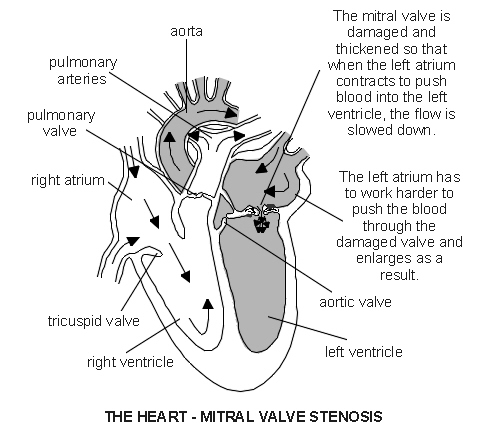
The mitral valve is a heart valve that lies between the left atrium and left ventricle. The valve has two flaps (cusps). The valve allows blood to flow into the left ventricle when the left atrium squeezes (contracts). When the left ventricle contracts, the valve closes and the blood flows out through the aortic valve into the aorta. (The aorta is the main artery which takes blood to the body.)
The cusps are stopped from turning inside out by thin strands of tissue called chordae. The chordae anchor the cusps to the inside wall of the ventricle. The valve or chordae may get damaged or scarred which can prevent the valve from working properly. This can lead to disorders called mitral stenosis, mitral regurgitation, or both.
Mitral stenosis means that when the mitral valve opens, it does not open fully. The opening is therefore narrower than normal (stenosed). So, there is some restriction of blood flow from the left atrium to the left ventricle. This in turn means there is a reduced amount of blood that is pumped out into the body from the left ventricle. In general, the more narrowed the valve, the less blood can get through and the more severe the problem is likely to be.
תסמינים
If the valve is only mildly narrowed (stenosed) you may have no symptoms or problems. If the stenosis is more severe, the symptoms may include:
קוצר נשימה, especially with activity or when you lie down
The heart - mitral valve stenosis
טיפול
תרופות
Mild cases may not require any regular medication. Although medicines cannot correct a narrowed (stenosed) mitral valve, some medicines may be prescribed to help ease symptoms, or to help prevent complications - for example, מעכבי אנזים ממיר אנגיוטנסין (ACE), 'water tablets' (diuretics) ו anticoagulation medication. If you develop פרפור פרוזדורים, several medicines can be used to slow the heart rate down.
טיפול כירורגי
Surgical treatment is needed in more severe cases. There are various options, depending of the exact site and severity of the stenosis.
Stretching the stenosed valve
This is a procedure that does not involve open heart surgery. It is called percutaneous balloon commissurotomy or balloon valvuloplasty. (It is called a commissurotomy, as the area where the valve flaps (cusps) come into contact with each other are known as the commissures.)
It is done by inserting a thin tube called a catheter through the skin (percutaneous) into the main blood vessel in the top of the leg. The catheter is passed up to the heart. The tip of the catheter is placed in the mitral valve opening. A balloon at the tip of the catheter is then inflated to stretch the narrowed valve. This is often successful in widening the narrowed valve.
Valve repair is possible in some cases
This is called mitral commissurotomy or mitral valvotomy. This is usually done by open heart surgery. Basically, the edges (commissures) of valve cusps that have become scarred and fused are shaved back to widen the narrowed valve opening.
Valve replacement is needed in some cases
This may be with a mechanical or a tissue valve.
Mechanical valves are made of materials which are not likely to react with your body (for example, those made from titanium), although they can produce a noise which can be heard outside the body.
Tissue valves are made from treated animal tissue (for example, valves from a pig).
If you need surgery, a surgeon will advise on which is the best option for your situation.
What is the outlook for people with mitral stenosis?
In some cases, the disorder is mild and causes no symptoms. If you develop symptoms they tend to become gradually worse over the years. However, the speed of decline can vary. It often takes years for symptoms to become serious. Medication can ease symptoms but cannot reverse a narrowed (stenosed) valve.
Surgical treatments have greatly improved the outlook (prognosis) for most people with more severe stenosis. Surgery has a very good success rate. However, as with all surgical procedures and operations, there is some risk involved when you have surgery. Complications due to surgery occur in a small number of cases.
בחירות המטופלים עבור מחלות לב

בריאות הלב וכלי הדם
אי ספיקה אאורטלית
אי ספיקה אאורטלית נקראת לפעמים גם אי ספיקת אאורטה או מסתם אאורטלי דולף. באי ספיקה אאורטלית המסתם אינו נסגר כראוי. המסתם האאורטלי הוא מסתם לב הנמצא בין החדר השמאלי לאאורטה. לכן, דם דולף חזרה (מתרגרג) אל החדר השמאלי מהאאורטה. במקרים מסוימים, אי ספיקה אאורטלית מתרחשת בו זמנית עם היצרות אאורטלית. קרא עוד על היצרות אאורטלית.
מאת ד"ר קולין טיידי, MRCGP

בריאות הלב וכלי הדם
היצרות אאורטלית
המסתם האורטלי הוא מסתם לב הנמצא בין החדר השמאלי לאבי העורקים. בהיצרות אבי העורקים, כאשר המסתם האורטלי נפתח כדי לאפשר לדם להישאב דרכו, הוא לא נפתח בצורה רחבה כפי שהיה נפתח בדרך כלל. הפתח בין החדר השמאלי לאבי העורקים מצטמצם (מצר). כמות הדם שיכולה לעבור מהחדר השמאלי לאבי העורקים מצטמצמת. ככל שהמסתם מצר יותר, כך כמות הדם שיכולה לעבור קטנה יותר, והתסמינים משמעותיים יותר. במקרים מסוימים, היצרות אבי העורקים מתרחשת במקביל לדליפה אורטלית.
מאת ד"ר פיליפה וינסנט, MRCGP
שאלות נפוצות
מהי הפונקציה התקינה של המסתם המיטרלי בלב?
המסתם המיטרלי ממוקם בין העלייה השמאלית לחדר השמאלי. מטרתו היא לאפשר לדם לזרום מהעלייה השמאלית אל החדר השמאלי כאשר העלייה מתכווצת. כאשר החדר השמאלי מתכווץ, המסתם נסגר ומכוון את הדם החוצה דרך המסתם האאורטלי לשאר הגוף.
כיצד מיתרי הלב מסייעים לפעולה התקינה של המסתם המיטרלי?
המיתרים הם רצועות דקות של רקמה המחוברות לדפנות המסתם המיטרלי (עלים) ומעגנות אותם לדופן הפנימית של החדר השמאלי. תפקידם קריטי במניעת הפיכת עלי המסתם כלפי חוץ כאשר הלב מתכווץ, ובכך מבטיחים שליטה נכונה בזרימת הדם.
מהם ההבדלים בין שסתומים מכניים לשסתומים רקמתיים המשמשים להחלפה?
שסתומים מכניים עשויים מחומרים עמידים כמו טיטניום, אשר מתוכננים לא להגיב עם הגוף, אם כי לפעמים הם יכולים להפיק צליל נשמע. שסתומי רקמה, לעומת זאת, עשויים מרקמת בעלי חיים מטופלת, כמו למשל מחזירים.
מה קורה אם המסתם המיטרלי או המיתרים נפגעים?
נזק או צלקות למסתם המיטרלי או למיתרים שלו יכולים למנוע מהמסתם לתפקד כראוי. זה יכול להוביל למצבים כמו היצרות מיטרלית, שבה המסתם לא נפתח במלואו, או דליפה מיטרלית, או שניהם, מה שמפריע לזרימת הדם התקינה דרך הלב.
קריאה נוספת והפניות
- מניעה נגד אנדוקרדיטיס זיהומית: מניעה אנטי-מיקרוביאלית נגד אנדוקרדיטיס זיהומית במבוגרים וילדים העוברים הליכים התערבותיים; הנחיות קליניות של NICE (מרץ 2008 - עודכן לאחרונה ביולי 2016)
- הנחיות ESC 2023 לניהול דלקת פנים הלב זיהומית; האגודה האירופית לקרדיולוגיה (אוגוסט 2023)
- Nishimura RA, Otto CM, Bonow RO, et al; 2017 AHA/ACC Focused Update of the 2014 AHA/ACC Guideline for the Management of Patients With Valvular Heart Disease. Circulation. 2017; CIR.0000000000000503. Originally published March 15, 2017.
- Vahanian A et al; הנחיות לניהול מחלות מסתמי הלב: צוות המשימה לניהול מחלות מסתמי הלב של האגודה האירופית לקרדיולוגיה, 2017
- Ozkan M; What is new in ACC/AHA 2017 focused update of valvular heart disease guidelines. Anatol J Cardiol. 2017 Jun;17(6):421-422. doi: 10.14744/AnatolJCardiol.2017.7925.
- מחלת מסתמי הלב במבוגרים: חקירה וניהול; הנחיות NICE (נובמבר 2021)
אודות המחברצפה בפרופיל המלא

Dr Colin Tidy, MRCGP
רופא כללי, מחבר רפואי
MBBS, MRCGP, MRCP (Paediatrics), DCH
ד"ר קולין טיידי הוא רופא ב-NHS, הממוקם באוקספורדשייר.
אודות המבקרצפה בפרופיל המלא

ד"ר אדריאן בונסול, MBBS
מחבר רפואי
תואר שני (כימיה), דוקטור לרפואה (בהצטיינות), דיפלומה ברפואת ילדים
מאז שנת 2000 אדריאן מועסק ברפואת ילדים דחופה וטיפול נמרץ בסידני, עם עניין מיוחד בטוקסיקולוגיה, טראומה והחייאה.
היסטוריית המאמר
המידע בעמוד זה נכתב ונבדק על ידי קלינאים מוסמכים.
המאמר זמין גם ב אנגלית, גרמנית, ספרדית, צרפתית, איטלקית, פורטוגזית, הינדי, עברית, ערבית, and שוודית.
1 Aug 2017 | הגרסה האחרונה

שאלו, שתפו, התחברו.
עיין בדיונים, שאל שאלות ושתף חוויות במאות נושאים בריאותיים.

מרגיש לא טוב?
הערך את הסימפטומים שלך באינטרנט בחינם
הירשמו לניוזלטר של פיישנט
המנה השבועית שלך של עצות בריאות ברורות ואמינות - נכתבה כדי לעזור לך להרגיש מעודכן, בטוח ובשליטה.
על ידי הרשמה אתה מקבל את שלנו מדיניות הפרטיות שלנו. באפשרותך לבטל את המנוי בכל עת. לעולם לא נמכור את הנתונים שלך.