Breathing difficulties in children
Peer reviewed by Dr Philippa Vincent, MRCGPLast updated by Dr Hayley Willacy, FRCGP Last updated 8 Jul 2024
Meets Patient’s editorial guidelines
- DownloadDownload
- Share
- Language
- Discussion
- Audio Version
- Add to preferred sources on Google
In this series:Dealing with a child who is unresponsive
Children often have coughs and colds which are usually harmless and get better quickly. Children can sometimes also have more serious breathing difficulties that need urgent treatment.
At a glance
Breathing difficulties in children can be caused by viral or bacterial infections.
Other causes include asthma, allergies, passive smoking, and inhaled objects.
Symptoms can include a runny nose, cough, fever, wheezing, and aches.
Signs of serious breathing difficulty include fast breathing, increased effort to breathe, or blue skin colour.
Seek medical help if your child seems to be getting worse, has a symptom that won't go away, or has feeding problems.
What causes breathing difficulties in children?
Pneumonia patch diagram
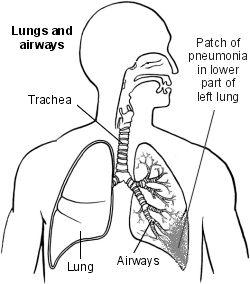
The respiratory tract can be divided into:
The upper respiratory tract: nose, mouth, throat and voice box (larynx).
The lower respiratory tract: windpipe (trachea), bronchi and lungs.
Many breathing difficulties are caused by infections but there are other causes too. The main causes of breathing difficulties include:
Viral infections.
Bacterial infections.
Passive smoking (exposure to cigarette smoke).
Exposure to other harmful gases (for example, really bad pollution).
Blockage of the airway by an inhaled object, such as food or any small object.
A genetic condition such as cystic fibrosis.
Although respiratory infections are very common, not all breathing difficulties are caused by infections. The main causes of breathing difficulties in children include the following.
Viral infections
Viral infections cause most upper respiratory infections, including colds and sore throats. These infections are usually mild and get better quickly. Some viruses can cause severe symptoms which may need treatment in hospital. Examples of common viral infections include bronchiolitis and croup.
Note: antibiotics do not kill viruses and so are not used to treat viral infections.
Bacterial infections
Bacterial infections, such as acute tonsillitis, are also very common in the upper respiratory tract. Bacterial infections in the lower respiratory tract, such as pneumonia, are much less common.
Antibiotics are effective against bacterial infections but mild upper respiratory tract infections often don't need any antibiotic treatment.
Examples of more serious bacterial infection include epiglottitis and pneumonia.
Asthma
Asthma can start at any age but most often starts during childhood. Symptoms may include wheezing and shortness of breath (or difficulty taking deep breaths), which may particularly occur after exercise or at night. Severe asthma causes much more severe symptoms, including difficulty with breathing that may need urgent medical treatment.
Allergies
Allergies are a common cause of breathing problems. They most often affect the upper respiratory tract and cause a clear discharge from the nose, sneezing and sore eyes. Allergies may also affect the lower respiratory tract and cause asthma symptoms.
Other causes
Other causes of breathing difficulties in children include:
Breathing in cigarette smoke.
Long-term conditions that affect the respiratory tract, such as cystic fibrosis.
Blockage of the airway by an inhaled object, such as a small piece of food or any other object.
If the child has inhaled something which is now blocking the airway - this is an emergency.
They may suddenly become upset or start to choke, or they may collapse. If the child can cough, encourage them to clear the blockage themselves. If they cannot do this and you know how to perform basic life support for choking situations, you should start immediately and ask someone else (if possible) to call the emergency services.
Heart attacks
It is very rare for a child or young person to have a heart attack but it can happen. When this occurs it is usually when they already have a congenital heart problem.
What are the symptoms of breathing difficulties in children?
The common symptoms caused by breathing (respiratory) difficulties in children include:
A runny nose, stuffy nose, blocked nose and sneezing
These symptoms are often caused by a cold but may also be caused by an allergy.
Cough
Most coughs clear up within 2-3 weeks and are caused by a viral infection.
Sometimes the cough may go on for a few weeks after the infection has gone but there are no other symptoms and this is also harmless.
If a cough is really bad, (that is, it occurs with severe breathing problems or it won't go away within the usual expected time) then there may be a more serious cause.
As well as common viral infections, a cough may be caused by other conditions such as croup, bronchiolitis or whooping cough. These often cause particular sounds or types of cough.
A cough that won't go away may be due to asthma or another long-term condition such as cystic fibrosis.
Coloured mucus
Yellow, green or brown mucus usually means there is a respiratory tract infection.
A high temperature (fever)
This can be a sign of infection. A high temperature can make the child irritable or drowsy. Often getting their temperature down will make them feel much better.
Wheezing
This is a high-pitched sound that comes from the chest when the child is breathing out. This is most often caused by respiratory infections or asthma.
Aches and pains
Children with respiratory tract infections often complain of aches and pains in their arms and legs and they often have a headache. They might also have chest pains.
How do I know when my child is really unwell?
The signs that the child is very unwell with breathing (respiratory) difficulties that might need urgent medical treatment include:
Breathing rate
An increase in the rate of breathing may be the first symptom of breathing difficulty. Count the number of breaths (in and out is one breath) in one minute. The breathing rate is too fast if it is more than:
60 breaths per minute for a baby aged 0-5 months.
50 breaths per minute for an infant aged 6-12 months.
40 breaths per minute for a child aged 1-5 years.
20-30 breaths per minute for children of school age. The normal breathing rate gradually gets less as a child gets older. So, for example, a breathing rate above 30 would be too high for a child aged 6 years but a breathing rate above 20 would be too high for a teenager aged 16 years.
Increased effort of breathing
This includes the chest sinking in below the neck and below the breastbone (sternum). The ribs may also look as if they are standing out when the child is breathing in, because the muscles between them are being pulled in hard.
Flaring of the nostrils
The nostrils widen when breathing. This also shows that more effort is needed for breathing.
Grunting
A grunting sound is made when breathing out. This is the body trying to get more air into the lungs.
Colour
The skin may seem pale or a bluish colour. The lips and tongue may also appear blue. These changes mean the child isn't getting enough oxygen from breathing.
Drowsiness
Low oxygen levels (less oxygen being carried by red blood cells) may cause the child to become very tired and difficult to keep awake.
Stridor
This is a high-pitched noise when the child breathes in. It is caused by an obstruction to the flow of air in the upper airway. The causes for this include croup or epiglottitis.
When should you seek medical advice and treatment?
Many children's coughs and breathing (respiratory) problems improve after about 10 days, sometimes much sooner. You should take the child to the doctor if they:
Seem to be getting much more unwell.
Have any symptom that won't go away.
Have problems feeding and drinking.
Have signs of becoming very dry (dehydrated) such as a very dry tongue.
Are coughing up mucus that is dark brown or bloody.
Are becoming more breathless.
Already have a diagnosed lung condition such as asthma.
Have any condition that reduces their defence against infection (weak immune system).
Babies and young children can become very unwell very quickly so it is even more important to keep a close eye on them and obtain medical advice if you have any concerns.
Although most children get better quickly from respiratory infections, occasionally the infection overwhelms the body's immune defence and causes sepsis, which needs emergency treatment in hospital.
See the separate leaflet called Sepsis (Septicaemia) for further information
What are the treatments for breathing difficulties in children?
Always act quickly and get medical help if you are worried about your child, especially if they are having any trouble breathing, seem to be getting worse or aren't getting any better.
Most infections will clear up by themselves. However, there are lots of things you can do to help the child be more comfortable and to help them to feel better more quickly. These include:
Encourage them to drink as much as they can
This often means drinking little and often. Cool water is best. Drinking lots of fluid will help to:
Prevent their body becoming too dry (dehydrated).
Keep them cool.
Keep the mucus moist and easier to cough up.
Stop their throat from feeling really dry and sore.
Paracetamol or ibuprofen
Only give paracetamol or ibuprofen if the child is distressed by a high temperature (fever). They can be used together if needed.
Make sure your child is in a comfortable and calm environment
This includes giving reassurance, keeping them cool and keeping them well away from any cigarette smoke.
Medicines
Unless the child has asthma or any other ongoing breathing (respiratory) condition, the only medicines needed are usually paracetamol or ibuprofen.
Most infections in children are caused by viruses and so antibiotics aren't needed. Cough medicines don't work and are not recommended.
Preventing the infection spreading to other people
This is very important, especially if you have other children. Important measures to reduce the spread of infection include:
Make sure everyone washes their hands regularly.
Use clean disposable tissues to remove any infected mucus when your child has been sneezing or coughing. Then put the used tissue in a bin and wash your hands thoroughly.
Patient picks for General health conditions
Children's health
Squint in children
A squint is a condition where the eyes do not always look in exactly the same direction. The difference in eye direction may be very slight, and may not always be present. Most squints occur in young children.
by Dr Philippa Vincent, MRCGP
Children's health
Back pain in children
Back pain in children occurs quite often and seems to be increasingly common. Most of the time this is not a serious problem.
by Dr Toni Hazell, FRCGP
Frequently asked questions
What is the normal breathing rate for a child who is not a baby or infant?
For children aged 1-5 years, a normal breathing rate is typically up to 40 breaths per minute. For school-aged children, the normal rate gradually decreases, with 20-30 breaths per minute generally considered normal. This rate continues to lessen as a child gets older; for example, a rate above 20 would be too high for a teenager aged 16 years.
How can I tell if my child's cough is serious?
Most coughs clear up within 2-3 weeks and are usually caused by a viral infection. However, a cough is considered serious if it is extremely severe, occurs with other severe breathing problems, or does not go away within the expected time frame. A persistent cough might also indicate conditions like asthma or other long-term issues such as cystic fibrosis. Specific sounds, like those associated with croup, bronchiolitis, or whooping cough, can also suggest a more serious cause.
What should I do if my child has a high temperature?
A high temperature can be a sign of infection and may make your child irritable or drowsy. Getting their temperature down often makes them feel much better. You can give paracetamol or ibuprofen if your child is distressed by the fever, and these can be used together if necessary.
Is it true that I shouldn't give cough medicine to my child?
Yes, cough medicines are generally not recommended for children as they do not work effectively. For most infections, the only medicines usually needed are paracetamol or ibuprofen, mainly to relieve distress from a high temperature.
My child has a runny nose and sneezing. Could this be more than just a cold?
While a runny nose, stuffy nose, blocked nose, and sneezing are often caused by a common cold, these symptoms can also be indicative of an allergy. If you're concerned or the symptoms persist, it's always best to observe other accompanying symptoms.
Further reading and references
- Smith DK, Kuckel DP, Recidoro AM; Community-Acquired Pneumonia in Children: Rapid Evidence Review. Am Fam Physician. 2021 Dec 1;104(6):618-625.
- Asthma; NICE Clinical Knowledge Summary. January 2025 (UK access only)
- Fever in under 5s: assessment and initial management; NICE Guidance (last updated November 2021)
- Dodson H, Cook J; Foreign Body Airway Obstruction. StatPearls, January 2024.
About the authorView full bio

Dr Colin Tidy, MRCGP
General Practitioner, Medical Author
MBBS, MRCGP, MRCP (Paediatrics), DCH
Dr Colin Tidy is an NHS Doctor, based in Oxfordshire.
About the reviewerView full bio

Dr Philippa Vincent, MRCGP
General Practitioner, Medical Author
MB BS, Bsc, MRCGP (2000), DCH, DFSRH, DRCOG
Dr Philippa Vincent is an NHS GP working in North London.
Article history
The information on this page is written and peer reviewed by qualified clinicians.
Article also available in English, German, Spanish, French, Italian, Portuguese, Hindi, Hebrew, Arabic, and Swedish.
Next review due: 7 Jul 2027
8 Jul 2024 | Latest version
17 Jun 2017 | Originally published
Authored by:
Dr Colin Tidy, MRCGP
Join the conversation
Share your thoughts or experiences with others in our patient communities.

Ask, share, connect.
Browse discussions, ask questions, and share experiences across hundreds of health topics.

Feeling unwell?
Assess your symptoms online for free
Sign up to the Patient newsletter
Your weekly dose of clear, trustworthy health advice - written to help you feel informed, confident and in control.
By subscribing you accept our Privacy Policy. You can unsubscribe at any time. We never sell your data.
More in children's health
- Adrenarche
- Bedwetting medicine - desmopressin
- Childhood gastro-oesophageal reflux
- Congenital pulmonary airway malformation
- Constipation in children
- Depression in children
- Ehlers-Danlos syndrome
- Erythema toxicum neonatorum
- Feeding premature babies
- Feeding your toddler
- Food poisoning in children
- Hirschsprung's disease
- Huntington's disease
- Nappy rash
- Norovirus
- Pyloric stenosis
- Rhabdomyosarcoma
- Rotavirus
- Urine infection in children
- Whooping cough