איך אני יודע אם הילד שלי מתמודד עם בעיות נפשיות, או שזה פשוט חלק מהתבגרות?
נבדק על ידי Dr Colin Tidy, MRCGPנכתב על ידי Babalwa Madikazi, Head of Children and Young People Psychological Therapies at Onebrightפורסם במקור 6 Feb 2026
עומד בהנחיות העריכה של Patient
- הורדהורד
- שתף
- Language
- דיון
- גרסת שמע
- הוסף למקורות מועדפים בגוגל
Childhood and adolescence are critical stages of life for mental health. This is a time of rapid growth and brain development. Young people are rapidly learning social and emotional skills that shape their future ability to learn, grow, and adapt to different situations in life.

Understanding mental health in children and young people
Like adults, at times children and young people experience overwhelming emotions such as low mood, חרדה, irritability, anger, etc., as well as challenging behaviours.
Some may find it occasionally challenging to sit still, pay attention, or interact with others. In most cases, these are just typical developmental phases.
However, distinguishing between challenging behaviours and emotions that are a part of normal development and those that may be a cause for concern can be hard. As a result, many children who could be helped by treatment don't get the help they need.
The importance of early intervention
Research has found that experiencing mental health symptoms before the age of 14 and even as young as five, were predictive of mental health issues well into adulthood.
Early recognition and early intervention can significantly improve outcomes for children experiencing mental health issues, leading to better long-term prognosis and a happier life.
Identifying and addressing mental health concerns during the formative years can help provide some much-needed skills and strategies to carry with them throughout their lives and mitigate the likelihood of more severe issues emerging later in life.
Consider seeking help if your child’s behaviour or emotions last for weeks or longer, cause distress for your child or your family, or interfere with your child’s functioning at school, at home, or with friends. Seek crisis help if your child engages in unsafe behaviour or talk about wanting to hurt themselves or someone else.
Common mental health issues in children
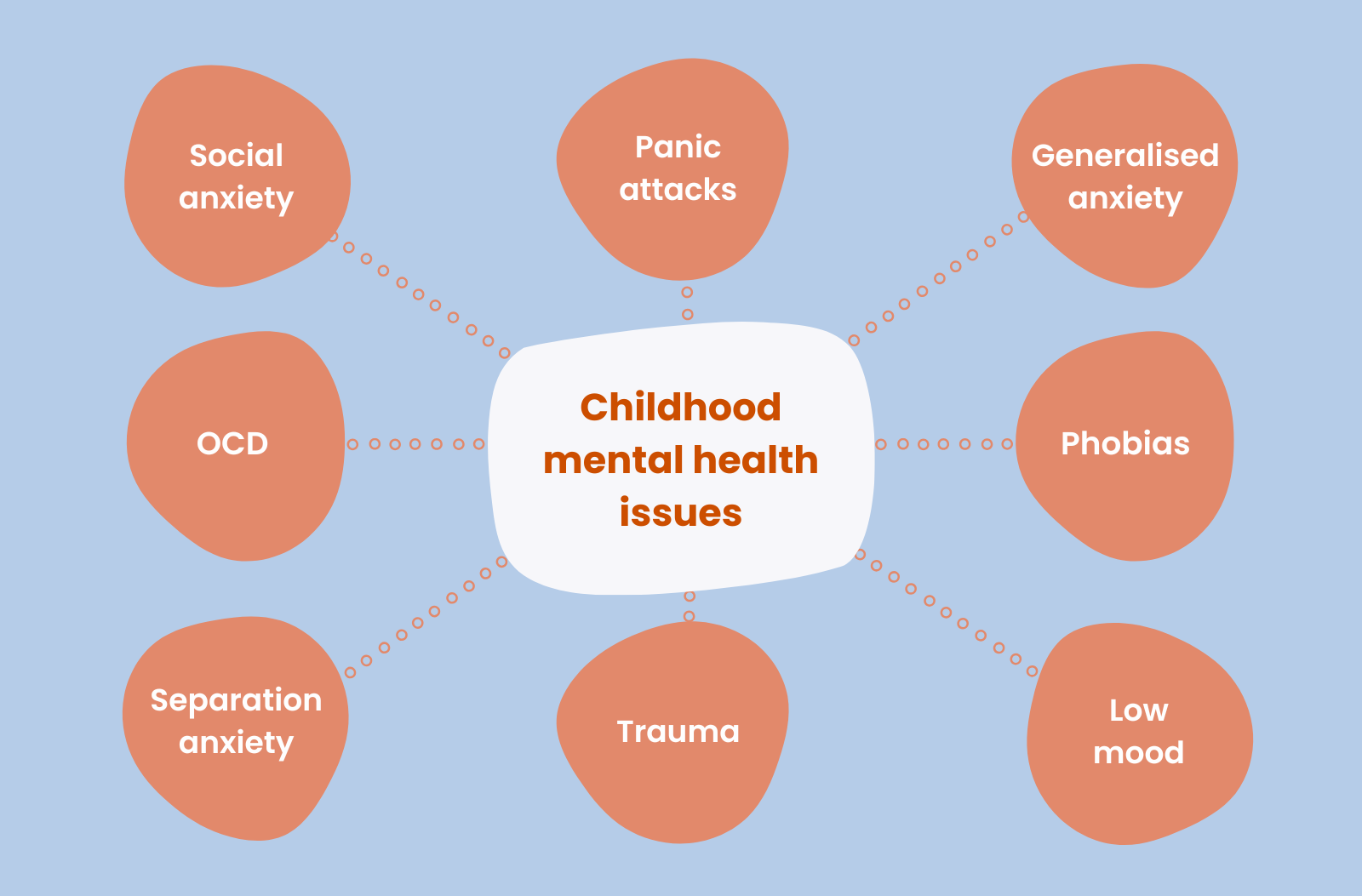
Common childhood mental issues deeper than normal developmental changes include:
Social anxiety: A fear of being judged or embarrassed in social situations, which can cause children to avoid places such as school and worry about saying or doing something wrong.
Separation anxiety: An intense fear of being away from a caregiver, leading children to avoid separation and worry about harm, getting lost, or being unable to cope without their parent.
Generalised anxiety: Excessive worry about many everyday things, often with physical symptoms - such as headaches or stomach aches - sleep issues, and frequent reassurance-seeking when feeling uncertain.
Panic attacks: A sudden feeling of intense fear and physical symptoms. Typically affects adolescence and early adulthood. Adolescents with panic disorder are at greater chance of a concurring depression.
OCD: Involves unwanted, repetitive thoughts (obsessions) and repetitive behaviours or mental rituals (compulsions) that a person feels driven to do to reduce anxiety or feel “just right.”
Trauma: Exposure to a very frightening or harmful event, which in children may show through play, drawings, nightmares, impulsive behaviour, and changes in emotions or development.
Low mood: Low mood in children and adolescents can show as irritability, loss of interest in activities, difficulty concentrating, and a drop in school performance or trouble completing work.
Phobias: Intense, ongoing fears of specific things or situations - for example, heights, animals, injections - that are much stronger than usual for a child’s age and interfere with daily life.
In a YoungMinds survey, 75 per cent of parents said that their child’s mental health had deteriorated while waiting for support from Child and Adolescent Mental Health Services (CAMHS).
How to support your child
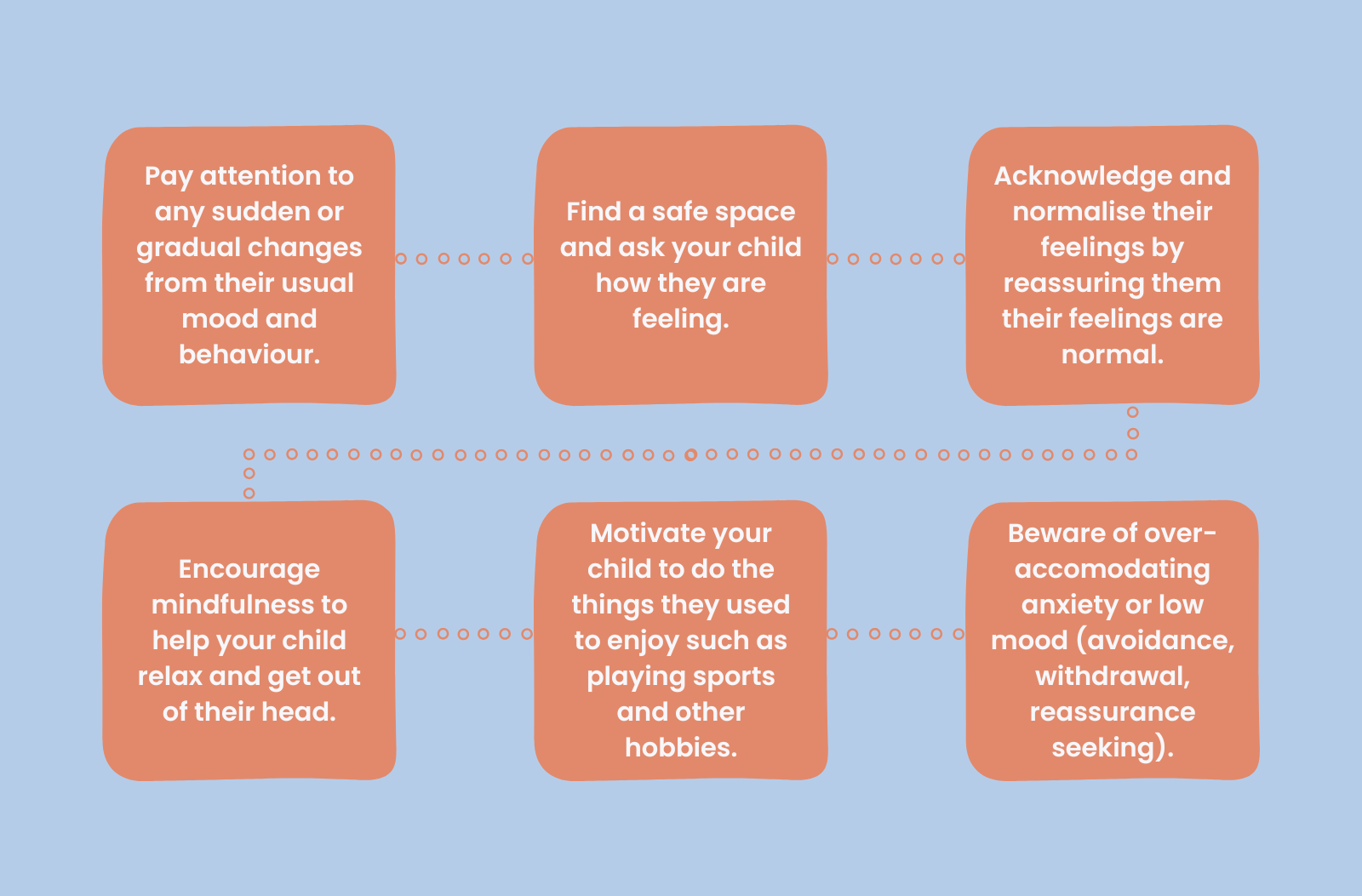
Encourage your child to engage in positive activities to prevent isolating themselves
Positive activities such as exercise, hobbies, connecting with others, often provide a sense of pleasure and achievement.
Activities give a child something to look forward to, can help to distract them from their worries, and more importantly, support their recovery and build their confidence.
Importance of structure and routine
Resetting your child’s biological clock - sleeping and waking up time, going to school and engaging in day-to-day activities is key to improving their overall wellbeing.
Seek professional support
Right evidence-based interventions at the right time are essential for quick recovery and return to normal life. Some children and young people will need professional or specialised help at some point in their lives, and this typically includes seeing a therapist or psychiatrist.
If you are concerned about your child’s mental health, it is crucial to seek professional guidance promptly. Speaking to your GP is the first step to accessing mental health services and for general advice regarding treatment options.
However, unprecedented demand for mental health services in recent years has resulted in a huge strain on the healthcare system, making prevention and early intervention more difficult. The cycle of poor mental health creates a significant burden for children and young people and their families.
Children and young people who receive effective evidence-based care at the right time to tackle the issue head-on before it gets worse are more likely to recover and return to full functioning (Early Intervention Foundation, 2023).
The benefits of Cognitive Behaviour Therapy (CBT) in managing mental health
CBT is an evidence-based talking therapy recommended by the National Institute for Clinical Excellence (NICE) as first line treatment for the treatment of childhood mental health issues including anxiety disorders, דיכאון, and trauma.
CBT helps identify the connection between thoughts, feelings, and behaviours that keep the issue going. It helps your child to identify triggers for their anxiety or low mood and teach them strategies to face anxiety provoking situations.
For children and young people, this means a child receives effective and targeted treatment to enhance their natural growth and development, improve quality of life, and enjoy greater resilience as adults.
Addressing mental health concerns early in their journey to better mental health, enables children and young people to build resilience into adulthood.
בחירות המטופלים עבור בריאות נפש והתנהגות

בריאות ילדים
איך לעזור לילד שלך להתמודד עם לחץ מבחנים
תקופת הבחינות היא זמן מלחיץ. עבור צעירים שניגשים ל-SATs, GCSEs, A-levels או בחינות אוניברסיטה, זה נפוץ להרגיש מוצפים וחרדים. וצפייה בילדכם חווה לחץ בזמן שהוא ניגש לבחינות יכולה להיות קשה מאוד גם כן. עם זאת, ישנם צעדים שתוכלו לנקוט כדי לעזור להם להתמודד.
מאת לידיה סמית

בריאות ילדים
בריאות הנפש של סטודנטים: איך לדעת אם הילד שלך בדיכאון באוניברסיטה
האוניברסיטה יכולה להיות תקופה מרגשת בחייו של צעיר - עבור רבים זה מסמן את הצעד הראשון לחיים עצמאיים, וזמן לחקור הזדמנויות חדשות. עם זאת, שינוי חיים מרגש זה יכול גם לבוא עם אתגרים, הן פיזיים והן רגשיים.
מאת לין סטיבן
שאלות נפוצות
מה ההבדל בין פחדים רגילים בילדות לפוביות?
פחדים רגילים בילדות הם שלבים התפתחותיים טיפוסיים. פוביות, לעומת זאת, הן פחדים עזים ומתמשכים מדברים או מצבים מסוימים, כמו גבהים או בעלי חיים, שהם חזקים בהרבה מהרגיל לגיל הילד ומפריעים לחיי היומיום.
איך אני יכול לדעת אם מצב הרוח הירוד של הילד שלי הוא יותר רציני מאשר סתם תחושת דכדוך?
מצב רוח ירוד אצל ילדים ובני נוער שמהווה סיבה לדאגה יכול להתבטא כרגזנות, אובדן עניין בפעילויות שהם נהנו מהן בעבר, קושי בריכוז, ירידה ניכרת בביצועים בבית הספר, או קושי בהשלמת עבודות בית ספר. תסמינים אלו נמשכים שבועות או יותר וגורמים למצוקה.
מהו התפקיד של שגרה בריאה בתמיכה ברווחה הנפשית של הילד שלי?
הקמת שגרה בריאה היא חיונית לשיפור הרווחה הכללית של ילדכם. זה כולל איפוס השעון הביולוגי שלהם על ידי הבטחת זמני שינה והתעוררות עקביים, ועידוד מעורבות בפעילויות יומיות כמו ללכת לבית הספר. מבנה כזה יכול לתמוך באופן משמעותי בבריאות הנפשית שלהם.
מה המשמעות אם הילד שלי חווה טראומה?
טראומה אצל ילדים מתייחסת לחשיפתם לאירוע מפחיד או מזיק מאוד. זה יכול להתבטא בדרכים שונות, כמו דרך המשחק שלהם, ציורים, סיוטים, התנהגות אימפולסיבית ושינויים ברגשותיהם או בהתפתחותם. זו בעיה בריאותית נפשית שמעמיקה יותר משינויים התפתחותיים רגילים.
כיצד טיפול קוגניטיבי-התנהגותי (CBT) מסייע לילדים עם בעיות בריאות נפשית?
טיפול CBT הוא טיפול בדיבור שעוזר לילדים לזהות את הקשר בין המחשבות, הרגשות וההתנהגויות שלהם שעשויים להנציח את בעיות הבריאות הנפשית שלהם. הוא עוזר להם לזהות גורמים מעוררי חרדה או מצב רוח ירוד ומלמד אותם אסטרטגיות להתמודד עם מצבים מעוררי חרדה. טיפול ממוקד זה שואף לשפר את הצמיחה הטבעית שלהם, לשפר את איכות החיים ולבנות חוסן.
מתי עליי להיות מודאג מספיק כדי לפנות לעזרה מקצועית עבור בריאות הנפש של ילדי?
עליך לשקול לפנות לעזרה מקצועית אם ההתנהגות או הרגשות של ילדך נמשכים במשך שבועות או יותר, גורמים למצוקה משמעותית לילדך או למשפחתך, או מתחילים להפריע לתפקודם בבית הספר, בבית או בחברויות שלהם. יש לפנות לעזרה במצב חירום אם ילדך מפגין התנהגות לא בטוחה או מדבר על פגיעה בעצמו או באחרים.
אודות המחברצפה בפרופיל המלא

Babalwa Madikazi, Head of Children and Young People Psychological Therapies at Onebright
אודות המבקרצפה בפרופיל המלא

Dr Colin Tidy, MRCGP
רופא כללי, מחבר רפואי
MBBS, MRCGP, MRCP (Paediatrics), DCH
ד"ר קולין טיידי הוא רופא ב-NHS, הממוקם באוקספורדשייר.
היסטוריית המאמר
המידע בעמוד זה נבדק על ידי קלינאים מוסמכים.
המאמר זמין גם ב אנגלית, גרמנית, ספרדית, צרפתית, איטלקית, פורטוגזית, הינדי, עברית, ערבית, and שוודית.
Next review due: 3 Feb 2029
6 Feb 2026 | פורסם במקור
נכתב על ידי:
Babalwa Madikazi, Head of Children and Young People Psychological Therapies at Onebrightנבדק על ידי
Dr Colin Tidy, MRCGP

שאלו, שתפו, התחברו.
עיין בדיונים, שאל שאלות ושתף חוויות במאות נושאים בריאותיים.

מרגיש לא טוב?
הערך את הסימפטומים שלך באינטרנט בחינם
הירשמו לניוזלטר של פיישנט
המנה השבועית שלך של עצות בריאות ברורות ואמינות - נכתבה כדי לעזור לך להרגיש מעודכן, בטוח ובשליטה.
על ידי הרשמה אתה מקבל את שלנו מדיניות הפרטיות שלנו. באפשרותך לבטל את המנוי בכל עת. לעולם לא נמכור את הנתונים שלך.
עוד בבריאות ילדים
- האם אפשר לסמוך על טבלאות BMI לילדים?
- האם בני נוער באמת צריכים יותר שינה?
- כיצד הלחץ להניק יכול להשפיע על בריאות הנפש
- איך להימנע מכינים בראש עם החזרה לבית הספר
- כיצד לצחצח ולשמור על שיני ילדך
- כיצד לעזור לילדך לבנות ביטחון עצמי
- כיצד לזהות את הסימנים לכך שהילד שלך בדיכאון
- כיצד לתמוך בילדכם אם הוא נתון לבריונות ברשת
- איך לדבר עם הילד שלך על המשקל שלו
- רבות ממותגי מזון התינוקות ה'בריאים' מכילים יותר מדי סוכר
- חזרת החצבת: למה חיסונים חשובים
- קדחת ארגמנית: עצות מרופא
- סימנים לסוכרת סוג 2 נמצאו אצל ילדים כבר בגיל שמונה
- הפתרונות הטובים ביותר להרטבת לילה
- מהם היתרונות של פרוביוטיקה לתינוקות?
- עודכןאילו מחלות ילדות יכולים מבוגרים לקבל?
- מה כדאי לעשות אם הילד שלך מצפצף?
- מה הכי יעיל לטיפול בקדחת השחת אצל ילדים?
- מתי כדאי לדאוג לגבי אכלן בררן?
- מדוע חצבת במגמת עלייה