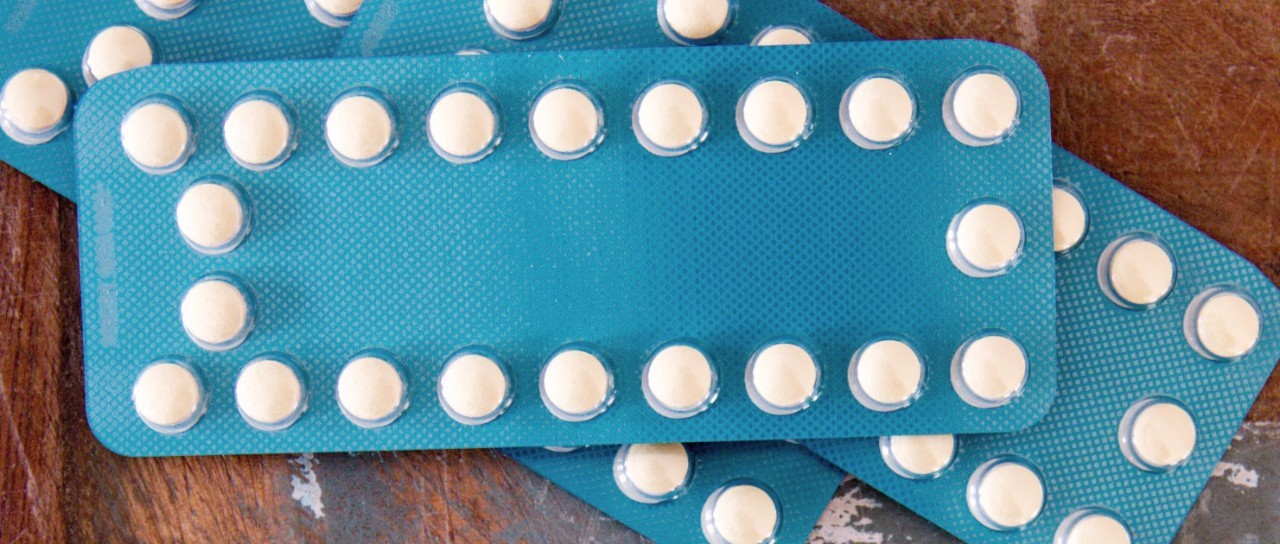
Can you prevent breakthrough bleeding on the pill?
Peer reviewed by Dr Sarah JarvisLast updated by Natalie HealeyLast updated 4 Jun 2019
Meets Patient’s editorial guidelines
- DownloadDownload
- Share
- Language
- Discussion
- Audio Version
- Add to preferred sources on Google
Breakthrough bleeding on the combined pill is common - especially when you first start taking it, or if you choose to take it without a break. But is there anything you can do to prevent breakthrough bleeding like spotting? We ask a gynaecologist.

Avoiding bleeds by taking the pill without a break
If you're using the combined oral contraceptive pill, you likely take a tablet every day for 21 days, followed by seven-day break for a bleed. That's the way it's currently licensed for use.
However, earlier this year, the Faculty of Sexual and Reproductive Healthcare (FSRH) published new guidance stating that this break was medically unnecessary. You can safely avoid monthly bleeding and the symptoms that come with it by running your pill packets together.
Benefits of taking the pill without a break
Reduced period symptoms - some women find symptoms associated with the withdrawal bleed, such as migraines, headaches and PMS, will be reduced.
Increased pill effectiveness - taking a break from the pill weakens the pill's ability to prevent preventing your ovaries from releasing an egg. This makes ovulation more likely if you miss any pills before or after the break.
Continuously taking the pill sounds like a solution then, since it means your bleeds will stop completely. However, it's common for those who embrace it to still experience breakthrough bleeding.
Why breakthrough bleeding happens on the pill
Consultant gynaecologist at Edinburgh University, Professor Sharon Cameron, notes that many women experience breakthrough bleeding when they first start taking the pill. "It should settle within three months, so if it's continuing you should go back and see your contraceptive provider."
She explains that taking the combined pill switches your ovaries off, and the hormones in the pill make the lining of the womb thicken up. Over time, the womb lining might start coming away. That's why you might experience light bleeding if you've been running your pill packets together.
How to prevent breakthrough bleeding on the pill
Cameron notes that some women are just more susceptible to breakthrough bleeding on the pill than others.
However, there are certain habits you can adopt to make it less likely:
Take the pill at the same time of day to maintain hormone levels in the body.
Check that other medications you take aren't interfering with the pill.
Stop taking the pill for four days to allow the womb lining to shed, and then start again.
If you opt for the 4-7 day break, this will not reduce the effectiveness of the contraceptive pill, Cameron explains.
"With a four-day rather than a seven-day break, there's less likelihood that the ovaries will wake up and for one of the eggs to develop enough for ovulation."
If this four-day break doesn't improve the bleeding, seek advice from your GP or local sexual health clinic.
Other causes of breakthrough bleeding
Missing the pill.
Diarrhoea and vomiting may prevent the pill from being absorbed properly.
Certain medications (including herbal preparations) may interact with the pill.
Smoking can make breakthrough bleeding more likely.
STIs such as chlamydia.
All of these scenarios can decrease the pill's effectiveness as contraception.
Rare causes
Womb and cervical cancer.
If breakthrough bleeding on the pill isn't not normal for you, you should get it checked out by a doctor.
"There are some women who just seem to bleed on every sort of hormonal contraception, and that's because the methods we have don't entirely replicate what the natural cycle would do. But as long as there's nothing harmful going on, there are some women who are prepared to put up with it in order to have an effective method of contraception", explains Cameron.
Breakthrough bleeding and PMS
Many women experience mood swings around their period. So could breakthrough bleeding also be associated with PMS, even if you've been taking the same dose of hormones every day?
Anecdotal reports suggest feeling anxious or agitated when breakthrough bleeding occurs is common. But Cameron says the evidence for this is currently unclear.
"Mood and the influence of hormones is poorly understood - and of course, the pill is also used as treatment for PMS," she points out.
If you're taking a contraceptive method that's switching your natural cycle off and giving you a continuous dose, it's hard to see why it would affect your mood. But some researchers believe these mood swings have more to do with a certain part of the brain than the ovaries, Cameron reveals.
"If someone was getting those symptoms on the pill and they're troublesome, it is worth trying a different combination pill to see if it's any better for them. And there are a lot of combinations of pills, or other methods of contraception, to try."
Some women also prefer not to run packs of pill together for fear of the monster bleed and cramps that will await when they do eventually take a break. But Cameron believes this shouldn't be a big concern.
"Continuous pill taking can be good for women who do have heavy bleeds when they're not on the pill because you're reducing the frequency of bleeds that do occur. And for some women, they may be able to go a long period of time without getting any bleeding on it. Because for them, that combination of hormones on the lining of their womb results in a very minimal thickening."
Patient picks for Contraception
Sexual health
What's the future of contraception?
There are already many contraception choices but no method is perfect and totally free of side effects. However, scientists are studying various new forms right now. It means that in the future, there should be better options for couples who want to avoid pregnancy.
by Dr Colin Tidy, MRCGP
Sexual health
When will I become fertile again after coming off contraception?
If you want to have a baby, you’ve probably got a lot of questions - including how long it can take for you to become fertile again if you’ve been on the contraceptive pill or the coil. And while everyone is different, here’s what we know about fertility after coming off different kinds of contraception.
by Lydia Smith
About the authorView full bio

Natalie Healey
Freelance journalist
BSc (Hons) Biomedical Science
She is a London-based health journalist who has been writing about science and medicine for several years. She is the former head of editorial at Patient.
About the reviewerView full bio

Dr Sarah Jarvis
Clinical Consultant
MA (Cantab), BM, BCh (Oxon), DRCOG, FRCGP, MBE
After training in medicine at Cambridge and Oxford, Dr Sarah Jarvis MBE became a GP.
Article history
The information on this page is peer reviewed by qualified clinicians.
Article also available in English, German, Spanish, French, Italian, Portuguese, Hindi, Hebrew, Arabic, and Swedish.
4 Jun 2019 | Latest version
Join the conversation
Share your thoughts or experiences with others in our patient communities.

Ask, share, connect.
Browse discussions, ask questions, and share experiences across hundreds of health topics.

Feeling unwell?
Assess your symptoms online for free
Sign up to the Patient newsletter
Your weekly dose of clear, trustworthy health advice - written to help you feel informed, confident and in control.
By subscribing you accept our Privacy Policy. You can unsubscribe at any time. We never sell your data.
More in sexual health
- Are fertility apps a reliable form of contraception?
- Can your diet and lifestyle improve fertility?
- HIV in women: what you should know
- How does having a stroke affect your sex life?
- How erection problems can affect your relationship
- How to prevent genital irritation from affecting your sex life
- Is it easy to have an HIV test?
- Secret shoppers: Are women given the best contraception advice?
- The most likely causes of pain during sex
- Understanding vulvodynia and why it causes painful sex
- Video: What are the different types of STI?
- What happens when you come off the pill?
- What not to say to someone experiencing infertility
- What not to say to someone with HIV
- What you need to know before you take erectile dysfunction medication
- When will I become fertile again after coming off contraception?
- Which medications can affect your contraception?
- Why is sexual violence against men on the rise?
- Women's HIV prevention: the importance of the vaginal ring
- World AIDS Day: Where are we now with HIV?