בוניון
נבדק על ידי Dr Doug McKechnie, MRCGPעודכן לאחרונה על ידי Dr Colin Tidy, MRCGPעודכן לאחרונה 15 Apr 2025
עומד בהנחיות העריכה של Patient
- הורדהורד
- שתף
- Language
- דיון
- גרסת שמע
- הוסף למקורות מועדפים בגוגל
בוניון (הלוקס ולגוס) הוא עיוות של מפרק הבסיס של הבוהן הגדולה. הסיבה אינה ברורה במקרים רבים. העיוות עשוי לגרום לרגל להתחכך בנעליים, מה שעלול לגרום לדלקת וכאב. נעליים טובות הן לעיתים כל מה שנדרש כדי להקל על התסמינים. ניתוח לתיקון העיוות הוא אפשרות אם נעליים טובות אינן מקלות על התסמינים.
במבט חטוף
בוניון הוא גוש גרמי בבסיס הבוהן הגדולה, הנוטה לכיוון הבוהן השנייה.
העור והרקמות מעל הבוניון יכולים להפוך לדלקתיים, נפוחים וכואבים.
בוניון יכול להיות כואב ועלול להקשות על נעילת נעליים או הליכה.
נעליים שמתאימות היטב יכולות לעזור להפחית כאב ואי נוחות.
Painkillers like paracetamol or ibuprofen may help ease pain.
ניתוח עשוי להיות מומלץ אם טיפולים אחרים אינם מקלים על התסמינים.
What is a bunion?
When your big toe is angled towards the second toe, the deformity is called a bunion (hallux valgus). This causes a bony bump (fluid-filled sac) on the side at the base of the big toe. In addition there is often thickening of the skin and tissues next to the affected joint. The thickened skin and tissues may become inflamed, swollen and painful.
Sometimes a fluid-filled sac (bursa) develops over the joint.
What does a bunion look like?
Foot diagram showing bunion
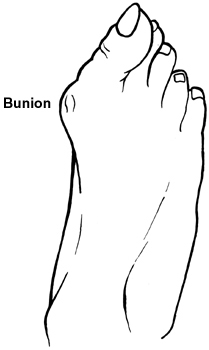
What causes bunions?
The underlying cause of bunions is a deformity of the joint at the base of the big toe. The deformity is called hallux valgus. In this deformity the joint develops a prominent sideways angle. Due to this deformity the foot bones and bones of the big toe are pushed towards the smaller toes.
The skin over the angled joint then tends to rub on the inside of shoes. This may cause thickening and inflammation of the overlying skin and tissues next to the bunion affected joint.
Are bunions hereditary?
In most cases it is not clear why people develop bunions. There may be some hereditary (genetic) tendency to have a weakness of this joint. In some cases it is associated with a joint problem such as osteoarthritis or rheumatoid arthritis.
However, whatever the underlying cause of bunions, wearing tight or badly fitting shoes tends to make the problem worse. Wearing such shoes puts extra pressure on the big toe joint and causes friction on the overlying skin.
Are bunions painful?
Bunion pain is very common, often resulting in difficulty walking or wearing shoes. Other bunion complications can include:
Inflammation and swelling at the base of the toe. This sometimes becomes infected.
The foot may become so wide that it can be difficult to find wide enough shoes.
You may develop arthritis in the big toe.
The second toe can become deformed. In severe cases, the big toe can push your second toe up and out of place.
How are bunions treated?
Wearing shoes that are comfortable
Wearing good footwear does not cure bunions but may reduce pain and discomfort. Ideally, get footwear advice from a person qualified to diagnose and treat foot disorders (podiatrist - previously called a chiropodist) and choose shoes accordingly.
Advice may include:
Wear shoes, trainers or slippers that fit well and have room for your toes.
Don't wear high-heeled, pointed or tight shoes that put pressure on your bunions.
You might find that shoes with laces or straps are best, as they can be adjusted to the width of your foot.
Bunion pads or toe spacers may help, as may ice packs.
Devices which help to straighten the toe (orthoses) may be recommended. However, there is no evidence they improve the underlying condition or stop it getting worse. They may help reduce the pain, at least for a while.
Medication for bunions
משככי כאבים כגון פרצטמול או איבופרופן are a non-surgical treatment option that may help ease any pain. A course of אנטיביוטיקה may be needed if the skin and tissues over the deformity become infected.
Bunion surgery
An operation may be advised if a change of footwear does not ease symptoms of your bunions. The aim of the bunion surgery is to straighten the joint as much as possible and relieve pain. It is not usually done just to improve appearance of the bunion. It can be done using a local or a general anaesthetic and you are usually out of hospital the same day.
There are many different types of operation which are used to treat bunions. These range from operations to trim parts of the joint, to a total artificial replacement of the big toe joint (similar to a knee or a hip replacement). A common surgical procedure used is called a scarf osteotomy (osteotomy means a cut in the bone). In some cases the joint may be fused together so it no longer moves (arthrodesis). The exact operation chosen by the specialist depends on:
How severe the bunion is, and how deformed your foot.
The shape of your foot.
If you have wear and tear (אוסטיאוארתריטיס) in the joint.
Their personal experience and expertise.
An operation is usually successful at easing symptoms of bunions but not in all cases. It is not always possible to relieve the pain completely or make the toe perfectly straight. Your specialist will be able to advise on the pros and cons of surgery and on the success rate of the chosen operation. Complications of the operation can include:
Continued pain.
זיהום.
The bunion returning (recurrence).
General risks of operations and anaesthetics.
You may need to wear a special shoe for six weeks after the bunion operation. Your hospital will give you specific information and advice. You may be given a leaflet with information about the procedures at your hospital and with advice for after the operation. See the Royal National Orthopaedic Hospital leaflet, in references below, for an example and further details.
בחירות המטופלים עבור בעיות בכף הרגל

טיפול בכף הרגל
שלפוחיות ברגליים
שלפוחיות הן כיסים קטנים של נוזל שמתפתחים לרוב על כפות הרגליים ונגרמים בדרך כלל מתערובת של חיכוך ולחץ. הן נפוצות מאוד ויכולות להיות כואבות.
מאת ד"ר פיליפה וינסנט, MRCGP

טיפול בכף הרגל
צניחת כף רגל
צניחת כף רגל, המכונה לפעמים גם רגל שמוטה, היא מצב שבו קשה להרים את החלק הקדמי של כף הרגל. כתוצאה מכך, החלק הקדמי של כף הרגל והאצבעות נוטים להיתפס או להיגרר על הרצפה בזמן הליכה. זה יכול להיות זמני או קבוע ובדרך כלל משפיע רק על צד אחד.
מאת ד"ר פיליפה וינסנט, MRCGP
שאלות נפוצות
האם אני יכול למנוע היווצרות של בוניון?
למרות שהסיבה המדויקת להיווצרות בוניון אינה תמיד ברורה ויכולה להיות נטייה תורשתית, נעילת נעליים מתאימות שמתאימות היטב ואינן מפעילות לחץ על מפרק הבוהן הגדולה עשויה לעזור למנוע את החמרתן או לעכב את התקדמותן. מומלץ להימנע מנעליים עם עקבים גבוהים, מחודדות או צמודות.
האם רפידות לבוניון או מפרידי אצבעות יתקנו את עיוות הבוניון?
רפידות לבוניון או מפרידי אצבעות עשויים לעזור להפחית כאב ואי נוחות הקשורים לבוניון. עם זאת, אין ראיות המצביעות על כך שמכשירים אלו משפרים את המצב הבסיסי או מונעים מהבוניון להחמיר. הם יכולים לספק הקלה זמנית מהתסמינים.
איזה סוג נעליים הכי מתאים אם יש לי בוניון?
כאשר יש לך בוניון, עדיף לנעול נעליים, נעלי ספורט או נעלי בית שמספקות מקום רחב לאצבעות ומתאימות היטב מבלי להיות צמודות. נעליים עם שרוכים או רצועות יכולות להיות מועילות מכיוון שהן מאפשרות התאמה לרוחב כף הרגל שלך. כדאי להימנע מנעליים עם עקבים גבוהים, מחודדות או צמודות שיכולות להפעיל לחץ על הבוניון.
כמה זמן לוקח להחלים מניתוח בוניון?
לאחר ניתוח בוניון, ייתכן שתצטרך לנעול נעל מיוחדת למשך כשישה שבועות. לוח הזמנים הספציפי להחלמתך יהיה תלוי בסוג הניתוח שבוצע ובגורמים אישיים. בית החולים שלך יספק מידע מפורט לאחר הניתוח ועצות בנוגע להחלמתך.
מהם התוצאות לטווח הארוך של ניתוח בוניון?
ניתוח בוניון בדרך כלל מצליח להקל על התסמינים, אך חשוב להבין שהוא עשוי לא להקל על כל הכאב או ליישר את הבוהן באופן מושלם. סיבוכים פוטנציאליים לטווח ארוך יכולים לכלול כאב מתמשך, חזרת הבוניון (הישנות), או סיכונים כלליים הקשורים לכל ניתוח. המומחה שלך יכול לספק מידע ספציפי יותר על שיעורי ההצלחה והתוצאות הפוטנציאליות של ההליך הכירורגי הנבחר.
קריאה נוספת והפניות
- בוניון; NICE CKS, August 2021 (UK access only)
- A Patient’s Guide to Bunions (Hallux Valgus) and Lesser Toe Deformities; Royal National Orthopaedic Hospital, 2020
- Aebischer AS, Duff S; Bunions: A review of management. Aust J Gen Pract. 2020 Nov;49(11):720-723. doi: 10.31128/AJGP-07-20-5541.
- Park CH, Chang MC; Forefoot disorders and conservative treatment. Yeungnam Univ J Med. 2019 May;36(2):92-98. doi: 10.12701/yujm.2019.00185. Epub 2019 May 14.
- Ferrari J, Higgins JP, Prior TD; Interventions for treating hallux valgus (abductovalgus) and bunions. Cochrane Database Syst Rev. 2004;(1):CD000964.
- Klugarova J, Hood V, Bath-Hextall F, et al; Effectiveness of surgery for adults with hallux valgus deformity: a systematic review. JBI Database System Rev Implement Rep. 2017 Jun;15(6):1671-1710. doi: 10.11124/JBISRIR-2017-003422.
- Nair A, Bence M, Saleem J, et al; A Systematic Review of Open and Minimally Invasive Surgery for Treating Recurrent Hallux Valgus. Surg J (N Y). 2022 Dec 21;8(4):e350-e356. doi: 10.1055/s-0042-1759812. eCollection 2022 Oct.
אודות המחברצפה בפרופיל המלא

Dr Colin Tidy, MRCGP
רופא כללי, מחבר רפואי
MBBS, MRCGP, MRCP (Paediatrics), DCH
ד"ר קולין טיידי הוא רופא ב-NHS, הממוקם באוקספורדשייר.
אודות המבקרצפה בפרופיל המלא

Dr Doug McKechnie, MRCGP
כותב רפואי
MA, MBBS, MSc, DRCOG, MRCP(UK), MRCGP(2021), FHEA
ד"ר דאג מקקני הוא רופא משפחה ב-NHS העובד בלונדון. הוא עובד במשרה מלאה קלינית ומשמש גם כסגן ראש המודול לפרקטיקה קלינית ומקצועית בבית הספר לרפואה של יוניברסיטי קולג' לונדון.
היסטוריית המאמר
המידע בעמוד זה נכתב ונבדק על ידי קלינאים מוסמכים.
המאמר זמין גם ב אנגלית, גרמנית, ספרדית, צרפתית, איטלקית, פורטוגזית, הינדי, עברית, ערבית, and שוודית.
הסקירה הבאה מתוכננת ל: 14 אפריל 2028
15 Apr 2025 | הגרסה האחרונה

שאלו, שתפו, התחברו.
עיין בדיונים, שאל שאלות ושתף חוויות במאות נושאים בריאותיים.

מרגיש לא טוב?
הערך את הסימפטומים שלך באינטרנט בחינם
הירשמו לניוזלטר של פיישנט
המנה השבועית שלך של עצות בריאות ברורות ואמינות - נכתבה כדי לעזור לך להרגיש מעודכן, בטוח ובשליטה.
על ידי הרשמה אתה מקבל את שלנו מדיניות הפרטיות שלנו. באפשרותך לבטל את המנוי בכל עת. לעולם לא נמכור את הנתונים שלך.