Urine dipstick test
נבדק על ידי Dr Doug McKechnie, MRCGPעודכן לאחרונה על ידי Dr Philippa Vincent, MRCGPעודכן לאחרונה 4 יוני 2024
עומד בהנחיות העריכה של Patient
- הורדהורד
- שתף
- Language
- דיון
- גרסת שמע
- הוסף למקורות מועדפים בגוגל
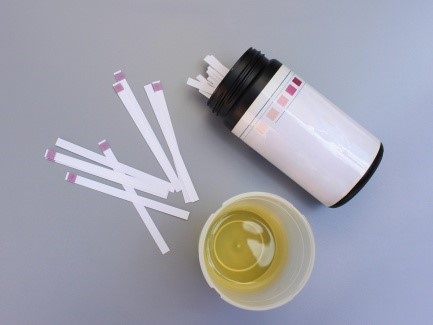
A urine dipstick test tests the urine using a special strip of paper that is dipped into a sample of urine. The result is available almost immediately. It is sometimes called a rapid urine test.
במבט חטוף
A urine dipstick test quickly checks for abnormal substances in your urine.
It involves dipping a treated strip into a urine sample, with results in minutes.
You provide a "midstream" urine sample in a sterile pot.
The test can check for things like blood, protein, glucose, or signs of infection.
Results may indicate conditions such as diabetes, kidney issues, or urinary tract infections.
Abnormal results may lead to further lab tests on your urine sample.
במאמר זה:
בחירות וידאו עבור בדיקות שתן ושלפוחית השתן
Urine contains waste chemicals from all of the millions of chemical reactions that go on in the body all the time.
However, in some conditions, chemicals that shouldn't normally be present in urine get through the filtering systems in the kidneys and pass into the urine. Normally these chemicals would be dealt with by the kidneys and return to the blood stream.
Urine dipstick tests can be used to see if those chemicals are present.
המשך לקרוא למטה
What is a urine dipstick test?
A urine dipstick test is the quickest way to test urine. It involves dipping a specially treated paper strip into a sample of urine. This can be done during an appointment with a health professional.
The results are usually available within 60-120 seconds. The sample doesn't need to be sent to a laboratory for a urine dipstick test although if the test is abnormal, the sample may be sent to a laboratory for further tests.
What do you need to do for a urine dipstick test?
חזרה לתוכןA sample of urine will need to be provided in a sterile container. Ideally the urine should be produced straight into the pot. Peeing into another container and then transferring it stops it being a sterile sample so is not recommended.
The best sample is one which is called a midstream specimen of urine (MSU). This means starting to pee, then passing the open pot into the stream of urine and then taking it away again when enough urine has been collected. The lid should then be replaced tightly on the pot and then both hands and the pot washed carefully.
המשך לקרוא למטה
How is a urine dipstick test done?
חזרה לתוכןA health professional will use a urine testing strip to test the urine. There are several different kinds of urine testing strips that test for different things in the urine. The strip has squares on it that change colour in the presence of certain substances.
The strip will then be compared to a chart on the side of the urine testing strip package. Often the more intense the colour change, the more of the substance there is in the urine.
How to read a urine dipstick
חזרה לתוכןSome urine dipsticks test for just one or two of the abnormalities below. Others test for many of these substances.
To read the dipstick, this involves:
Taking a urine sample as above.
Dipping one of the sticks into the sample, making sure all the test zones on the stick are submerged.
Removing the stick, tapping to remove excess urine and holding it horizontally so urine doesn't drip.
After the relevant time (usually between 30 seconds and 2 minutes), holding the dipstick up against the colour chart on the dipstick bottle.
Each test will be colour-coded and there will be several different shades of that colour. A darker shade indicates that there is more of the relevant substance - blood, glucose etc - in the urine.
Recording the result.
המשך לקרוא למטה
Why is a urine dipstick test done?
חזרה לתוכןA urine dipstick test is done for lots of different reasons, such as:
A routine check during pregnancy to check for glucose, protein or signs of bacteria.
To screen for סוכרת.
If a זיהום בדרכי השתן is suspected.
To look for דם בשתן (haematuria).
It may be done in people with some types of abdominal or back pain to look for kidney or bladder problems.
The first thing that a health professional will do is look at the urine. Normal urine varies in colour from colourless to dark yellow. Various things can affect the way urine looks, from how much fluid has been drunk to what has been eaten recently. The smell can also vary widely and is not a good gauge of illness.
What are the results of a urine dipstick test?
חזרה לתוכןA urine dipstick test can look for the following:
דם
Blood is not normally found in the urine.
It may be present if there is an infection.
It can be due to significant underlying disease, such as cancer, in the bladder or kidney.
In women, it may be due to contamination if menstruating at the time of doing the sample.
Will usually need to be confirmed by sending the sample for a full laboratory test, as the dipstick test can show a false positive.
חלבון
Protein is normally found in the urine in tiny amounts but these tiny amounts are usually too small to be picked up on a urine dipstick test.
Protein may be found in larger amounts if there is an infection.
It can be seen as one of the signs of רעלת הריון in pregnancy.
It can be the first sign of kidney disease and is also used as a measure of the severity of kidney disease.
Glucose
Glucose, a type of sugar, is not normally found in the urine.
It can be found in the urine if someone has poorly controlled סוכרת or as the first sign of diabetes.
It can also be found in people with particular types of kidney disease, even without diabetes.
There is a rare condition called familial renal glycosuria where glucose is found in the urine without diabetes - this is an inherited condition.
People with type 2 diabetes who are taking a medicine called an SGLT2 inhibitor (such as canagliflozin, dapagliflozin או empagliflozin) can have glucose in the urine due to the fact that these medicines help to reduce blood sugar, partly by reducing the amount of glucose reabsorbed into the system via the kidneys. Glucose in the urine whilst taking one of these medicines is normal.
Ketones
Ketones are chemicals made by the body when it's breaking down fat for energy. This happens when starving and the body has used up all, or nearly all, of its stores of sugar (glucose). This is normal.
Ketones are not usually found in the urine otherwise.
Ketones may be present in סוכרת which is not well controlled; levels of glucose in the blood are usually also very high in this scenario. In someone with diabetes, particularly type 1 diabetes, ketones in the urine can indicate a condition called diabetic ketoacidosis. This is a serious emergency and requires urgent treatment in hospital.
Ketones may also be present in women who are pregnant.
Ketones can be a sign of dehydration.
Bilirubin and urobilinogen
Bilirubin and urobilinogen are chemicals produced by the liver. They are not normally found in the urine.
If bilirubin is found in the urine it usually means there's a problem with the liver.
Small amounts of urobilinogen may be found in the urine but large amounts suggest a problem with the liver or with red blood cells being destroyed too quickly.
Leukocyte esterase and nitrite
These are both tests for the presence of infection.
Leukocyte esterase test looks for a reaction that only happens if there are lots of white cells in the urine. White cells get into the urine when there is an infection.
Nitrite is not normally found in the urine but will appear there if there are lots of bacteria in the urine.
Nitrite test can be negative even if there are lots of bacteria in the urine if the urine hasn't been in the bladder for long.
Urine dipstick tests are very accurate at excluding infection but are less reliable for predicting infection - there are more false positive results.
The urine dipstick test also measures how concentrated the urine is and how acidic it is.
בחירות המטופלים עבור בדיקות שתן ושלפוחית השתן
בדיקות וחקירות
Ketones in urine
Ketones are produced when the body burns fat for fuel. Normally these ketones will be completely broken down (metabolised) so that there are very few ketones in the urine. If for any reason the body cannot get enough glucose for energy it will switch to using body fats, causing an increase in ketones in the body. This results in more ketones in urine.
מאת ד"ר סורנגי מנדיס, MRCGP

בדיקות וחקירות
Urodynamic testing
Urodynamic tests check the filling and emptying of your bladder and help to investigate the cause of any urinary incontinence you may have. Note: the information below is a general guide only. The arrangements, and the way tests are performed, may vary between different hospitals. Always follow the instructions given by your doctor or local hospital.
מאת ד"ר היילי וילאסי, FRCGP
שאלות נפוצות
Does a urine dipstick test hurt?
No, a urine dipstick test is not painful. It involves providing a urine sample, which is then tested by dipping a paper strip into it. There are no needles or invasive procedures during the test itself.
Can I prepare for a urine dipstick test?
The main preparation is to be ready to provide a midstream urine sample. This involves starting to urinate, then collecting a portion of the urine in a sterile pot, and then finishing urination. Ensuring you have enough fluid in your system to provide a sample is helpful.
How quickly will I get the results from a urine dipstick test?
The results from a urine dipstick test are usually available very quickly, typically within 60-120 seconds, as the health professional can read the colour changes on the strip almost immediately.
What if my urine dipstick test shows an abnormality?
If the urine dipstick test shows an abnormal result, the urine sample may be sent to a laboratory for further, more detailed tests. For example, if blood is detected, it usually needs confirmation by a full laboratory test because a dipstick can sometimes show a false positive.
Can diet or medication affect my urine dipstick test results?
Yes, certain factors can influence results. For example, some people with type 2 diabetes taking SGLT2 inhibitor medication will normally have glucose in their urine. Also, the general appearance and smell of urine can be affected by how much fluid you've drunk or what you've eaten recently.
If I am menstruating, will this affect the test?
Yes, if you are menstruating when you provide a urine sample, blood may be present in the sample due to contamination. This can lead to a positive result for blood on the dipstick test.
קריאה נוספת והפניות
- BMC Urology; The urine dipstick test useful to rule out infections. A meta-analysis of the accuracy
המשך לקרוא למטה
אודות המחברצפה בפרופיל המלא

Dr Philippa Vincent, MRCGP
רופא כללי, מחבר רפואי
MB BS, Bsc, MRCGP (2000), DCH, DFSRH, DRCOG
ד"ר Philippa וינסנט הוא רופא משפחה ב-NHS העובד בצפון לונדון.
אודות המבקרצפה בפרופיל המלא

Dr Doug McKechnie, MRCGP
כותב רפואי
MA, MBBS, MSc, DRCOG, MRCP(UK), MRCGP(2021), FHEA
ד"ר דאג מקקני הוא רופא משפחה ב-NHS העובד בלונדון. הוא עובד במשרה מלאה קלינית ומשמש גם כסגן ראש המודול לפרקטיקה קלינית ומקצועית בבית הספר לרפואה של יוניברסיטי קולג' לונדון.
היסטוריית המאמר
המידע בעמוד זה נכתב ונבדק על ידי קלינאים מוסמכים.
הסקירה הבאה מתוכננת ל: 3 ביוני 2027
4 יוני 2024 | הגרסה האחרונה

שאלו, שתפו, התחברו.
עיין בדיונים, שאל שאלות ושתף חוויות במאות נושאים בריאותיים.

מרגיש לא טוב?
הערך את הסימפטומים שלך באינטרנט בחינם
הירשמו לניוזלטר של פיישנט
המנה השבועית שלך של עצות בריאות ברורות ואמינות - נכתבה כדי לעזור לך להרגיש מעודכן, בטוח ובשליטה.
על ידי הרשמה אתה מקבל את שלנו מדיניות הפרטיות שלנו. באפשרותך לבטל את המנוי בכל עת. לעולם לא נמכור את הנתונים שלך.