Hiccups
Hiccoughs
נבדק על ידי Dr Colin Tidy, MRCGPעודכן לאחרונה על ידי Dr Hayley Willacy, FRCGP Last updated 3 Jun 2025
עומד בהנחיות העריכה של Patient
- הורדהורד
- שתף
- Language
- דיון
- גרסת שמע
- Add to preferred sources on Google
A hiccup is an involuntary contraction of your diaphragm that is followed by the closing of your glottis - the top of your windpipe - which makes the 'hic' sound. Hiccups are common and nothing to worry about.
במאמר זה:
Video picks for Other signs and symptoms
נקודות מפתח
A hiccup is a reflex you can’t control. It happens when your diaphragm suddenly tightens, followed by your glottis (the top of your windpipe) closing, making the 'hic' sound.
Many things can trigger hiccups including eating or drinking too quickly, swallowing air, sudden temperature changes, excitement, stress, or an overly full stomach.
Hiccups usually go away on their own but there are some things you can do to help stop them, these include holding your breath, breathing into a paper bag, sipping cold water, and swallowing granulated sugar.
המשך לקרוא למטה
What are hiccups?
Diagram of lungs and airways
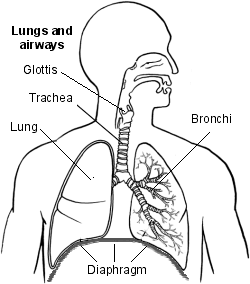
Everyone has had hiccups, and knows exactly what they are and what they feel like. Hiccups can be divided into three groups:
Acute hiccups lasting for minutes or hours. They are usually harmless and last for less than 48 hours.
Persistent (chronic) hiccups lasting for more than 48 hours, or occurring in recurrent attacks.
Intractable hiccups lasting for more than one month.
Hiccups affect women and men equally, although persistent hiccups occur much more commonly in men. They happen mainly in the evening.
Persistent or intractable hiccups are more likely to be linked to an underlying illness and you may need medical tests.
There is a medical term for hiccups - singultus.
What causes hiccups?
חזרה לתוכןMost people have bouts of hiccups from time to time. In most cases they start for no apparent reason, last a short while and then stop. Sometimes they are due to:
Sudden excitement or emotional stress.
A temporary swollen stomach caused by overeating or eating too fast, drinking fizzy drinks, or swallowing air.
A sudden change in temperature (very hot or cold food or drinks, a cold shower, etc).
Alcohol.
Excess smoking.
המשך לקרוא למטה
What causes persistent hiccups?
חזרה לתוכןPersistent hiccups are rare.
In some cases, persistent hiccups are caused by an underlying disease. Over 100 diseases have been reported to cause hiccups. Some are common, such as acid reflux, and some are rare. You would normally have other symptoms apart from the hiccups.
In some cases of persistent hiccups there is no apparent cause. However, the persistent hiccups can become exhausting and distressing.
Examples of conditions which can cause persistent hiccups are:
Certain medicines - examples are סטרואידים, tranquillisers, painkillers containing opiates (such as morphine) and methyldopa (for blood pressure).
Changes in blood chemistry such as from alcohol, high blood sugar, or lack of calcium or potassium in the blood.
Gut problems such as ריפלוקס חומצי, stretching (distension) of the stomach, infection of the gallbladder or infection under the diaphragm.
Other gut conditions that can cause hiccups include hiatus hernia ו oesophageal cancer.
Abdominal masses, such as enlargement of the liver (hepatomegaly) or enlargement of the spleen (splenomegaly).
A general anaesthetic.
Conditions affecting the neck, chest or tummy (abdomen). For example, surgery, infections (such as כאב גרון או דלקת ריאות), swellings or tumours in these parts of the body.
Some heart conditions - a התקף לב או inflammation around the heart.
Brain conditions such as שבץ, head injury or brain infection.
Hiccups which sometimes occur in the late stages of a terminal illness such as when a person is very ill with advanced cancer.
Do I need any tests?
חזרה לתוכןYou are unlikely to need any tests unless you have persistent hiccups lasting more than 48 hours or frequent recurring short bouts of hiccups Unless your doctor can find an obvious cause, they will most likely want to do some tests.
The initial tests are usually:
Blood tests.
A chest צילום רנטגן.
These look for changes such as blood chemistry, chest problems or heart disease.
Other tests may be advised, depending on your individual situation and whether any other medical condition is suspected.
המשך לקרוא למטה
How to get rid of hiccups
חזרה לתוכןShort bouts of hiccups
Most cases need no treatment, as a bout of hiccups usually soon goes. There are many popular remedies that are said to stop a short bout of hiccups but they are based on people's individual experiences. It is not clear how effective they are, as they have not been tested by research trials. They include the following:
First, block off all airways by putting fingers in your ears and blocking your nostrils. Then, take a sip or two of water from a glass. It is possible to do this alone (looks a bit silly - but is possible) but you may find it easier with an assistant.
Drinking water (or cold water).
Swallowing granulated sugar.
Biting on a lemon or tasting vinegar.
Holding your breath, breathing fast, or breathing into a paper bag.
Gasping after a sudden fright, or sneezing.
Pulling your knees up to your chest and/or leaning forward to compress the chest.
Using a technique called the Valsalva manoeuvre. (The Valsalva manoeuvre means trying to push your breath out while you hold your throat and voice box closed.) The way to do this is to take a deep breath in, then keep the air inside you while pushing with your muscles as if to force the air out. This is like pushing in childbirth or straining on the toilet.
Persistent hiccups
If an underlying cause is found then treatment of the underlying cause, if possible, may cure the hiccups. For example, one research study found that many people with persistent hiccups had a gut condition called acid reflux. See the separate leaflet called Acid reflux and oesophagitis (Heartburn) for more details. Treating the reflux seemed to help stop hiccups in many cases.
Firstly, try any of the popular remedies used to treat short bouts of hiccups (explained above). Also, treat any underlying cause, if possible.
Secondly, medication is sometimes needed to stop persistent hiccups. Various medicines have been used for this. The following medicines may be used for treating adults with hiccups (for children, specialist advice is recommended):
Chlorpromazine ו haloperidol are medicines which can relax the diaphragm muscle or its nerve supply and may stop persistent hiccups.
For stomach problems such as acid reflux or a stretched (distended) stomach: anti-acid medicines (various types, such as אומפרזול) or medicines which help the stomach to empty faster (such as metoclopramide).
Baclofen - this is a medicine which helps to relax muscles.
Gabapentin - this can help to relax the nerve supply to the muscle under your lungs that helps you breathe in (the diaphragm).
Ketamine - an intravenous anaesthetic - is sometimes effective when other treatments have failed.
Giving a medication called metoclopramide by intravenous injection has been reported to cure hiccups occurring after anaesthetic.
For people with a terminal illness, sedatives such as midazolam can help to control hiccups and relieve the stress they cause.
Referral to a specialist is often advised for persistent hiccups, either to look for a cause, or to offer more treatment options. Some examples of treatments that have been successfully used for persistent hiccups are:
Acupuncture or hypnotherapy.
A device similar to a pacemaker. This is used to stimulate or pace the nerve to the diaphragm (the phrenic nerve) or to stimulate another important nerve in the neck, called the vagus nerve.
For hiccups that continue despite treatment, a phrenic nerve block is occasionally used. This involves interrupting the phrenic nerve - for example, by injecting a local anaesthetic near the nerve. However, this treatment needs to be considered carefully: it carries risks because the phrenic nerve is important in breathing.
Are there any complications of hiccups?
חזרה לתוכןShort bouts of hiccups do not normally cause any problems or complications.
Persistent hiccups may cause complications such as:
Tiredness, or exhaustion.
Poor sleep.
They may also cause psychological distress or embarrassment.
For people who have had recent surgery to the tummy (abdomen), persistent hiccups may delay healing of the scar (wound), because hiccups move the abdominal muscles. This increases the risk of complications with the wound.
שאלות נפוצות
חזרה לתוכןHow to stop reflux hiccups?
Reflux hiccups often improve by treating the underlying acid reflux. Try eating smaller meals, avoiding spicy or fatty foods, and staying upright after eating. If hiccups persist or become frequent, speak to your doctor as you may need medication to reduce stomach acid.
Can hiccups kill you?
Hiccups themselves won’t kill you, but ongoing or severe bouts can sometimes signal an underlying medical problem. If your hiccups last more than 48 hours or affect your ability to eat, drink, or sleep, it’s important to see your doctor.
Why do babies get hiccups in the womb?
Babies get hiccups in the womb as part of their normal development. These tiny spasms help strengthen the baby’s diaphragm and prepare them for breathing after birth. It’s usually harmless and a good sign of healthy growth.
Patient picks for Other signs and symptoms

סימנים ותסמינים
Loss of appetite
There are numerous possible causes for loss of appetite. If it persists then see your doctor who can try to find the cause in your particular case.
מאת ד"ר טוני הייזל, MRCGP

סימנים ותסמינים
Neck pain
A sudden-onset (acute) bout of neck pain is common. Two out of three people will have neck pain at some time in their lives. In most cases it is not due to a serious condition or neck problem and often the exact cause for the pain is not clear. The usual advice is to keep the neck active. Painkillers can be helpful until the pain eases. Persistent (chronic) pain develops in some cases and further treatment may then be needed.
מאת ד"ר פיליפה וינסנט, MRCGP
קריאה נוספת והפניות
- Hiccups; NICE Clinical Knowledge Summary, February 2022 (UK access only)
- Seifi A, Fox MR; 'What puts the 'Hic' into Hiccups?'. BMJ Open Gastroenterol. 2022 Jun;9(1):e000918. doi: 10.1136/bmjgast-2022-000918.
- Cole JA, Plewa MC; Singultus.
- Kishi Y, Nakawaga M, Inumaru A, et al; Interventions for Hiccups in Adults: A Scoping Review of Western and Eastern Approaches. Palliat Med Rep. 2025 Apr 17;6(1):171-178. doi: 10.1089/pmr.2024.0109. eCollection 2025.
המשך לקרוא למטה
About the authorView full bio

Dr Hayley Willacy, FRCGP
General Practitioner, Medical Author
MBChB (1992), DRCOG, DFFP, MRCOG (Part 1) MRCGP (2007), DFSRH (2013), MSc - medical education (2020)
Dr Hayley Willacy was an NHS GP working in northwest England, who retired from clinical practice in 2022 after 30 years.
About the reviewerView full bio

Dr Colin Tidy, MRCGP
General Practitioner, Medical Author
MBBS, MRCGP, MRCP (Paediatrics), DCH
Dr Colin Tidy is an NHS Doctor, based in Oxfordshire.
היסטוריית המאמר
המידע בעמוד זה נכתב ונבדק על ידי קלינאים מוסמכים.
Next review due: 2 Jun 2028
3 Jun 2025 | הגרסה האחרונה

שאלו, שתפו, התחברו.
עיין בדיונים, שאל שאלות ושתף חוויות במאות נושאים בריאותיים.

מרגיש לא טוב?
הערך את הסימפטומים שלך באינטרנט בחינם
הירשמו לניוזלטר של פיישנט
המנה השבועית שלך של עצות בריאות ברורות ואמינות - נכתבה כדי לעזור לך להרגיש מעודכן, בטוח ובשליטה.
By subscribing you accept our מדיניות הפרטיות שלנו. באפשרותך לבטל את המנוי בכל עת. לעולם לא נמכור את הנתונים שלך.