תזונה ל-PCOS: מה לאכול כדי לנהל את התסמינים
נבדק על ידי Dr Colin Tidy, MRCGPעודכן לאחרונה על ידי Victoria Rawעודכן לאחרונה 3 Mar 2026
עומד בהנחיות העריכה של Patient
- הורדהורד
- שתף
- Language
- דיון
- גרסת שמע
- הוסף למקורות מועדפים בגוגל
Polycystic Ovary Syndrome (PCOS) is a health condition that affects some women from their late teens onwards. Though PCOS is sometimes managed with medicine, its symptoms can be reduced through a combination of healthy lifestyle habits - especially your diet.
What is PCOS?
PCOS is a hormonal disorder that affects 1 in 10 women worldwide. If you have PCOS, you may have irregular or absent periods. This is because your ovaries do not release eggs as regularly as they should.
Dr Megan Lyons, Double Board Certified Doctor of Clinical Nutrition, The Lyon's Share Wellness, Dallas, USA explains that one of the hallmark symptoms of PCOS is the presence of multiple ovarian cysts, which gives the condition its name.
However, they are not actually cysts. They're painless, fluid-filled sacs (follicles) surrounding your ovaries that cause them to become enlarged. The abnormal hormone levels in PCOS can prevent some of these follicles from growing and maturing to release eggs. This contributes to irregular menstrual cycles and some cycles where eggs aren't released at all (anovulation).
Lyons says: "People with PCOS also have high levels of androgens. These are traditionally thought of as male hormones, but are present in both men and women at different levels. In women with PCOS, these androgens are higher than normal."
Alyssa Pacheco, Registered Dietitian, The PCOS Nutritionist Alyssa, Greater Boston, USA says that PCOS can present differently and cause a variety of symptoms.
Not everyone with polycystic ovaries will have PCOS and not everyone with PCOS has polycystic ovaries.
For diagnosis, you need any two of the following:
Polycystic ovaries - usually seen on an ultrasound scan. An ovary might have more than 20 cysts.
Signs of high androgen levels - for example high testosterone levels from blood tests or symptoms of high testosterone such as hirsutism or acne.
No or infrequent periods.
Aside from irregularities in your period, these can also include:
Hair thinning or hair loss.
אקנה.
עייפות.
עלייה במשקל - particularly around your tummy (abdomen).
Abnormal hair growth (hirsutism) - typically in areas such as your face, bottom, back, or chest.
Lyons adds: "It can also lead to irritability, mood changes, and depression."
Pacheco says that PCOS is linked to an increased chance of developing type 2 diabetes, heart disease, כבד שומני, and endometrial cancer.
How can diet help with PCOS?
PCOS diet: what to eat to manage symptoms
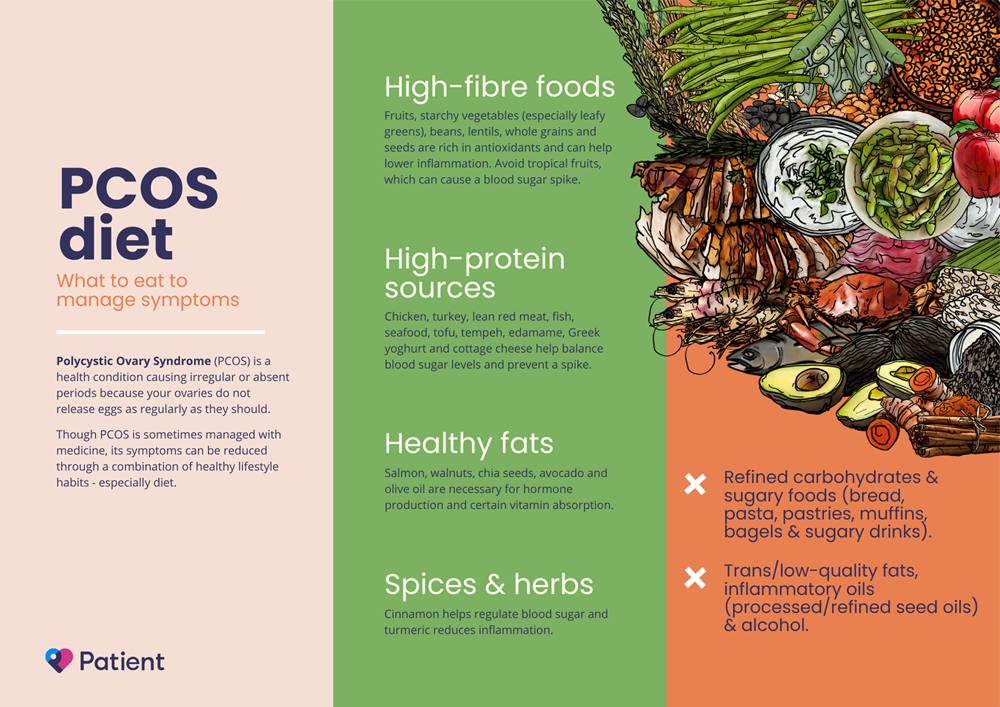
Graphic: Ben Hudson
Up to 70% of women with PCOS have insulin resistance. Insulin is a hormone your body makes to stabilise your blood sugar levels.
Lyons says that though PCOS is often categorised as a hormonal disorder, it is increasingly considered a metabolic condition because much can be done to manage it through food and lifestyle changes. One of the most effective strategies for managing PCOS is blood sugar stabilisation.
"By controlling blood sugar, we can help reduce insulin resistance," Lyon explains. "This, in turn, supports proper metabolic function and contributes to hormone balance."
Pacheco explains that PCOS is also linked with long-term inflammation.
"Insulin resistance and inflammation can each increase androgens - such as testosterone levels - which cause a lot of the typical PCOS symptoms," she says. "By including certain foods, in specific patterns, that maintain stable blood sugar levels and lower inflammation, you can see a decrease in PCOS symptoms."
Foods to eat with PCOS
To help stabilise blood sugar levels, it's important to focus on the types of foods that support blood sugar regulation and lower inflammation.
Lyons says that when your body is not constantly fighting inflammation, it has more resources available to regulate hormones effectively.
Both Lyons and Pacheco recommend the following foods to help ease PCOS symptoms.
מזונות עשירים בסיבים - such as fruits, starchy vegetables (especially leafy greens), beans, lentils, whole grains, and seeds. These are rich in antioxidants and can help lower inflammation. However, avoid tropical fruits, which can cause a blood sugar spike.
High-protein sources - such as chicken, turkey, lean red meat, fish, seafood, tofu, tempeh, edamame, Greek yoghurt, and cottage cheese. These foods can help balance your blood sugar levels and prevent a spike.
Healthy fats - such as salmon, walnuts, chia seeds, avocado, and olive oil. These are necessary for hormone production, and certain vitamin absorption.
Spices and herbs - such as cinnamon (which could help regulate blood sugar) and turmeric (which could reduce inflammation).
Pacheco recommends pairing high-fibre carbohydrates with protein and healthy fats at meals for an optimal combination to keep blood sugar levels more stable.
Foods to avoid with PCOS
When modifying your diet to help manage PCOS symptoms, it's important to minimise foods that cause blood sugar spikes.
Lyons says these include refined carbohydrates and sugary foods such as bread, pasta, pastries, muffins, bagels and sugary drinks. She also recommends cutting back on trans fats, low-quality fats, inflammatory oils - such as processed and refined seed oils - and alcohol.
Pacheco agrees that these types of foods can worsen inflammation or insulin resistance if they're consumed frequently, or in high amounts.
PCOS diet: what to eat to manage symptoms
What else can help with symptoms of PCOS?
According to Pacheco, while diet can certainly help PCOS symptoms, it's not the only thing you can focus on.
"Exercise, getting enough sleep, and stress management are all big factors when it comes to hormone health," she says.
Make time for exercise
Physical activity plays a crucial role in managing PCOS. A balanced exercise routine - incorporating strength training and moderate cardio - can significantly improve PCOS symptoms.
Lyons advises that while people with PCOS shouldn't overexert themselves with intense activities such as running marathons, a moderate amount of low-intensity cardio can also be beneficial.
She adds: "Strength training also helps with blood sugar regulation, reduces insulin resistance, and decreases inflammation."
Sleep well, stress less
In addition to exercise, sleep is another key element of PCOS symptom control.
"Lack of sleep can make insulin resistance worse. Likewise, long-term stress should be managed, as it can lead to cortisol dysregulation," says Lyons. "Cortisol is a hormone that affects both blood sugar and insulin levels - as well as androgens. So when cortisol levels are out of balance, it can make PCOS symptoms worse."
Supplements
Current UK guidance from the British Dietetic Association (BDA) advises that no supplements are necessary - or have a good evidence base - for their use in managing PCOS.
Effectively managing PCOS symptoms involves an integrated approach involving healthy dietary choices, regular exercise, quality sleep and stress management.
Lyon concludes: "By stabilising blood sugar and reducing insulin resistance, you can address the root causes of many PCOS symptoms. This can lead to improved hormone balance and overall wellbeing."
בחירות המטופלים עבור PCOS

הורמונים
8 מיתוסים נפוצים על תסמונת השחלות הפוליציסטיות (PCOS)
Polycystic ovary syndrome is one of the most common yet misunderstood women's health conditions. With misinformation circulating the internet, we sort fact from fiction and explore how myths about PCOS might be harming women with this condition.
מאת אמברלי דייוויס

בריאות האישה
תסמונת השחלות הפוליציסטיות
Polycystic ovary syndrome (PCOS) is a metabolic condition that affects how the ovaries work. It can cause symptoms such as weight gain, excess hair growth, period problems, and can impact fertility.
מאת ד"ר פיליפה וינסנט, MRCGP
אודות המחברצפה בפרופיל המלא
Victoria Raw
כותב תכנים
תואר ראשון (בהצטיינות), ספרות אנגלית
ויקטוריה היא כותבת תוכן ב-Patient, עם עניין מיוחד ברווחה נפשית, מגמות חברתיות והשפעת הטכנולוגיה על הבריאות שלנו.
אודות המבקרצפה בפרופיל המלא

Dr Colin Tidy, MRCGP
רופא כללי, מחבר רפואי
MBBS, MRCGP, MRCP (Paediatrics), DCH
ד"ר קולין טיידי הוא רופא ב-NHS, הממוקם באוקספורדשייר.
היסטוריית המאמר
המידע בעמוד זה נבדק על ידי קלינאים מוסמכים.
המאמר זמין גם ב אנגלית, גרמנית, ספרדית, צרפתית, איטלקית, פורטוגזית, הינדי, עברית, ערבית, and שוודית.
Next review due: 3 Mar 2029
3 Mar 2026 | הגרסה האחרונה
20 ינואר 2025 | פורסם במקור
נכתב על ידי:
Victoria Raw

שאלו, שתפו, התחברו.
עיין בדיונים, שאל שאלות ושתף חוויות במאות נושאים בריאותיים.

מרגיש לא טוב?
הערך את הסימפטומים שלך באינטרנט בחינם
הירשמו לניוזלטר של פיישנט
המנה השבועית שלך של עצות בריאות ברורות ואמינות - נכתבה כדי לעזור לך להרגיש מעודכן, בטוח ובשליטה.
על ידי הרשמה אתה מקבל את שלנו מדיניות הפרטיות שלנו. באפשרותך לבטל את המנוי בכל עת. לעולם לא נמכור את הנתונים שלך.
עוד בהורמונים
- סימנים נפוצים לחוסר איזון הורמונלי
- האם אתה זקוק לבדיקה לחוסר איזון הורמונלי?
- האם את צריכה בדיקת גיל המעבר בגיל 40?
- קורטיזול גבוה: תסמינים, גורמים ובדיקות
- עודכןכמה זמן נמשכים התסמינים של גיל המעבר?
- כיצד גיל המעבר יכול להשפיע על נשים בעבודה
- איך לקיים יחסי מין נהדרים במהלך ואחרי גיל המעבר
- כיצד המחזור שלך משתנה במהלך פרימנופאוזה
- לחיות עם טיפול הורמונלי חלופי
- גיל המעבר ופעילות גופנית
- סרטונים על PCOS
- ה'התבגרות השנייה': למה אתם עשויים לסבול מפצעונים בשנות השלושים לחייכם
- המזונות הטובים ביותר לבריאות הורמונלית
- מהם EDCs ולמה כדאי לך לדאוג לגביהם?
- מהן תופעות הלוואי של HRT?
- מה גורם לסחרחורת בגיל המעבר, וכיצד ניתן להתמודד איתה?
- מהי דיכאון לאחר גיל המעבר?
- איך זה לעבור את גיל המעבר כשיש לך HIV
- האם טיפול הורמונלי חלופי לגיל המעבר יהיה בקרוב חופשי ללא מרשם?
- התזונה שלך והגיל המעבר