
מהו מדריך Eatwell? הסבר על תזונה מאוזנת
נבדק על ידי Dr Krishna Vakharia, MRCGPנכתב על ידי Victoria Rawפורסם במקור 25 Oct 2024
עומד בהנחיות העריכה של Patient
- הורדהורד
- שתף
- Language
- דיון
- גרסת שמע
- הוסף למקורות מועדפים בגוגל
סקר התזונה הלאומי של ממשלת בריטניה (NDNS) מצא ירידה מדאיגה בצריכת רכיבי תזונה חשובים בקרב אנשים בבריטניה. גם עם גישה למגוון רחב של מידע בנושא, רבים עדיין לא בטוחים מה מהווה תזונה מאוזנת. עם זאת, אם אתם מרגישים מוצפים ממידע תזונתי, המדריך Eatwell מציע מסגרת פשוטה וקלה למעקב לאכילה בריאה.
The Eatwell Guide is a useful way of knowing how much of each food group you should eat to stay healthy. The Health and Food Supplement Information Service (HSIS) says that including each of these groups in your diet can help reduce your chance of developing some serious health conditions such as heart disease, diabetes and stroke.
What is the Eatwell Guide?
The Eatwell Guide - created by Public Health England - is a tool that shows the recommended amounts of different food groups needed for a healthy diet. It breaks down the perfect proportions of these groups in a simple, visual way.
Isabelle Spellissy, registered associate nutritionist, Innermost, London, UK explains: "The Eatwell Guide acts as a general framework for a balanced diet, and is designed to be adaptable for the UK population. Its recommendations are broader than some diets - such as the Mediterranean diet - though it still emphasises the importance of eating fruits, vegetables, whole grains and lean protein sources."
Sebnem Unluisler, Chief Longevity Officer and Genetic Engineer, London Regenerative Institute says that the Eatwell Guide provides guidance on the types and amounts of foods you should eat to make sure your body receives all the necessary nutrients.
These foods are divided into five main groups:
Fruits and vegetables - these should make up more than one third of your daily food intake, and include the recommended five portions of fruit and veg a day.
Starchy carbohydrates - such as whole grain bread, brown rice, and potatoes, which should also make up one third.
Proteins - such as beans, pulses, fish, eggs, and lean cuts of meat and mince, with a focus on variety, including plant-based sources.
Dairy or dairy alternatives - should be low-fat or lower-sugar options.
Oils and spreads - to be used in small amounts, prioritising unsaturated fats over saturated and trans fats.
"The Guide advises that you reduce your intake of foods high in fat, sugar, and salt - such as sweets, fried foods, and sugary drinks," says Unluisler. "It encourages you to drink water as your go-to beverage, suggesting low-fat milk or unsweetened drinks as alternatives."
מדריך האכילה הבריאה
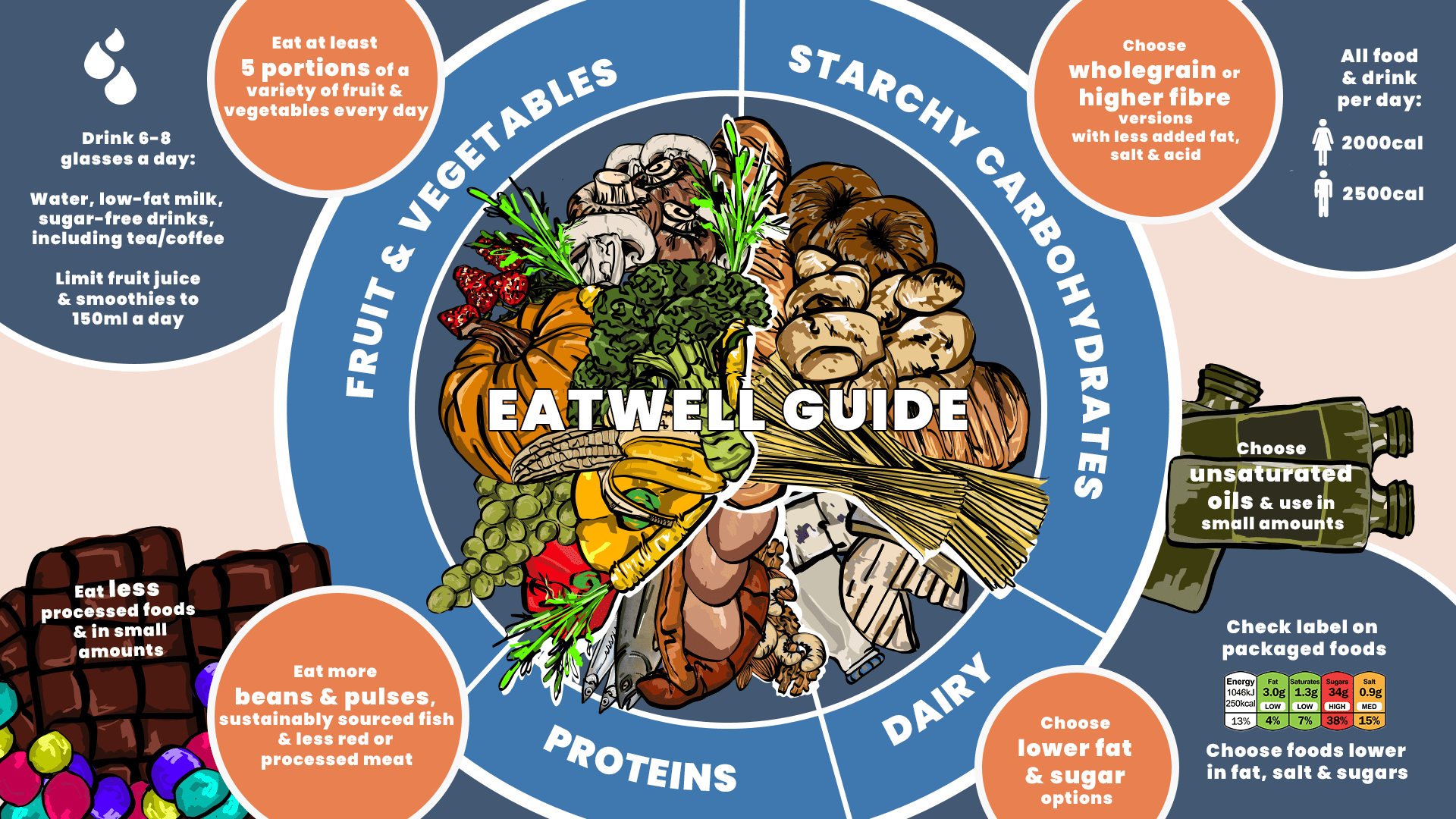
Source: Public Health England in association with the Welsh Government, Food Standards Scotland and the Food Standards Agency in Northern Ireland
Graphic: Ben Hudson
How can the Eatwell Guide help you?
A nutritious diet is crucial for your wellbeing. A balanced intake of nutrients can boost energy, maintain a healthy weight, and keep your body functioning well.
Spellissy says: "By focusing on a variety of food groups, the Eatwell Guide ensures you're getting all the necessary vitamins, minerals, fibre and healthy fats needed for overall wellness."
Healthy ageing plays a crucial role in maintaining cellular health, and reducing your chance of age-related conditions.
Unluisler says: "A high intake of fruits and vegetables - rich in vitamins, minerals and antioxidants - will protect your skin, and reduce the signs of ageing."
According to Unluisler, a balanced intake of proteins, healthy fats and carbohydrates can:
Support heart health.
Lower cholesterol and blood pressure.
Protect your brain against cognitive decline.
Improve mood and mental well-being.
Reduce symptoms of anxiety and depression.
She adds that by encouraging the consumption of whole grains and limiting sugary foods, following the Eatwell Guide can contribute to stable blood sugar levels, reducing the likelihood of insulin resistance and type 2 diabetes.
Who should follow the Eatwell Guide?
The Eatwell Guide is designed to serve a wide range of the UK population, making it a suitable dietary model for most people - including children over two years of age, and older adults.
Spellissy says, that people with specific dietary needs may need to modify certain aspects of the Eatwell Guide to fit their personal nutritional requirements.
People with the following conditions may need to adjust their portions or food choices:
Food allergies or intolerances - such as lactose intolerance.
Medical conditions - such as coeliac disease, kidney disease, diabetes.
"Adjustments might also be required if you're pregnant, an athlete, older, or following a vegetarian or vegan diet," adds Spellissy.
How to use the Eatwell Guide
The Eatwell Guide - Source: Public Health England
Planning meals and controlling portion sizes help make the Eatwell Guide easier to follow, and ensure you're following its daily recommendations.
Spellissy advises you start by filling half your plate with fruits and vegetables - a quarter with starchy carbohydrates, preferably whole grains, and the remaining quarter with protein.
An example of a healthy, well-balanced plate might include:
Seasoned or spiced grilled chicken - protein.
Wholegrain rice - starch.
A colourful variety of roasted vegetables - such as broccoli, carrots and bell peppers.
A glass of water, milk, or a sugar-free drink.
Unluisler recommends the following tips for incorporating healthier foods:
Go for healthy snacks - such as fruit, nuts or yoghurt.
Cut down your intake of processed foods.
Choose healthier cooking methods - such as baking, grilling or steaming.
Try new recipes that incorporate different food groups - these could include stir-fries or salads that combine various vegetables and proteins.
If you have specific dietary needs you should work with a registered dietitian to customise the Eatwell Guide to your requirements. This will ensure you're meeting your nutritional goals, while addressing any health concerns.
בחירות המטופלים עבור דיאטה

תזונה ודיאטה
הדיאטה הרדוקטארית: איך לאכול פחות בשר
אם אתם שוקלים להפחית בצריכת בשר - בין אם מסיבות בריאותיות, סביבתיות או אתיות - הגישה הרדוקטארית היא דרך טובה להתחיל. היא מעודדת הפחתות הדרגתיות וברות קיימא בצריכת מוצרים מהחי, ומאפשרת לכם לבצע שינויים משמעותיים בקצב שלכם. דיברנו עם מדליסטית האופניים האולימפית ושיאנית העולם לשעבר, מייסדת Switch4Good, דוטסי באוש, על המסע האישי שלה עם אכילת פחות בשר - והטיפים המעשיים שלה להפחתת הצריכה שלכם.
מאת ויקטוריה ראו
תזונה ודיאטה
מהי דיאטת אורניש והאם היא יכולה לשנות את בריאותך?
דיאטת אורניש היא תוכנית מבוססת צמחים, שפותחה במקור על ידי ד"ר דין אורניש כדרך למניעת והפיכת מחלות לב. היא מקדמת תזונה דלת שומן ועשירה בסיבים, לצד שינויים משמעותיים באורח החיים. היא מעודדת להפחית את צריכת הסוכר והמזון המעובד, תוך שילוב פעילות גופנית קבועה וניהול מתח.
מאת ויקטוריה ראו
אודות המחברצפה בפרופיל המלא

Victoria Raw
כותב תכנים
תואר ראשון (בהצטיינות), ספרות אנגלית
ויקטוריה היא כותבת תוכן ב-Patient, עם עניין מיוחד ברווחה נפשית, מגמות חברתיות והשפעת הטכנולוגיה על הבריאות שלנו.
אודות המבקרצפה בפרופיל המלא

Dr Krishna Vakharia, MRCGP
קצין רפואה ראשי לבריאות, Optum UK
MBChB, MRCGP(2013), BMedSci (hons), DFSRH, DRCOG, PGDipDerm (Distn)
ד"ר קרישנה וקאריה היא רופאת משפחה ב-NHS. היא גם בוחנת קבועה לדיפלומה לתואר שני בדרמטולוגיה מעשית באוניברסיטת קרדיף וכן משמשת כקצינת הרפואה הראשית לבריאות ב-Optum UK.
היסטוריית המאמר
המידע בעמוד זה נבדק על ידי קלינאים מוסמכים.
המאמר זמין גם ב אנגלית, גרמנית, ספרדית, צרפתית, איטלקית, פורטוגזית, הינדי, עברית, ערבית, and שוודית.
הסקירה הבאה מתוכננת ל: 25 אוקטובר 2027
25 Oct 2024 | פורסם במקור
נכתב על ידי:
Victoria Rawנבדק על ידי
Dr Krishna Vakharia, MRCGP

שאלו, שתפו, התחברו.
עיין בדיונים, שאל שאלות ושתף חוויות במאות נושאים בריאותיים.

מרגיש לא טוב?
הערך את הסימפטומים שלך באינטרנט בחינם
הירשמו לניוזלטר של פיישנט
המנה השבועית שלך של עצות בריאות ברורות ואמינות - נכתבה כדי לעזור לך להרגיש מעודכן, בטוח ובשליטה.
על ידי הרשמה אתה מקבל את שלנו מדיניות הפרטיות שלנו. באפשרותך לבטל את המנוי בכל עת. לעולם לא נמכור את הנתונים שלך.
עוד בתזונה ותזונה
- 7 מזונות עשירים בברזל שכדאי להוסיף לתזונה שלך
- האם ממתיקים מלאכותיים באמת כל כך רעים עבורנו?
- האם זרעי דלעת טובים עבורך?
- האם תזונה מבוססת צמחים יכולה לשפר את המיגרנות שלך?
- האם נטילת תוספי תזונה יכולה לעזור בניהול סוכרת?
- האם אכילת אוכל חריף עוזרת לרדת במשקל?
- זרעי פשתן: נשק סודי לבריאות נשים?
- רעיונות לארוחות צהריים בריאות לארוז לבית הספר
- כיצד בינה מלאכותית יכולה לתת לך רעיונות לארוחות בריאות
- עודכןכיצד תזונה משפיעה על הלב שלך
- כמה בשר כדאי לנו לאכול?
- כיצד לשפר את המערכת החיסונית שלך באמצעות תזונה ואורח חיים
- האם כורכום טוב עבורך?
- האם הילד שלך אוכל יותר מדי סוכר?
- תזונה ל-PCOS: מה לאכול כדי לנהל את התסמינים
- מזונות עשירים בוויטמין A עשויים להגן מפני סרטן העור
- מהי הדיאטה הנורדית?
- מהי צריכת הקלוריות המומלצת לנשים?
- למה לשמור יומן מזון?
- מדוע מזונות מעובדים במיוחד כל כך ממכרים - וכיצד להפחית בצריכתם