
דיאטה ים תיכונית
נבדק על ידי Dr Doug McKechnie, MRCGPעודכן לאחרונה על ידי Dr Colin Tidy, MRCGPעודכן לאחרונה 8 Jan 2025
עומד בהנחיות העריכה של Patient
- הורדהורד
- שתף
- Language
- דיון
- Ask Patient
- גרסת שמע
- הוסף למקורות מועדפים בגוגל
The term 'Mediterranean Diet' describes a specific mix of dietary food ingredients, shown to promote health and long life in people.
במבט חטוף
הדיאטה הים תיכונית היא דפוס אכילה בריא, לא תוכנית דיאטה קפדנית.
הוא עשיר בירקות, פירות, אפונה, שעועית ודגנים, עם כמויות מתונות של עוף ודגים.
רוב השומנים מגיעים ממקורות בלתי רוויים כמו שמן זית ואגוזים, עם מעט בשר אדום.
דיאטה זו יכולה להפחית את הסיכון שלך למחלות לב, סוכרת סוג 2, לחץ דם גבוה וחלק מהסוגים של סרטן.
היא מתמקדת במזונות מלאים, בשימוש בעשבי תיבול במקום מלח, ובהגבלת מזונות מעובדים, בשר אדום וממתקים עתירי סוכר.
What is the Mediterranean diet?
The word Mediterranean refers to the origins of the diet, rather than to specific foods such as Greek or Italian foods.
Using a wide range of fruits and vegetables gives the body maximum access to sources of vitamins, minerals and other trace nutrients. There are individual foods within the Mediterranean Diet which are particularly beneficial to health, such as olive oil, garlic and some fruits and vegetables. However, overall it is the combination of foods within a healthy lifestyle which is linked to improved health.
The overuse of salt in flavouring Western-style meals and fast foods has been linked with increased blood pressure. The healthy alternative is to replace the excess salt with herbs and also garlic, as Mediterranean people have done for many years. This can also add new flavours to quite simple pasta dishes, rice dishes and stews.
The Mediterranean Diet is rich in vegetables, fruit, peas and beans (legumes) and grains. It also contains moderate amounts of chicken and fish. There is little red meat and most fat is unsaturated and comes from olive oil and nuts. Having a small amount of red wine has been shown to increase the health benefits.
In combination with moderate שיעור התעמלות and not עישון, the Mediterranean Diet offers a scientifically researched, affordable, balanced and health-promoting lifestyle choice.
Health benefits of the Mediterranean diet
The typical Western diet is high in animal fats, sugar and preservatives but low in fruit and vegetables. Scientific research has shown that this food combination is partially responsible for triggering many chronic diseases and cancers.
Research has also shown that following a Mediterranean diet can reduce the chance of developing conditions such as:
כמה סוגי סרטן.
It can also be useful for people wishing to lose weight as it is rich in fruit and vegetables and lower in sugars and saturated fats than a typical Western diet.
Switching from a Western to a Mediterranean diet represents a healthy lifestyle choice. It can reduce the risk of a premature death and increase the chance of a healthy retirement, free from long-term medication.
עקרונות כלליים
The Mediterranean Diet is not about quick fix superfoods. Nor is it a strict list of what you should not eat. Rather, the Mediterranean Diet is a formula for healthy day-to-day eating over the long term. Here's a quick guide for those who would like to try it:
Maximise your intake of vegetables, peas and beans (legumes), fruits and wholegrain cereals.
Limit your red meat intake - fish and poultry are healthier substitutes.
Where possible, use mono-unsaturated olive oil or rapeseed oil in place of animal fat such as butter or lard.
Limit your intake of highly processed fast foods and ready meals, which may be high in salt and saturated fat.
Eat no more than moderate amounts of dairy products.
Do not add salt to your food at the table - there is already plenty in the food.
Snack on fruit, dried fruit and unsalted nuts rather than cakes, crisps and biscuits.
Drink (red) wine during meals but no more than two small glasses per day.
Water is the best 'non-alcoholic beverage' (as opposed to sugary drinks), although health benefits have also been claimed for various teas and coffee.
Mediterranean Diet ingredients
Vegetables and fruits
The World Health Organization (WHO) - and the UK Government's Change4Life campaign - recommend we eat five portions of fruit and vegetables a day. A portion is 80 g. This guidance is partly based on research into the Mediterranean Diet. Other governments recommend higher levels of fruit and vegetables, such as seven or even ten portions daily.
A wide variety of fresh vegetables and fruits is an important part of the Mediterranean Diet. Tinned, dried and frozen fruit or vegetables are also valuable in the diet.
They are high in fibre, antioxidants and vitamins, especially vitamin C.
They help to reduce the risk of heart disease, cancers and bowel problems.
Cereals
Cereals should be wholegrain where possible, such as wholemeal bread or brown rice or pasta.
Examples are wheat, barley, oats, millet, corn and rice. They are found in cereal flakes, pasta, bread, couscous and crackers.
They provide carbohydrate, protein, fibre, vitamins and minerals.
They help to reduce bowel problems, including cancers; they help to lower cholesterol, which can reduce the risk of heart disease.
דג
Various types of fish are important in the Mediterranean Diet. White fish such as cod, plaice, haddock, hake and halibut are a good source of protein which is low in fat.
Shellfish such as prawns, crab, lobster and mussels contain protein and some trace minerals
Oily fish also contains omega-3 fatty acids and vitamins A and D. Omega-3 fatty acids may reduce the risk of heart disease, some cancers and dementia; they are also thought to be helpful for brain development and in the treatment of depression.
הערה: some oily fish contain low levels of toxic heavy metals. Pregnant women and those trying for a baby should limit their intake of tuna, shark and swordfish.
קטניות
These are vegetables which grow in pods. They include peas, beans, lentils, chickpeas and peanuts.
They form quite an important part of the Mediterranean Diet and are a useful base for soups and stews, as well as being found in hummus and eaten on their own - for example, as baked beans.
They provide protein, carbohydrate, fibre and vitamins. They are associated with a reduced risk of heart disease.
Fats and oils
When cooking Mediterranean-style meals, mono-unsaturated oils are used to replace saturated animal fats, such as butter and lard.
Olive oil is the traditional oil used in the Mediterranean region but rapeseed oil produced in the UK has similar uses and benefits.
Healthier mono-unsaturated oils are also found in olives, nuts, seeds and avocados.
Vegetables can be roasted with small amounts of olive oil. Olive oil is often used in dressings for salads. You can also dip bread into it as an alternative to using butter.
Overall, although typical Western and Mediterranean diets can have a similar total fat content, the Mediterranean Diet is high in health-protective mono-unsaturated fat. However, consuming too much fat of any type can contribute to obesity.
אגוזים וזרעים
Nuts such as almonds, chestnuts, walnuts, cashews and Brazil nuts, and also seeds such as pumpkin, sunflower, sesame and poppy, provide protein, fibre, vitamins and minerals, as well as being high in 'good' unsaturated fats.
Try to avoid salted nuts, as salt can raise blood pressure. As with all high-fat foods, consuming too much can contribute to obesity.
White meat
Lean chicken, turkey and other poultry are high in protein, vitamins and minerals. It is best to remove the skin and any visible fat.
When white meat is served in processed foods such as pies, burgers and fried chicken it is generally much higher in animal fat and so is not a healthy choice.
Foods to eat in smaller quantities
Wine
Wine, particularly red wine, is often consumed as part of a traditional Mediterranean diet. It contains antioxidants and anti-inflammatory chemicals and can help to protect against heart disease.
However, alcohol in excess is not healthy and current health guidelines for men and women recommend no more than two small glasses of wine daily, preferably with a couple of alcohol-free days during the week. Wine is also quite high in calories and can therefore contribute to obesity.
Pregnant women should not drink any alcohol.
Dairy produce
Milk, yoghurt, cheese, butter and cream are consumed in smaller quantities in a Mediterranean diet than in a Western diet.
Dairy products contain protein, vitamins A and B12 and calcium. However, some are also high in saturated fat, especially cream and butter.
Choosing lower-fat cheeses such as cottage cheese, mozzarella or feta rather than cream cheese or cheddar will reduce your saturated fat intake. Choosing semi-skimmed or skimmed milk rather than full-cream milk is also a lower-fat option.
בשר אדום
Red meat such as beef, pork or lamb is eaten in smaller quantities in the Mediterranean Diet than in the Western diet.
Meat is high in protein, vitamins and minerals (especially iron) but tends to be higher in fat (particularly saturated fat) compared with the fat content of poultry.
When found in processed foods such as pies and sausages, it is likely to be higher in fat and lower in nutritional value.
Red meat can form part of a healthy diet but it may be better to keep it as a treat, such as Sunday dinner, or to make it into a stew or casserole with lots of vegetables. In this way, you are consuming less red meat overall.
Potatoes
Potatoes can be a healthy choice, depending on the cooking method. They contain fibre, vitamins B and C and potassium.
However, they also contain a lot of starch which is rapidly converted to glucose. High available starch content can be associated with an increased risk of type 2 diabetes.
Potatoes do not have the same health benefits as other vegetables so are listed separately.
Simpler cooking methods such as boiling, baking or mashing (without butter) are healthier choices than chips, roast potatoes or crisps.
Sweets and desserts
Sweet foods such as cakes, biscuits and sweets should only be eaten in small quantities, perhaps as an occasional treat.
As well as sugar which is a major contributor to type 2 diabetes and tooth decay, they often contain high levels of saturated fat.
They may have some nutritional value.For example, milk-based desserts contain calcium, and many desserts contain fruit, although supermarket desserts rarely contain enough fruit to count as a portion.
In general, sweet foods should be eaten only in small quantities.
Adopting a strict Mediterranean diet
Scientific research has shown that the closer we can get to the ideal Mediterranean diet, outlined in the pyramid chart below, the greater the health advantage. The benefits of adopting the whole dietary pattern are greater than the health-giving properties of each type of food.
Mediterranean diet food pyramid
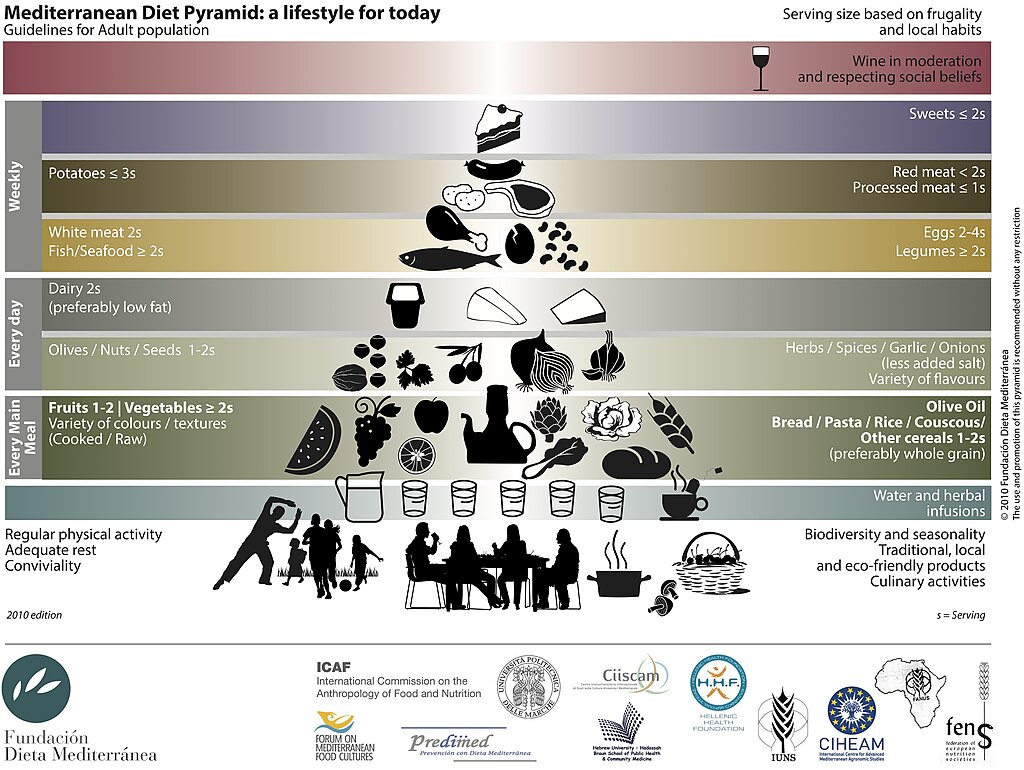
A guide to portions or servings described in the pyramid is as follows:
Vegetables: a cup of raw leafy vegetables or half a cup of other vegetables (at least 6 servings a day).
Potatoes: 100 g.
קטניות: one cup (100 g) of cooked dry beans.
אגוזים: 30 g. Eat as a snack or sprinkle on food for added taste.
Fruit: one apple, banana, one orange, 200 g of melon or watermelon, 30 g of grapes.
Meat: 60 g of cooked lean meat or fish.
Grains: half a cup (50-60 g) of cooked pasta or rice; one slice of bread (25 g).
Dairy: one cup of milk or yoghurt; 30 g of cheese.
Eggs: one egg.
Wine: 125 ml glass of average-strength red wine.
לסיכום
The strict Mediterranean Diet has been assessed and found to contain all the essential nutrients required for normal health. It also avoids excessive consumption of ingredients linked to ill health. Try it for yourself.
בחירות המטופלים עבור תזונה ודיאטה
חיים בריאים
דיאטת פלאוליתית (דיאטת פליאו)
Following a Paleolithic diet means eating unprocessed, fresh foods that reflect the diet of our hunter-gatherer ancestors from the Paleolithic era. It involves avoiding any foods that were not available to these 'cavemen' at that time, including processed foods, grains and dairy products. The staple foods of a Paleolithic diet include meat and seafood. The diet also includes fresh fruit and vegetables, nuts and seeds, eggs and certain oils. There may be some benefits of following a Paleolithic diet but there are also some disadvantages. These include possible calcium deficiency if followers of the diet are not careful. Reliable evidence supporting the long-term health benefits of a Paleolithic diet is currently lacking.
מאת ד"ר רוזלין אדלמן, MRCGP
חיים בריאים
חוסר, עודף ותוספי אבץ
אבץ נחוץ להרבה מהתגובות הכימיות שמתרחשות בתוכנו כל הזמן ברמה המיקרוסקופית. אנו מקבלים אבץ מהתזונה שלנו, אך חוסר בכמות מספקת יכול לגרום למגוון רחב של תסמינים, שחלקם מאוד מעורפלים.
מאת ד"ר טוני הייזל, FRCGP
שאלות נפוצות
איזה סוגי דגנים מומלצים בתזונה הים תיכונית?
דגנים בתזונה הים תיכונית צריכים להיות בעיקר אפשרויות מלאות כמו לחם מלא, אורז חום או פסטה מחיטה מלאה. דוגמאות כוללות חיטה, שעורה, שיבולת שועל, דוחן, תירס ואורז, הנמצאים בצורות שונות כמו פתיתים, לחם, קוסקוס וקרקרים. אלה מספקים פחמימות חשובות, חלבון, סיבים, ויטמינים ומינרלים, ויכולים לעזור להפחית בעיות מעיים ולהוריד כולסטרול.
כמה מוצרי חלב מתאימים בתזונה ים תיכונית?
מוצרי חלב כמו חלב, יוגורט וגבינה נצרכים בכמויות קטנות יותר בתזונה ים תיכונית בהשוואה לתזונה מערבית טיפוסית. בעוד שהם מספקים חלבון, ויטמינים A ו-B12, וסידן, חלק ממוצרי החלב, במיוחד שמנת וחמאה, יכולים להיות עשירים בשומן רווי. מומלץ לבחור באפשרויות דלות שומן כמו גבינת קוטג', מוצרלה, פטה, חלב חצי רזה או רזה.
האם תפוחי אדמה נחשבים לחלק בריא מהתזונה הים תיכונית?
תפוחי אדמה יכולים להיות בחירה בריאה תלוי איך מכינים אותם, הם מציעים סיבים, ויטמינים B ו-C, ואשלגן. עם זאת, הם מכילים הרבה עמילן, שהופך במהירות לגלוקוז, ותכולת עמילן גבוהה יכולה להיות קשורה לסיכון מוגבר לסוכרת סוג 2. הם לא מציעים את אותם יתרונות בריאותיים כמו ירקות אחרים. שיטות בישול בריאות יותר כוללות הרתחה, אפייה או מעיכה ללא חמאה, תוך הימנעות מאופציות כמו צ'יפס או תפוחי אדמה צלויים.
מה נחשב לגודל מנה של פירות וירקות בתזונה זו?
מנה של פירות או ירקות היא בדרך כלל 80 גרם. לדוגמה, גדלי מנות ספציפיים כוללים תפוח אחד, בננה או תפוז, 200 גרם מלון או אבטיח, או 30 גרם ענבים לפירות. לירקות, מדובר בכוס של עלים ירוקים טריים או חצי כוס של ירקות אחרים. הדיאטה ממליצה על לפחות שש מנות של ירקות ביום.
איזה סוגי שומנים משתמשים לבישול בתזונה הים תיכונית?
הדיאטה הים תיכונית משתמשת בעיקר בשמנים חד בלתי רוויים, כמו שמן זית ושמן קנולה, לבישול, במקום שומנים רוויים מהחי כמו חמאה או שומן חזיר הנמצאים בדיאטות מערביות. שומנים בריאים אלו נמצאים גם בזיתים, אגוזים, זרעים ואבוקדו. שמן זית משמש לעיתים קרובות ברטבים, לצליית ירקות או כטבילה ללחם.
האם כל סוגי הדגים מומלצים באותה מידה בתזונה הים תיכונית?
סוגים שונים של דגים הם חשובים. דגים לבנים כמו בקלה, פלטוס והדוק מספקים חלבון דל שומן. רכיכות כמו שרימפס ומולים מציעים חלבון ומינרלים קורט. דגים שמנים כמו סלמון מספקים גם חומצות שומן אומגה-3 וויטמינים A ו-D, שיכולים להפחית את הסיכון למחלות לב, סוגי סרטן מסוימים ודמנציה. עם זאת, נשים בהריון ואלו המנסות להיכנס להריון צריכות להגביל את צריכתן של דגים שמנים מסוימים כמו טונה, כריש ודג חרב בשל רמות נמוכות של מתכות כבדות רעילות.
קריאה נוספת והפניות
- Cardiovascular disease prevention; NICE Public Health Guideline (June 2010)
- הנחיות אירופאיות לשנת 2021 למניעת מחלות לב וכלי דם בפרקטיקה קלינית; האגודה האירופית לקרדיולוגיה (2021)
- Risk estimation and the prevention of cardiovascular disease; Scottish Intercollegiate Guidelines Network - SIGN (2017)
- מחלת לב וכלי דם: הערכת סיכון והפחתה, כולל שינוי שומנים; הנחיות NICE (יולי 2014 - עודכן לאחרונה בפברואר 2023)
- CVD risk assessment and management; NICE CKS, May 2023 (UK access only)
- Lacatusu CM, Grigorescu ED, Floria M, et al; The Mediterranean Diet: From an Environment-Driven Food Culture to an Emerging Medical Prescription. Int J Environ Res Public Health. 2019 Mar 15;16(6). pii: ijerph16060942. doi: 10.3390/ijerph16060942.
אודות המחברצפה בפרופיל המלא
עודכן על ידי

Dr Colin Tidy, MRCGP
רופא כללי, מחבר רפואי
MBBS, MRCGP, MRCP (Paediatrics), DCH
ד"ר קולין טיידי הוא רופא ב-NHS, הממוקם באוקספורדשייר.
אודות המבקרצפה בפרופיל המלא

Dr Doug McKechnie, MRCGP
כותב רפואי
MA, MBBS, MSc, DRCOG, MRCP(UK), MRCGP(2021), FHEA
ד"ר דאג מקקני הוא רופא משפחה ב-NHS העובד בלונדון. הוא עובד במשרה מלאה קלינית ומשמש גם כסגן ראש המודול לפרקטיקה קלינית ומקצועית בבית הספר לרפואה של יוניברסיטי קולג' לונדון.
שתפו את מחשבותיכם או חוויותיכם עם אחרים ב קהילות המטופלים שלנו.
גישה פשוטה לטיפולים ושירותי בריאות אמינים באינטרנט.
Common conditions
Get help with common conditions through the NHS, without a GP appointment.





הירשמו לניוזלטר של פיישנט
המנה השבועית שלך של עצות בריאות ברורות ואמינות - נכתבה כדי לעזור לך להרגיש מעודכן, בטוח ובשליטה.
על ידי הרשמה אתה מקבל את שלנו מדיניות הפרטיות שלנו. באפשרותך לבטל את המנוי בכל עת. לעולם לא נמכור את הנתונים שלך.