התמודדות עם מבוגר שאינו מגיב
נבדק על ידי Dr Doug McKechnie, MRCGPעודכן לאחרונה על ידי Dr Colin Tidy, MRCGPעודכן לאחרונה 31 אוק 2023
עומד בהנחיות העריכה של Patient
- הורדהורד
- שתף
- Language
- דיון
- גרסת שמע
- הוסף למקורות מועדפים בגוגל
This leaflet is created from first aid advice provided by St John Ambulance, the nation's leading first aid charity.
If someone becomes unresponsive they need someone to help keep them safe and prevent further harm. The type of help they need varies depending on why they have become unresponsive, whether they are breathing or not breathing and if they are baby, child or adult.
במבט חטוף
An unresponsive person needs immediate attention.
If they are breathing, open their airway by tilting their head and lifting their chin.
Place them in the recovery position to keep their airway open.
Call 999 or 112 once they are in the recovery position.
If a spinal injury is suspected, use the jaw thrust technique to avoid neck movement.
If they are not breathing, start cardiopulmonary resuscitation (CPR).
CPR involves alternating chest compressions and rescue breaths.
This leaflet is designed to give a summary of general advice. This advice is no substitute for first aid training (see 'Further Reading' below to find out more about St John Ambulance and British Red Cross training courses).
If someone is unresponsive and breathing
What to look for
If someone is not responding to you and you think they are unresponsive, ask loudly: 'Are you alright?' or 'Open your eyes'. If they don't respond, pinch their earlobe or gently shake their shoulders. If they still don't respond, then you can presume they're unresponsive.
What you need to do
Step 1 of 5: Open the airway
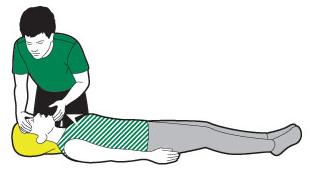
Place one hand on the person's forehead and gently tilt their head back. As you do this, the mouth will fall open slightly.
Place the fingertips of your other hand on the point of the person's chin and lift the chin.
Open the airway
Step 2 of 5: Check breathing
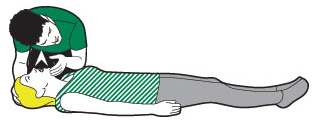
Look, listen and feel for normal breathing - chest movement, sounds and breaths on your cheek. Do this for no more than ten seconds.
Check breathing
Step 3 of 5: Put them in the recovery position
This will keep their airway open.
Kneel down next to them on the floor.
The next three steps are for if you find the person lying on their back. If you find them lying on their side or their front you may not need all three.
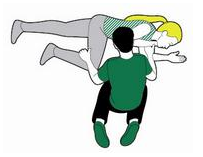
Place their arm nearest you at a right angle to their body, with their palm facing upwards.
Take their other arm and place it across their chest so the back of their hand is against their cheek nearest you, and hold it there. With your other hand, lift their far knee and pull it up until their foot is flat on the floor.
Now you're ready to roll them on to their side. Carefully pull on their bent knee and roll them towards you. Once you've done this, the top arm should be supporting the head and the bent leg should be on the floor to stop them from rolling over too far.
Recovery position
Step 4 of 5: If you suspect spinal injury
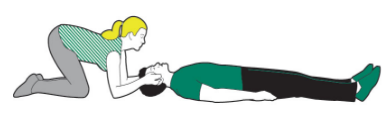
If you think the person could have a spinal injury, you must keep their neck as still as possible. Instead of tilting their neck, use the jaw thrust technique: place your hands on either side of their face and with your fingertips gently lift the jaw to open the airway, avoiding any movement of their neck.
Suspect spinal injury
Step 5 of 5: Call for help
Once you've put them safely into the recovery position, call 999 or 112 for medical help.
Until help arrives, keep checking the person's breathing.
If they stop breathing at any point, call 999 or 112 straightaway and get ready to give them CPR (cardiopulmonary resuscitation - a combination of chest pressure and rescue breaths).
If someone is unresponsive and not breathing
If an adult is unresponsive and not breathing, you'll need to do cardiopulmonary resuscitation (CPR).
CPR involves giving someone a combination of chest compressions and rescue breaths to keep their heart and circulation going to try to save their life. If they start breathing normally again, stop CPR and put them in the recovery position.
What you need to do
If someone is with you, get them to call 999 or 112 for emergency help and ask them to get an automated external defibrillator (AED) if one is available.
How to perform CPR on an adult
Step 1: Giving chest compressions
Kneel down beside the person on the floor, level with their chest.
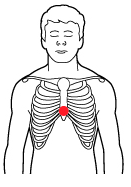
Place the heel of one hand towards the end of their breastbone, in the centre of their chest.
CPR finger position adult
CPR adult
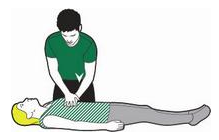
Place the heel of your other hand on top of the first hand and interlock your fingers, making sure you keep the fingers off the ribs.
Lean over the person, with your arms straight, pressing down vertically on the breastbone, and press the chest down by 5-6 cm (2-2½ in).
Release the pressure without removing your hands from their chest. Allow the chest to come back up fully - this is one compression.
Repeat 30 times, at a rate of about twice a second or the speed of the song 'Staying Alive'.
Give two rescue breaths.
Step 2: Giving rescue breaths
Ensure the person's airway is open.
Open the airway
Pinch their nose firmly closed.
Pinch nose adult
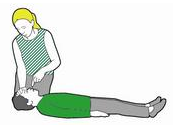
Take a deep breath and seal your lips around their mouth.
Blow into the mouth until the chest rises.
Rescue breath adult
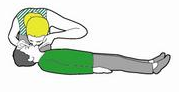
Remove your mouth and allow the chest to fall.
Rescue breath pause adult
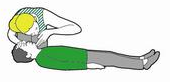
Repeat once more.
Carry on giving 30 chest compressions followed by two rescue breaths for as long as you can, or until help arrives.
If an automated external defibrillator (AED) arrives switch it on and follow the instructions provided with it.
If the person starts breathing normally again, stop CPR and put them in the recovery position.
Recovery position
בחירות המטופלים עבור First aid

טיפול ותרופות
קיצוצים
This leaflet gives a guide as to what you should do following a cut.
מאת ד"ר דאג מקקנזי, MRCGP

טיפול ותרופות
התמודדות עם ילד שאינו מגיב
If someone becomes unresponsive they need someone to help keep them safe and prevent further harm. The type of help they need varies depending on why they have become unresponsive, whether they are breathing or not breathing and if they are a baby, child or adult.
מאת ד"ר פיליפה וינסנט, MRCGP
שאלות נפוצות
What does it mean if someone is unresponsive?
If someone is unresponsive, it means they are not reacting to attempts to get their attention. This can be checked by asking loudly if they are alright, telling them to open their eyes, or gently shaking their shoulders or pinching their earlobe. If there's no response to these actions, they are presumed to be unresponsive.
What should I do first if someone is unresponsive?
Your first step is to check if they are unresponsive by calling out and gently trying to get their attention. If they do not respond, the next crucial step is to open their airway by gently tilting their head back and lifting their chin. This ensures they can breathe properly.
How do you know if a person has normal breathing when they are unresponsive?
To check for normal breathing in an unresponsive person, you should look for chest movement, listen for breathing sounds, and feel for breaths on your cheek. This observation should be done for no more than ten seconds.
When should I call for emergency help after finding someone unresponsive?
After you have safely put an unresponsive person into the recovery position (if they are breathing), you should immediately call 999 or 112 for medical help. Continue checking their breathing until help arrives.
What happens if someone stops breathing while in the recovery position?
If an unresponsive person, who was initially breathing and placed in the recovery position, stops breathing, you must call 999 or 112 straightaway. Be prepared to start CPR (cardiopulmonary resuscitation) immediately.
קריאה נוספת והפניות
- St John Ambulance Training Courses
- Red Cross Training Couress
- Unresponsive and not breathing - adults; St John Ambulance
- הנחיות לתמיכה מתקדמת בחיים למבוגרים 2021; מועצת ההחייאה של בריטניה
אודות המחברצפה בפרופיל המלא

Dr Colin Tidy, MRCGP
רופא כללי, מחבר רפואי
MBBS, MRCGP, MRCP (Paediatrics), DCH
ד"ר קולין טיידי הוא רופא ב-NHS, הממוקם באוקספורדשייר.
אודות המבקרצפה בפרופיל המלא

Dr Doug McKechnie, MRCGP
כותב רפואי
MA, MBBS, MSc, DRCOG, MRCP(UK), MRCGP(2021), FHEA
ד"ר דאג מקקני הוא רופא משפחה ב-NHS העובד בלונדון. הוא עובד במשרה מלאה קלינית ומשמש גם כסגן ראש המודול לפרקטיקה קלינית ומקצועית בבית הספר לרפואה של יוניברסיטי קולג' לונדון.
היסטוריית המאמר
המידע בעמוד זה נכתב ונבדק על ידי קלינאים מוסמכים.
המאמר זמין גם ב אנגלית, גרמנית, ספרדית, צרפתית, איטלקית, פורטוגזית, הינדי, עברית, ערבית, and שוודית.
הסקירה הבאה מתוכננת ל: 29 אוקטובר 2028
31 אוק 2023 | הגרסה האחרונה

שאלו, שתפו, התחברו.
עיין בדיונים, שאל שאלות ושתף חוויות במאות נושאים בריאותיים.

מרגיש לא טוב?
הערך את הסימפטומים שלך באינטרנט בחינם
הירשמו לניוזלטר של פיישנט
המנה השבועית שלך של עצות בריאות ברורות ואמינות - נכתבה כדי לעזור לך להרגיש מעודכן, בטוח ובשליטה.
על ידי הרשמה אתה מקבל את שלנו מדיניות הפרטיות שלנו. באפשרותך לבטל את המנוי בכל עת. לעולם לא נמכור את הנתונים שלך.
עוד בטיפול ותרופות
- מעכבי ACE
- טבליות נוגדות דלקת
- נוגדי דיכאון
- שמיעה
- חוסמי בטא
- ביספוספונטים
- תחליף בופרנורפין להרואין
- חוסמי תעלות סידן
- רפואה משלימה ואלטרנטיבית
- עדשות מגע
- אנגיופלסטיה כלילית
- תרופות אנטי-ראומטיות משנות מחלה
- מוקוליטים
- מרפי שרירים
- משככי כאבים
- פוליו וחיסון לפוליו
- ריבוי תרופות
- פרוביוטיקה ופרה-ביוטיקה
- כלבת וחיסון נגד כלבת
- רדיותרפיה