זיבה
נבדק על ידי ד"ר טוני הייזל, MRCGPעודכן לאחרונה על ידי Dr Hayley Willacy, FRCGP עודכן לאחרונה 29 Mar 2023
עומד בהנחיות העריכה של Patient
- הורדהורד
- שתף
- Language
- דיון
- גרסת שמע
- הוסף למקורות מועדפים בגוגל
בסדרה זו:זיהומים המועברים במגע מינייבלות גניטליותהרפס גניטליאורתריטיס בגבריםטריכומוניאזיסמיקופלסמה גניטליום
Gonorrhoea is a זיהום המועבר במגע מיני caused by a germ (bacterium). It can be treated with antibiotics. Treatment is important to prevent complications.
במבט חטוף
Gonorrhoea is a sexually transmitted infection (STI) caused by bacteria, affecting mainly genital areas.
It can cause discharge, pain when urinating, and irritation, though about half of women have no symptoms.
Without treatment, gonorrhoea can lead to complications such as pelvic inflammatory disease in women.
It is diagnosed with a urine sample or swab, usually at a genitourinary medicine (GUM) clinic.
Treatment involves antibiotics, and sexual partners also need testing and treatment.
Using condoms during sex helps prevent gonorrhoea and other STIs.
במאמר זה:
בחירות וידאו עבור זיהומים המועברים במגע מיני
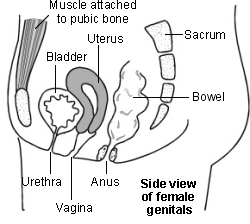
Female genitals
המשך לקרוא למטה
What is gonorrhoea?
What is gonorrhoea?
Gonorrhoea is an infection affecting mainly the genital areas. It can also affect the throat and eyes. Very occasionally the infection can spread to other parts of the body. Gonorrhoea accounts for 9 out of every 100 sexually transmitted infections (STIs) diagnosed in sexual health clinics in England. There were 57,084 cases in England in 2020. One in three of those cases were in young people aged 15-24 years.
What causes gonorrhoea?
חזרה לתוכןHow do you contract gonorrhoea?
Gonorrhoea is caused by the germ (a bacterium) Neisseria gonorrhoeae. It is passed on if you have:
Unprotected vaginal, oral or anal sex with an infected person.
Shared sex toys that have not been washed or covered with a new condom during use.
As gonorrhoea can be transmitted vaginally, anally and orally, it can therefore be passed during sex between men and women or sex between men and men.
In men, the infection usually affects the urethra (the tube between the bladder and the end of the penis) but can cause infection of the mouth or anus of both sexes. Vaginal liquid can be a source of infection so in theory it could be passed on during sex between women but this is very uncommon.
The bacterium that causes gonorrhoea cannot survive outside the human body for long. Therefore it is not spread by using communal swimming pools, public toilets, sharing baths, towels and cutlery, or hugging and kissing.
המשך לקרוא למטה
Gonorrhoea symptoms
חזרה לתוכןSymptoms of gonorrhoea in women
Female genitals
There are no symptoms in about half of women who have infection with gonorrhoea.
About 1 in 2 women develop an increase or change in הפרשה נרתיקית.
About 1 in 4 women develop pain in the lower part of the stomach.
Rarely, women may notice bleeding between periods, or heavy periods.
Pain when passing urine can sometimes mimic a urine infection.
There may be pain when having sex in some women.
Infection of the back passage (rectum) or throat (pharynx) can develop. Such infections do not usually cause symptoms, although occasionally rectal itching or a sore throat may be noticed.
Symptoms of gonorrhoea in men
Infection of the urethra (urethritis) is the typical infection in men. This commonly develops 5-7 days after having sex with an affected person. Symptoms include:
Discharge from the penis. This may stain underpants. It occurs in at least 8 out of 10 men with the infection.
Pain or burning sensation when passing urine. This occurs in about half of cases.
Irritation inside the penis, or a feeling of wanting to pass urine frequently.
Redness at the opening of the urethra at the end of the penis.
Infection of the back passage (rectum) or throat (pharynx) can develop. Such infections do not usually cause symptoms, although occasionally rectal pain, discharge or itching or a sore throat may be noticed.
Gonorrhoea is believed to cause symptoms in most infected men (about 9 in 10 affected). However, about 1 in 2 women with gonorrhoea do not have any symptoms.
The symptoms may clear over time, even without treatment. This may take up to six months but can be just a couple of weeks or so. However, without treatment, some germs (bacteria) usually remain in the urethra. It is just that the symptoms may go.
הערה: even if symptoms go or are not present, there is a good chance that you can pass on the infection if you do not have treatment.
Gonorrhoea test
חזרה לתוכןIt is important to get tested and treated If you suspect that you have gonorrhoea or any other STI. You will need your diagnostic test to be done in a specialist genitourinary medicine (GUM) clinic, so if you think you have gonorrhoea you should make an appointment at your local genitourinary medicine GUM clinic. If you are not sure you can see your GP first, but they will need you to be seen at the clinic for proper diagnosis. In the UK you can go to the local GUM clinic without a referral from your GP. You can ring your GP surgery, local hospital or health authority and ask where the nearest clinic is. Local and national information is also available on the internet - for example, see Further Reading for the 'Find a sexual health clinic service'.
You will normally be advised to have tests if gonorrhoea is suspected - even if symptoms go. Ideally you should attend a local GUM clinic for this.
ממומן
Confidante Home STI Test
Confidante is quick, easy, and discreet to use from purchase to results. Test for 10 common STIs including infections that do not show any symptoms, to provide a comprehensive profile of your sexual health.

What happens during a gonorrhoea test?
A urine sample and/or a sample (swab) of the discharge will be taken to try to identify the germ (bacterium) that causes gonorrhoea. A urine test is not as accurate in women as it is in men. If a swab is taken for a man, it will be taken from the inside end of the penis (the urethra).
In women, a swab is taken from high up in the vagina. Another swab is taken from the inside the neck of the womb (the endocervix) at the womb's entrance. You will also be advised to have tests for other STIs. It will also be suggested that any sexual partners attend for tests and/or treatment.
המשך לקרוא למטה
Gonorrhoea complications
חזרה לתוכןWhat are the long-term effects of gonorrhoea?
Complications of gonorrhoea in women
Infection can spread to the womb (uterus) to cause מחלת דלקת אגן. This can cause long-standing (chronic) pelvic pain and can lead to infertility.
Pregnancy can be complicated by premature labour, הריון חוץ רחמי או הפלה.
Infection present during pregnancy can lead to infection spreading to the eyes of a newborn baby. This is called ophthalmia neonatorum.
Pelvic infection can spread to the liver.
Abscesses can develop in the Bartholin's glands on either side of the lower part of the vaginal opening.
Rarely, there can be spread in the bloodstream to other parts of the body.
Complications of gonorrhoea in men
In a small number of cases the infection travels up the urethra to the prostate gland. It may also cause infection of the testicles or the tubes around them (epididymo-orchitis).
Rarely, a narrowing (stricture) of the urethra may develop.
It can affect future fertility.
Men who have sex with men can get infections of the back passage (anus) and throat.
Rarely, there can be spread in the bloodstream to other parts of the body.
Gonorrhoea treatment
חזרה לתוכןThe usual treatment is a single injection of an תרופה אנטיביוטית plus a single large dose of a different antibiotic taken by mouth. However, sometimes other treatment regimes and schedules are used. For example, if you have an allergy to the usual antibiotic, or if you have another infection at the same time. Symptoms of gonorrhoea usually start to improve within a few days.
Previous successful treatment for gonorrhoea does not prevent you from catching it again.
Does my sexual partner need treatment?
Yes. Sexually active men and women should be tested for infection, even if they have no symptoms. Treatment with antibiotics is usually advised for sexual partners, even if the tests are negative, because:
Germs (bacteria) that cause gonorrhoea are often passed on during sex. Tests for bacteria are not foolproof. Treatment with antibiotics helps to make sure that any possible infection is cleared.
If a sexual partner is infected and not treated, infection can be passed back to you.
If you have gonorrhoea without symptoms then you may have had it for some time. In this situation any sexual partners within the previous three months should be tested and treated.
Treatment follow-up
A doctor or healthcare professional will normally want to know that treatment has worked. It is usual to be reviewed soon after you finish treatment. This is to check that symptoms have gone and to do a test to check that the infection has gone. Sometimes further treatment (perhaps with a different antibiotic) is needed if the infection has persisted despite treatment.
You should not have sex until both you and your sexual partner have finished treatment. הערה: this will normally be for at least seven days after treatment has commenced. Even if the treatment is the usual one-dose schedule of two antibiotics as described above, it takes several days for the infection to clear after taking the treatment.
Gonorrhoea prevention
חזרה לתוכןWearing a קונדום during sex (including anal sex and oral sex) helps to prevent the spread of STIs.
The risk of STIs increases with the number of changes of sexual partner. So, the fewer partners you have, the lower your risk of STIs.
Patient picks for זיהומים המועברים במגע מיני

בריאות מינית
מין בטוח
'סקס בטוח' מתייחס בדרך כלל לקיום יחסי מין באופן שמפחית את הסיכון להידבק בזיהום המועבר במגע מיני (STI).
מאת ד"ר לורנס קנוט

בריאות מינית
HIV ואיידס
HIV ו-AIDS אינם אותו דבר ואנשים שנדבקים ב-HIV לא מפתחים אוטומטית AIDS. למעשה, בזכות התקדמות בטיפול, מעט מאוד אנשים בבריטניה עם HIV ממשיכים לפתח AIDS. מניעת HIV על ידי קיום יחסי מין בטוחים יותר והימנעות משיתוף מחטים היא מפתח, אך אם נדבקים ב-HIV, אבחון מוקדם וטיפול הם מצילי חיים.
מאת ד"ר רייצ'ל הדסון, MRCGP
שאלות נפוצות
Can I get gonorrhoea just from kissing or sharing a drink?
No, gonorrhoea is not spread by kissing, hugging, sharing baths, towels, or cutlery, or using communal swimming pools or public toilets. The bacterium that causes gonorrhoea cannot survive outside the human body for long.
How quickly do symptoms of gonorrhoea usually appear after infection?
In men, symptoms of urethral infection commonly develop 5-7 days after having sex with an infected person. For women, about half will not have any symptoms. If symptoms do occur, the article does not specify a typical timeframe for their appearance, but they can be varied and sometimes mild.
If my symptoms clear up on their own, does that mean the infection is gone?
No, even if symptoms clear up over time, which can take up to six months or even just a couple of weeks, some germs (bacteria) usually remain. Without treatment, you can still pass on the infection.
What should I do if I think I might have gonorrhoea but don't have any symptoms?
It is important to get tested and treated if you suspect you have gonorrhoea, even if you have no symptoms. You should make an appointment at your local genitourinary medicine (GUM) clinic for a diagnostic test. In the UK, you do not need a referral from your GP to attend a GUM clinic.
Are there any specific risks of gonorrhoea for pregnant women or their babies?
Yes, if a pregnant woman has gonorrhoea, there is a risk of complications such as premature labour, ectopic pregnancy, or miscarriage. Also, infection present during pregnancy can spread to the eyes of a newborn baby, causing a condition called ophthalmia neonatorum.
How long after treatment do I need to wait before I can have sex again?
You should not have sex until both you and your sexual partner have finished treatment. This will normally be for at least seven days after treatment has started, as it takes several days for the infection to clear even with the usual one-dose antibiotic schedule.
What is the typical treatment for gonorrhoea?
The usual treatment for gonorrhoea involves a single injection of one antibiotic medicine, combined with a single large dose of a different antibiotic taken by mouth. However, other treatment plans may be used if you have an allergy to the standard antibiotic or have another infection simultaneously. Symptoms usually begin to improve within a few days.
קריאה נוספת והפניות
- Sexually transmitted infections (STIs): surveillance, data, screening and management; UK Health Security Agency (Last updated February 2020)
- Gonorrhoea: guidance, data and analysis; GOV.UK
- 2018 UK national guideline for the management of infection with Neisseria gonorrhoeae; British Association for Sexual Health and HIV (BASHH) - 2018: reviewed 2020
- Find a sexual health clinic near you; NHS services
- זיבה; NICE CKS, מרץ 2024 (גישה בבריטניה בלבד)
המשך לקרוא למטה
אודות המחברצפה בפרופיל המלא

Dr Hayley Willacy, FRCGP
רופא כללי, מחבר רפואי
MBChB (1992), DRCOG, DFFP, MRCOG (Part 1) MRCGP (2007), DFSRH (2013), MSc - medical education (2020)
Dr Hayley Willacy was an NHS GP working in northwest England, who retired from clinical practice in 2022 after 30 years.
אודות המבקרצפה בפרופיל המלא

ד"ר טוני הייזל, MRCGP
MBBS, BSc, MRCGP, DFSRH, Dip GU med, DRCOG, DCH (London, UK, 2000)
Dr. Toni Hazell qualified from St. Mary’s Hospital Medical School and did her VTS at Northwick Park Hospital.
היסטוריית המאמר
המידע בעמוד זה נכתב ונבדק על ידי קלינאים מוסמכים.
Next review due: 27 Mar 2028
29 Mar 2023 | הגרסה האחרונה

שאלו, שתפו, התחברו.
עיין בדיונים, שאל שאלות ושתף חוויות במאות נושאים בריאותיים.

מרגיש לא טוב?
הערך את הסימפטומים שלך באינטרנט בחינם
הירשמו לניוזלטר של פיישנט
המנה השבועית שלך של עצות בריאות ברורות ואמינות - נכתבה כדי לעזור לך להרגיש מעודכן, בטוח ובשליטה.
על ידי הרשמה אתה מקבל את שלנו מדיניות הפרטיות שלנו. באפשרותך לבטל את המנוי בכל עת. לעולם לא נמכור את הנתונים שלך.