Germs
Microbes
Peer reviewed by Dr Colin Tidy, MRCGPLast updated by Dr Toni Hazell, FRCGPLast updated 26 Mar 2023
Meets Patient’s editorial guidelines
- DownloadDownload
- Share
- Language
- Discussion
- Audio Version
- Add to preferred sources on Google
In this series:AntibioticsExtended-spectrum beta-lactamases
This leaflet gives a brief overview of the different types of germs (microbes) that can cause infections.
At a glance
Germs are microbes that can cause illness.
Types of germs include bacteria, viruses, fungi, yeasts, and parasites.
Many common illnesses like colds are caused by viruses, which antibiotics do not treat.
Antibiotics treat bacterial infections but are not always needed for minor ones.
Simple hygiene, like hand-washing, helps prevent the spread of germs.
What are germs?
Healthcare professionals classify 'germs' (microbes) into different groups. The most common groups of microbes that cause illness are described below.
Types of germs
Bacteria
There are many different types of bacteria. Some bacteria are good and are helpful and protective to humans. Some flourish naturally in our bodies - particularly in the bowel and vagina - and help to protect the body from infections. However, infections with certain bacteria can cause serious illnesses such as meningitis, pneumonia, tuberculosis, etc. A bacterial infection may be treated with a course of antibiotic medication.
Viruses
These are smaller and different to bacteria. Many different types exist. Most of the common 'minor' illnesses are caused by viruses. For example, colds, coughs, sore throats, chickenpox and some other rashes. Most common infections in the community are due to a viral infection.
Viral infections are much more common than bacterial and fungal infections.
For many viral infections there are no effective antiviral medicines (unlike antibiotics for bacteria). Fortunately, the immune system in the body usually fights off most viral infections within a few days. Taking 'symptomatic' treatments for a high temperature (fever) or catarrh, such as paracetamol and/or ibuprofen, resting and drinking plenty are usually all that needs to be done to get better.
There are some antiviral medicines that are used for certain infections - such as antiretroviral medicines used to treat HIV. Another example is aciclovir and related medicines which are used to treat certain herpes virus infections including shingles. As a rule, antiviral medicines do not clear the virus from the body. They usually work by stopping the virus from multiplying and so 'control' the virus and the infection that it causes.
Fungi
Many types of fungi exist and cause problems in humans, animals and plants. Fungal infections commonly affect the skin and nails in humans. They can cause ringworm, athlete's foot, other localised skin rashes and infections in and around nails. Modern creams usually work well to clear a local fungal rash quickly. However, nail infections can be rather stubborn and may need long-term treatment of antifungal medicines taken by mouth.
Most fungi are free-living in the environment and few of these are capable of causing infection in an otherwise healthy person. However, they can cause serious infections in patients with weakened immune systems (for example, those who have recently received chemotherapy for cancer).
Yeasts
Yeasts are actually a type of fungus. There are different yeasts which cause various infections. The most common yeast infection is thrush. This is due to a yeast called candida which thrives in moist, airless, warm areas of the body. It can cause infections in the vagina and infections in the mouth. It can cause nappy rash in babies and it can also sometimes infect other areas of the body. Treatment of yeast infections usually works well with anti-yeast creams and medicines.
Parasites
A parasite is a type of germ that needs to live on or in another living being (host) to survive. It gets its food from its host.
Parasites are usually found in contaminated food or water. They can also get into the body by insect bites or by sexual contact. Parasitic infections are more common in the tropics and subtropics. They can occur in the UK but the serious infections are more typically seen in people who have weakened immune systems (for example, those with HIV or those people taking chemotherapy for types of cancer).
Examples of diseases caused by parasites are malaria, amoebic dysentery and giardia. Threadworms, hookworms and tapeworms are also parasites.
What do germs look like?
Germs cannot be seen by the naked eye - you would need a microscope to look at them. This picture is taken down the microscope - it is of the bacterium called Staphylococcus aureus which often causes skin infections.
Staphylococcus aureus
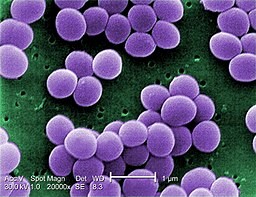
© Content Providers(s):CDC/Matthew J. Arduino, DRPH Photo Credit:Janice Haney Carr, Public domain, via Wikimedia Commons
How do germs spread?
Germs can spread by contact between people and sometimes on surfaces such as door handles. It is therefore very important that you wash your hands after going to the toilet and after coughing or sneezing if you have a cold.
How long do germs live on surfaces?
This can vary from a few hours to several months, depending on which type of germ it is.
How to prevent infections from germs
The best way to prevent infections is by simple hygiene methods such as regular hand-washing, using a tissue if you cough or sneeze, and staying at home and avoiding close contact with others if you are ill, particularly if you have an illness with vomiting or diarrhoea.
Can germs be killed by a medicine?
Treating bacterial infections and parasites
As mentioned, most common infections are caused by viruses when an antibiotic will not be of use. Even if you have a bacterial infection, the immune system can clear most bacterial infections. This means that antibiotics are not usually needed for minor infections (for example, an ear or throat infection in an otherwise fit person). The throat infection sometimes known as 'strep throat' is a good example of a bacterial infection which usually gets better by itself. However, you do need antibiotics if you have certain serious infections caused by bacteria, such as meningitis, urinary tract infections, pneumonia or kidney infections.
Antibiotics can kill off normal 'defence' bacteria which live in the bowel and vagina. This may then allow other infections - for example, thrush - to develop.Overuse of antibiotics has led to some bacteria mutating and becoming resistant to some antibiotics which may then not work when really needed. For example, meticillin-resistant Staphylococcus aureus (MRSA) is a bacterium that has become resistant to many different antibiotics and is often very difficult to treat.
Another example is some bacteria produce chemicals called enzymes such as extended-spectrum beta-lactamases (ESBLs), which make them resistant to some antibiotics. The more antibiotics are used, the greater the problem of antibiotic resistance.When antibiotics are appropriately prescribed, it is important to take them as directed on your prescription and to complete the full course of treatment.
Treating viral infections
Doctors are skilled in diagnosing which conditions are in need of antibiotics. So do not be surprised if a doctor does not recommend an antibiotic for conditions caused by viruses or non-bacterial infections, or even for a mild bacterial infection. Most simple coughs, colds, sore throats and influenza are caused by viruses and an antibiotic will not work. For some viral infections you are more likely to be harmed by the side-effects of an antibiotic than to benefit from it.
Occasionally, a viral infection or minor bacterial infection develops into a more serious 'secondary' bacterial infection. You should see a doctor to review the situation if an illness appears to change, becomes worse, does not go in the expected time-frame, or if you are worried about any new symptom that develops.
Treating infections from fungi and yeasts
Antibiotics will only clear infections caused by germs such as bacteria and some parasites. They do not work when an infection is caused by viruses, fungi or yeasts.
Antibiotics are not a 'cure all' for infections. Antibiotics can cause side-effects such as allergies, diarrhoea, rashes and nausea. Side-effects are quite common. Most side-effects are not serious, but some people have died from a severe allergic reaction to an antibiotic.
See the separate leaflet called Antibiotics for more information.
Patient picks for Other infections
Infections
Strep A
Strep A, or Group A streptococcus, is a common type of bacteria, which has been recognised as a cause of infections for many years. Most Group A streptococcus infections are mild, but in rare cases, these can cause serious illness and even death.
by Dr Colin Tidy, MRCGP

Infections
Abscess
An abscess can develop in many different parts of the body. A small operation may be needed to drain the pus. You may also need to take antibiotic medicine.
by Dr Hayley Willacy, FRCGP
Frequently asked questions
Are viruses more common than bacterial and fungal infections?
Yes, viral infections are much more prevalent in the community compared to bacterial and fungal infections.
What kind of fungal infections commonly affect people?
Fungal infections often affect the skin and nails, leading to conditions such as ringworm, athlete's foot, other localized skin rashes, and nail infections.
Can fungi cause serious infections in some individuals?
While most free-living fungi don't cause issues for healthy people, they can lead to serious infections in those with weakened immune systems, for example, patients undergoing chemotherapy for cancer.
What is thrush, and what causes it?
Thrush is the most common yeast infection, caused by a yeast called candida. This yeast thrives in moist, airless, warm parts of the body and can cause infections in the vagina, mouth, and can also lead to nappy rash in babies.
How are yeast infections generally treated?
Treatment for yeast infections usually involves anti-yeast creams and medicines, which typically work well.
How do parasites get into the body?
Parasites are often found in contaminated food or water. They can also enter the body through insect bites or via sexual contact.
Are parasitic infections common in the UK?
Parasitic infections are more common in tropical and subtropical regions. While they can occur in the UK, serious parasitic infections are more typically seen in people with weakened immune systems, such as those with HIV or individuals receiving chemotherapy for cancer.
What are some examples of diseases caused by parasites?
Examples of diseases caused by parasites include malaria, amoebic dysentery, and giardia. Threadworms, hookworms, and tapeworms are also types of parasites.
Further reading and references
- Antimicrobial Resistance (AMR): information and resources; GOV.UK, updated September 2025
- Health protection, Infectious Diseases; GOV.UK
- Antibiotic Resistance. Fact Sheet; World Health Organization, November 2017
- Kramer A, Schwebke I, Kampf G; How long do nosocomial pathogens persist on inanimate surfaces? A systematic review. BMC Infect Dis. 2006 Aug 16;6:130. doi: 10.1186/1471-2334-6-130.
About the authorView full bio

Dr Toni Hazell, FRCGP
MBBS, BSc, FRCGP, DFSRH, Dip GU med, DRCOG, DCH (London, UK, 2000)
Dr. Toni Hazell qualified from St. Mary’s Hospital Medical School and did her VTS at Northwick Park Hospital.
About the reviewerView full bio

Dr Colin Tidy, MRCGP
General Practitioner, Medical Author
MBBS, MRCGP, MRCP (Paediatrics), DCH
Dr Colin Tidy is an NHS Doctor, based in Oxfordshire.
Article history
The information on this page is written and peer reviewed by qualified clinicians.
Article also available in English, German, Spanish, French, Italian, Portuguese, Hindi, Hebrew, Arabic, and Swedish.
Next review due: 24 Mar 2028
26 Mar 2023 | Latest version
Join the conversation
Share your thoughts or experiences with others in our patient communities.

Ask, share, connect.
Browse discussions, ask questions, and share experiences across hundreds of health topics.

Feeling unwell?
Assess your symptoms online for free
Sign up to the Patient newsletter
Your weekly dose of clear, trustworthy health advice - written to help you feel informed, confident and in control.
By subscribing you accept our Privacy Policy. You can unsubscribe at any time. We never sell your data.