בדיקת PSA
Prostate specific antigen
נבדק על ידי ד"ר טוני הייזל, MRCGPעודכן לאחרונה על ידי Dr Philippa Vincent, MRCGPLast updated 15 דצמבר 2024
עומד בהנחיות העריכה של Patient
- הורדהורד
- שתף
- Language
- דיון
- גרסת שמע
- Add to preferred sources on Google
בסדרה זו:Prostate problemsEnlarged prostateUrinary retentionUrethral strictureChronic prostatitisLower urinary tract symptoms in men
The PSA test (prostate specific antigen) is a blood test which assesses for the likelihood of prostate cancer. It is also used to monitor the treatment for סרטן הערמונית.
The PSA blood level can also be increased in other conditions. Having an increased PSA test result does not therefore mean that prostate cancer is the diagnosis. At the moment there is no national screening programme for prostate cancer in the UK but there are currently studies looking at whether screening would be appropriate for prostate cancer.
The TRANSFORM randomised controlled trial is being planned to start during 2024. This will include a PSA test amongst others in assessing whether a prostate cancer screening programme is possible or appropriate.
במאמר זה:
Video picks for בדיקות דם
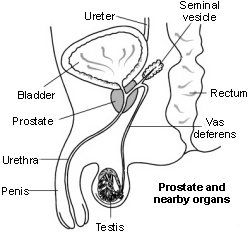
Cross-section diagram of the prostate and nearby organs
המשך לקרוא למטה
What is a PSA test?
The PSA test (prostate specific antigen) is a blood test that measures the level of prostate specific antigen in the blood. PSA is a protein which is made by the prostate gland. The PSA level in the bloodstream is measured in nanograms per millilitre (ng/mL). PSA is made by normal prostate cells but also by prostate cancer cells.
PSA test preparation
חזרה לתוכןBefore having a PSA test, it is important not to have:
An active urine infection.
Produced semen during sex or masturbation (ejaculated) in the previous 48 hours.
Exercised heavily in the previous 48 hours.
Had a prostate biopsy in the previous six weeks.
Had an examination of the back passage with a gloved finger (a digital rectal examination) in the previous week.
Had receptive anal intercourse for a period of 48 hours before a PSA test.
Each of these may produce an unnaturally high PSA result, resulting in unnecessary further investigations.
In England, the PSA test may be offered to any man aged 50 and over who requests it as long as they have considered the pros and cons of having the test. The test may be offered to younger men who have a higher risk of prostate cancer.
המשך לקרוא למטה
The normal range for a PSA test
חזרה לתוכןThe normal range changes as men age.
PSA Cut-off Values | |
|
|
40-49 | 2.5 micrograms/litre or higher |
50-59 | 3.5 micrograms/litre or higher |
60-69 | 4.5 micrograms/litre or higher |
70-79 | 6.5 micrograms/litre or higher |
There are no age-specific reference limits for men older than 80 years of age. Any referral will depend on local guidelines.
Generally, the higher the level of PSA, the more likely it is to be a sign of cancer.
Benefits and limitations of a PSA test
חזרה לתוכןBenefits of PSA testing
PSA testing may lead to prostate cancer being detected earlier, before symptoms develop.
Detecting prostate cancer early before symptoms develop may improve the outcome (prognosis) and improve the chance of a complete cure.
Limitations and risks of PSA testing
False negative result: about 15 out of 100 men with a negative PSA test may have prostate cancer.
False positive result: about 75 out of 100 men with a positive PSA test have normal prostate investigations, ie no evidence of cancer.
A false positive PSA test may lead to unnecessary investigations, such as a prostate biopsy, and there may be side-effects from this investigation, such as bleeding or infection. This is less common nowadays as MRI scans are a more common initial investigation which carry lower risks.
A positive result may also lead to unnecessary treatment. Many prostate cancers are slow growing and may not become evident during a man's lifetime. Side-effects of treatment are common and can be serious, such as urinary incontinence and sexual problems.
Current statistics suggest that, in men between the ages of 50 and 66 who are screened for 13 years, annual PSA testing would result in the avoidance of death from prostate cancer of 1.3 per 1000 men.
המשך לקרוא למטה
Causes of a raised PSA level
חזרה לתוכןA raised PSA level may be due to a diagnosis prostate cancer but about three out of four men with a raised PSA level will not be found to have prostate cancer.
Other conditions may also cause a raised PSA level, including:
Inability to pass urine, causing an enlarged bladder (acute retention of urine).
Older age.
Transurethral resection of the prostate (TURP) operation. TURP is a prostate operation used if you have benign enlargement of the prostate.
Having a catheter in place to help pass urine.
PSA test results
חזרה לתוכןIf the PSA level is not raised
Prostate cancer is less likely. A digital rectal examination may also be needed to rule this out.
If the PSA level is slightly raised
Prostate cancer is less likely. A digital rectal examination may also be needed to rule this out. Annual PSA tests might be advised.
If the PSA level is definitely raised
The GP will do an urgent referral to a urologist (a specialist doctor) for further tests for prostate cancer. The specialist will discuss the options for further investigations, which may include a sample taken (ביופסיה) of the prostate gland and an MRI scan.
If prostate cancer is found, what are my options?
חזרה לתוכןPatient picks for בדיקות דם

בדיקות וחקירות
בדיקת דם שגרתית לתפקוד כליות
There are various different ways of measuring how well the kidneys are working. The most common way is by measuring a substance called creatinine with a blood test, and calculating something called the estimated glomerular filtration rate (eGFR). Usually, other substances such as urea and salts in the blood (potassium and sodium) are measured as well.
מאת ד"ר דאג מקקנזי, MRCGP

בדיקות וחקירות
סוגי דם וקבוצות
ABO ו-rhesus הם שני סוגים של אנטיגנים הנמצאים על פני השטח של תאי דם אדומים. ישנם סוגים רבים אחרים, אך אלו הם החשובים ביותר.
מאת ד"ר רוזלין אדלמן, MRCGP
קריאה נוספת והפניות
- Prostate cancer risk management programme: overview; בריאות הציבור אנגליה
- חשד לסרטן: זיהוי והפניה; הנחיות NICE (2015 - עודכן לאחרונה באפריל 2026)
- Prostate cancer: diagnosis and management; NICE Guidance (2019 - last updated December 2021)
- סרטן הערמונית; NICE CKS, אוגוסט 2025 (גישה בבריטניה בלבד)
המשך לקרוא למטה
About the authorView full bio

Dr Philippa Vincent, MRCGP
General Practitioner, Medical Author
MB BS, Bsc, MRCGP (2000), DCH, DFSRH, DRCOG
ד"ר Philippa Vincent is an NHS GP working in North London.
About the reviewerView full bio

ד"ר טוני הייזל, MRCGP
MBBS, BSc, MRCGP, DFSRH, Dip GU med, DRCOG, DCH (London, UK, 2000)
Dr. Toni Hazell qualified from St. Mary’s Hospital Medical School and did her VTS at Northwick Park Hospital.
היסטוריית המאמר
המידע בעמוד זה נכתב ונבדק על ידי קלינאים מוסמכים.
Next review due: 14 Dec 2027
15 דצמבר 2024 | הגרסה האחרונה

שאלו, שתפו, התחברו.
עיין בדיונים, שאל שאלות ושתף חוויות במאות נושאים בריאותיים.

מרגיש לא טוב?
הערך את הסימפטומים שלך באינטרנט בחינם
הירשמו לניוזלטר של פיישנט
המנה השבועית שלך של עצות בריאות ברורות ואמינות - נכתבה כדי לעזור לך להרגיש מעודכן, בטוח ובשליטה.
By subscribing you accept our מדיניות הפרטיות שלנו. באפשרותך לבטל את המנוי בכל עת. לעולם לא נמכור את הנתונים שלך.