פריחות בעור
נבדק על ידי Dr Colin Tidy, MRCGPעודכן לאחרונה על ידי ד"ר היילי וילאסי, FRCGP עודכן לאחרונה 14 בפברואר 2024
עומד בהנחיות העריכה של Patient
- הורדהורד
- שתף
- Language
- דיון
- Ask Patient
- גרסת שמע
- הוסף למקורות מועדפים בגוגל
There are many different types of skin rashes and many different causes of skin rashes. Although most skin rashes are harmless, some do need treatment (which may be tablets, creams or ointments) from your doctor or pharmacist.
Some rashes (especially dark red or purple rashes that don't fade when you press them) may even need urgent medical treatment as they can be associated with meningitis and blood infection (septicaemia).
במבט חטוף
Skin rashes can be described by their appearance, such as redness or blisters.
Rashes can be flat (macules), raised solid areas (papules, nodules, plaques), or fluid-filled (blisters, pustules).
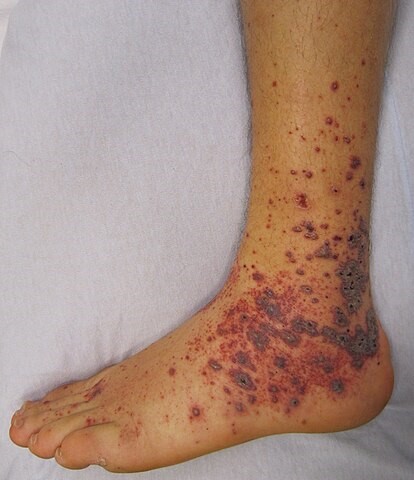
Some dark red or purple rashes that do not fade with pressure are called purpura.
Common causes of rashes include infections, allergic reactions, and certain medical conditions.
Itchy skin rashes can be caused by dry skin, eczema, or psoriasis.
Seek urgent medical advice if a rash does not disappear quickly, if you feel unwell, or if it does not fade with pressure.
This leaflet is a guide but if you have any concerns, you must seek urgent clinical assessment if:
The rash doesn't quickly disappear.
You feel unwell.
The rash does not fade with pressure (the best way to test this is to press a glass gently against the rash to see if it fades).
How are skin rashes described?
Skin rashes can be described in the following way:
Redness of the skin (called erythema).
Flat abnormally coloured areas of skin (called macules). Macules are often either red, dark red or purple, brown or white.
Solid raised areas which are up to half a centimetre across (called papules).
Solid raised areas which are more than half a centimetre across (called גושים).
Areas of red raised skin (called plaques) and scales, which have a flaky silvery-white appearance.
Reddish-purple lesions which do not fade with pressure (called purpura):
If less than one centimetre across then these are called petechiae.
If more than one centimetre across then they are called ecchymoses.
Blisters: these are swellings of the skin containing fluid:
If a blister is less than half a centimetre across then it is called a vesicle. If filled with yellow fluid (pus) then it is called a pustule.
If a blister is larger than half a centimetre across it is called a bulla (plural is bullae).
What skin conditions cause itching?
Skin disorders that can cause itching include (please click the links to separate leaflets which provide further information):
What causes skin rashes?
Please click the links to separate leaflets which provide further information:
Red (erythema) but not scaly skin rash
A skin infection called צלוליטיס.
An allergic reaction called אורטיקריה.
Reaction to a medicine you are taking.
פריחות ויראליות - eg, חצבת או rubella (German measles).
Vasculitis. This is a condition involving inflammation of blood vessels, which may occur with various illnesses, including דלקת מפרקים שגרונית.
אריתמה נודוזום. This is a condition which causes red rounded lumps (nodules), most commonly on the shins.
Redness on the palms of your hands may be caused by liver disease, pregnancy or an בלוטת תריס פעילה יתר על המידה (היפרתירואידיזם).
A red rash may occasionally be due to an inflammatory condition called זאבת אדמנתית מערכתית, especially if it is on the cheeks.
Red (erythema) and scaly skin rash
פסוריאזיס. This is a condition where there is inflammation of the skin.
אקזמה. This is sometimes called dermatitis and also involves inflammation of the skin. It may be caused by an allergy and is then called atopic dermatitis/eczema. This may happen in response to some plants - eg, poison oak or ivy.
דרמטיטיס סבוראי (in adults). This is a type of skin rash sometimes called seborrhoeic eczema. In babies it is known as cradle cap.
Fungal (or 'yeast') skin infection, such as פטרת כף הרגל, groin infection (tinea cruris), ringworm, scalp ringworm or infection with candida.
פיטיריאזיס רוזאה. This condition is described as 'self-limiting' and the rash will clear itself naturally.
פיטיריאזיס ורסיקולור. This is a rash which is caused by a yeast-like germ.
ליכן פלאנוס. This condition mainly affects the skin and causes an itchy rash.
Macules
Red macules may be due to a reaction to a medicine or a viral rash - כגון חצבת או אדמת - as well as other causes.
A brown macule may be a mole but check with your doctor if a mole changes or you are concerned it might be a מלנומה.
A white macule may be due to a condition which causes pale patches of skin (called ויטיליגו) or a skin complaint with flaky discoloured areas (called pityriasis versicolor).
If a macule is dark red or purple and does not fade when you put pressure on it then it is a purpura (see below) and you need to see a doctor urgently. This is because it could be a sign of דלקת קרום המוח or blood infection (ספטיסמיה).
Papules
Common causes of papules include אקנה, viral wart, seborrhoeic wart, molluscum contagiosum, גרדת, עקיצות החרקים and skin tags.
Other causes include פסוריאזיס.
Purpura and petechiae
These are dark red or purple and don't fade when you press them. You need to see a doctor urgently because there may be a serious cause that needs urgent treatment, such as meningococcal infection.
However, common causes include injury to the skin or repeated coughing. More serious common causes include liver disease such as שחמת.
Less common causes include vasculitis (eg, פורפורה על שם הנוך-שונליין) or a low level of platelets in your blood (eg, פורפורה תרומבוטית תרומבוציטופנית).
וסקוליטיס
Nodules
Common causes of a nodule include a ציסטה חלבית, lipoma, סרטן העור, or a wart.
Other causes include rheumatoid nodules (associated with דלקת מפרקים שגרונית) and Heberden's nodes (associated with אוסטיאוארתריטיס).
Blisters
Skin inflammation, including reactions to medicines, דרמטיטיס ממגע, eczema. Eczema on your legs may be caused by varicose veins (אקזמה וריקוזית).
Diseases of your immune system - eg, bullous pemphigoid.
Viral infections - eg, אבעבועות רוח, hand, foot and mouth disease.
Skin infection: a germ (bacterial) infection with אימפטיגו or viral infection with herpes simplex (פצעי קור או הרפס גניטלי) or with herpes zoster (shingles).
Rarer causes include pemphigus ו pemphigoid.
Pustules
Skin infection by a virus (eg, פצעי קור due to herpes simplex virus) or bacterial germs (אימפטיגו).
Inflammation - eg פסוריאזיס.
Pustular skin reaction to medicine you are taking.
Pustules on your face may be acne or rosacea.
כיבים
Ulcers may be due to venous leg ulcers, pressure ulcers, diabetes skin ulcers או cancerous (malignant) skin ulcers.
This leaflet is a guide but if you have any concerns, you must telephone or see your GP, especially if:
The rash doesn't quickly disappear.
You feel unwell.
The rash does not fade with pressure (the best way to test this is to press a glass gently against the rash to see if it fades).
You are not sure what has caused the rash or have any other concerns.
בחירות המטופלים עבור פריחות בעור

בריאות העור, הציפורניים והשיער
מיליה
מיליה הן בליטות קטנות מאוד, מורמות, בצבע לבן פנינה או צהבהב על העור. הן נראות לרוב על העור סביב הלחיים, האף, העיניים והעפעפיים, המצח והחזה. עם זאת, הן יכולות להופיע בכל מקום בגוף. מיליה נפוצות מאוד בתינוקות שזה עתה נולדו אך יכולות להשפיע על אנשים בכל גיל. אצל תינוקות, מיליה נעלמות מעצמן ואין צורך בטיפול. אצל אנשים אחרים, הן עשויות לקחת זמן רב יותר להיעלם. במקרים מתמשכים, ייתכן שיוצע טיפול.
מאת ד"ר פיליפה וינסנט, MRCGP

בריאות העור, הציפורניים והשיער
קרטוזה אקטינית
קרטוזיס אקטיני (המכונה גם קרטוזיס סולרי) הוא מצב העור הנפוץ ביותר הנגרם מנזקי שמש. זהו תוצאה של נזק לעור שנגרם על ידי השמש במשך שנים רבות. קרטוזות אקטיניות הן בדרך כלל כתמים מחוספסים וקשקשיים באזורים החשופים לשמש כמו הראש והפנים. קרטוזות אקטיניות נפוצות, במיוחד אצל אנשים מבוגרים, רבים מהם יש יותר מאחת. בדרך כלל הן אינן מזיקות אך יש סיכון קטן שהן עלולות בסופו של דבר להפוך לסרטן עור ולכן ייתכן שיומלץ על טיפול.
מאת ד"ר דאג מקקנזי, MRCGP
שאלות נפוצות
What is the difference between a macule that is dark red or purple and purpura?
A dark red or purple macule is a flat, abnormally coloured area of skin. If it does not fade when you put pressure on it, it is classified as a purpura. Purpura indicates a potential seriousness, such as meningitis or blood infection, and requires urgent medical attention.
Can rashes on the palms of my hands indicate a serious condition?
Yes, redness appearing on the palms of your hands can be a sign of certain underlying health issues such as liver disease, pregnancy, or an overactive thyroid gland (hyperthyroidism). If you notice this, it is important to consult a doctor.
What is the distinction between a vesicle, a pustule, and a bulla?
These terms all describe blisters, which are swellings of the skin containing fluid. A vesicle is a small blister, less than half a centimetre across. If this small blister is filled with yellow fluid (pus), it is called a pustule. A bulla is a larger blister, more than half a centimetre across.
What specifically is a 'self-limiting' rash like Pityriasis rosea?
A 'self-limiting' rash, such as Pityriasis rosea, means that the rash will clear up on its own naturally without specific medical treatment. It resolves over time without intervention.
Are all brown macules a type of mole?
While a brown macule may be a mole, it's important to be aware that not all brown macules are. You should check with your doctor if a mole changes in appearance or if you have any concerns that it might be a melanoma, which is a type of skin cancer.
When should I be concerned if a macule is dark red or purple?
If a macule is dark red or purple and doesn't fade when pressure is applied, it's called a purpura. In this situation, you need to see a doctor urgently, as it could signal serious conditions like meningitis or a blood infection (septicaemia).
קריאה נוספת והפניות
- Meningococcal infection rash images; DermNet NZ
- DermIS - Dermatology Information System
- תפרחת חיתולים; NICE CKS, אוקטובר 2023 (גישה בבריטניה בלבד)
אודות המחברצפה בפרופיל המלא
עודכן על ידי

Dr Hayley Willacy, FRCGP
רופא כללי, מחבר רפואי
MBChB (1992), DRCOG, DFFP, MRCOG (Part 1) MRCGP (2007), DFSRH (2013), MSc - medical education (2020)
ד"ר היילי וילאסי הייתה רופאה כללית ב-NHS שעבדה בצפון מערב אנגליה, ופרשה מעבודתה הקלינית בשנת 2022 לאחר 30 שנות עבודה.
אודות המבקרצפה בפרופיל המלא

Dr Colin Tidy, MRCGP
רופא כללי, מחבר רפואי
MBBS, MRCGP, MRCP (Paediatrics), DCH
ד"ר קולין טיידי הוא רופא ב-NHS, הממוקם באוקספורדשייר.
אנשי מקצוע רפואיים
Looking for more in-depth clinical detail? Our Professional Reference articles are written for doctors, nurses and other healthcare professionals. They include comprehensive clinical guidance, diagnostic information and UK/European evidence summaries. If you need the clinical version, you can read the Professional Reference article on this topic.
שתפו את מחשבותיכם או חוויותיכם עם אחרים ב קהילות המטופלים שלנו.
גישה פשוטה לטיפולים ושירותי בריאות אמינים באינטרנט.
Common conditions
Get help with common conditions through the NHS, without a GP appointment.





הירשמו לניוזלטר של פיישנט
המנה השבועית שלך של עצות בריאות ברורות ואמינות - נכתבה כדי לעזור לך להרגיש מעודכן, בטוח ובשליטה.
על ידי הרשמה אתה מקבל את שלנו מדיניות הפרטיות שלנו. באפשרותך לבטל את המנוי בכל עת. לעולם לא נמכור את הנתונים שלך.